- 12 June, 2026
June 12 2026: Every year, millions of Catholics around the world celebrate the Feast of the Sacred Heart of Jesus, a solemnity that focuses on one profound truth: God's infinite love for humanity.


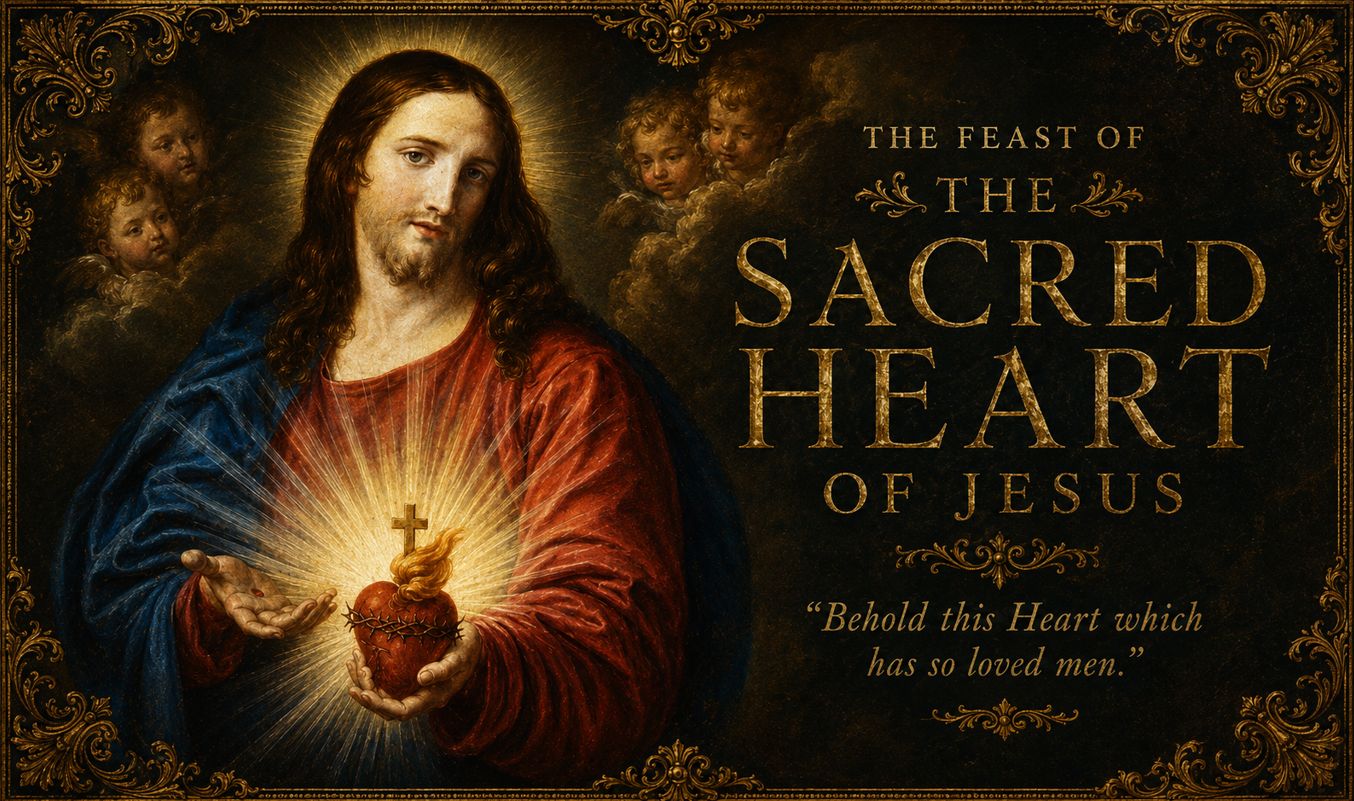
In churches, homes, schools and religious communities, believers gaze upon a striking image—a heart ablaze with fire, encircled by a crown of thorns, pierced by a wound, and surmounted by a cross. For many, it is a familiar devotional image. Yet behind every detail lies a powerful spiritual message that has touched generations of Christians.
The Feast of the Sacred Heart is more than a devotional celebration. It is an invitation to encounter the compassionate heart of Christ, a heart that continues to love, forgive and heal despite humanity's rejection and indifference.


While devotion to the love of Christ can be traced back to the early Church and medieval saints such as St. Bernard of Clairvaux, St. Gertrude the Great and St. Mechtilde, the modern Sacred Heart devotion emerged through the mystical experiences of St. Margaret Mary Alacoque, a French Visitation nun.
(CLICK HERE to follow Catholic Connect for regular Catholic News & Content)
Between 1673 and 1675, St. Margaret Mary reported receiving a series of visions of Jesus. In these apparitions, Christ revealed His Sacred Heart and expressed His desire that humanity respond to His love through prayer, devotion and acts of reparation.
One of the most significant visions occurred in June 1675, when Jesus reportedly pointed to His Heart and lamented humanity's coldness towards His love. He requested a special feast in honour of His Sacred Heart.
The devotion gradually spread throughout France and Europe before being officially approved by the Church. In 1856, Pope Pius IX extended the Feast of the Sacred Heart to the universal Church, making it one of the most beloved celebrations in the Catholic calendar.
The image of the Sacred Heart is rich with meaning and deeply rooted in Scripture and Christian theology.
The flames rising from the Heart symbolise the burning love of Christ for every human person.
Unlike earthly love, which can fade or fail, the fire of Christ's love never diminishes. It reflects God's passionate desire to draw humanity closer to Himself and reminds believers that divine love is active, transforming and eternal.
Wrapped tightly around the Heart is the crown of thorns worn by Jesus during His Passion.
This symbol represents the suffering Christ willingly endured for the salvation of humanity. It also signifies the wounds inflicted upon His Heart by human sin, indifference and rejection.
The crown serves as a reminder that authentic love often involves sacrifice.
Visible on the Sacred Heart is the wound from the soldier's lance at Calvary.
The Gospel of John recounts how blood and water flowed from Christ's side after His death on the Cross. Christians have long understood this as a symbol of the sacraments and the birth of the Church.
The open wound signifies that Christ's Heart remains forever open to sinners, inviting all people to mercy and reconciliation.
The cross resting atop the Heart unites Christ's love with His sacrifice.
It reminds believers that salvation was won through the Cross and that the Sacred Heart cannot be separated from the Passion, Death and Resurrection of Jesus.
One reason the devotion spread so rapidly was the series of promises associated with it. According to tradition, Jesus revealed twelve special blessings to St. Margaret Mary for those devoted to His Sacred Heart.
These promises include:
These promises have inspired countless Catholics to practise the First Friday devotion, attend Mass regularly and deepen their spiritual lives.
Throughout history, devotion to the Sacred Heart has influenced nations, religious orders and ordinary families.
The Sacred Heart became a symbol of hope during times of war, revolution and persecution. Churches dedicated to the Sacred Heart were built across the world, including the famous Basilica of the Sacred Heart in Paris.
Popes from Leo XIII to Leo XIV have repeatedly encouraged devotion to the Sacred Heart as a remedy for division, violence and spiritual indifference. In 1899, Pope Leo XIII consecrated the entire world to the Sacred Heart, calling it one of the greatest acts of his pontificate.
Today, the devotion continues to flourish through parish celebrations, Eucharistic Adoration, family enthronements and acts of charity inspired by Christ's love.
The Feast of the Sacred Heart ultimately points beyond symbols, images and traditions. It directs believers to the person of Jesus Christ Himself.
The flames speak of a love that never grows cold. The crown reminds us of sacrifice. The wound reveals mercy. The cross proclaims redemption.
In a world often marked by loneliness, conflict and uncertainty, the Sacred Heart offers a timeless message: that every person is deeply loved by God.
As Catholics celebrate this beautiful feast, they are invited not merely to admire the Sacred Heart, but to enter into it—to allow Christ's love to transform their lives and to become instruments of that same love in the world.
For behind the flames, the thorns and the wound lies a simple yet life-changing truth: the Heart of Jesus still beats with love for humanity today.
By Catholic Connect Reporter
© 2026 CATHOLIC CONNECT POWERED BY ATCONLINE LLP