- 26 June, 2026
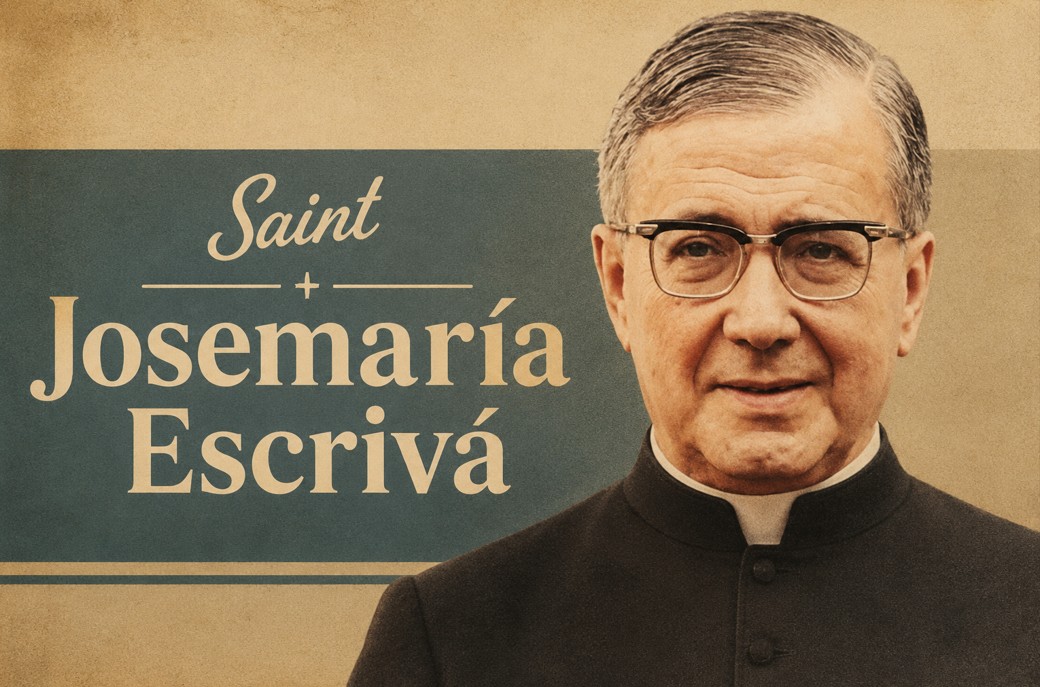
Spain, June 26, 2026: Why is Saint Josemaría Escrivá remembered as one of the most influential spiritual figures of the twentieth century? Discover the extraordinary story of the Spanish priest who founded Opus Dei, encouraged Christians to seek holiness in ordinary work and daily responsibilities, and inspired millions to unite faith with everyday life.


Feast Day: 26 June
Born: 9 January 1902, Barbastro, Spain
Died: 26 June 1975, Rome, Italy
Canonized: 6 October 2002 by Pope John Paul II


Patron of: Personal sanctification through ordinary life, workers, professionals, and those seeking holiness in daily duties
Known For: Founding Opus Dei, promoting the universal call to holiness, spiritual writings, and teaching that work can be a path to God
Title: Founder of Opus Dei and Apostle of Ordinary Life
Few modern saints have influenced the spirituality of ordinary Christians as deeply as Saint Josemaría Escrivá.
At a time when many people saw holiness as something reserved for priests, monks, or religious communities, Josemaría proclaimed a different message: every person, regardless of profession or social position, is called to become a saint.
He taught that ordinary activities—working, studying, caring for family, and serving others—could become opportunities to encounter God when done with love and faith.
Through his preaching, writings, and the foundation of Opus Dei, he encouraged millions of people to seek holiness in the middle of the world.
Josemaría Escrivá was born on 9 January 1902 in Barbastro, Spain.
He was the second of six children born to José Escrivá and Dolores Albás, a deeply Christian family that taught him the importance of faith, generosity, and trust in God.
His childhood included moments of joy as well as suffering. The family experienced financial difficulties, and several of Josemaría’s siblings died at a young age.
These experiences helped form his understanding of suffering and strengthened his belief in God’s loving care.
From his early years, he developed a strong desire to discover God’s plan for his life.
As a young man, Josemaría studied in Logroño and later moved to Zaragoza, where he entered the seminary.
While walking through the streets of Logroño during winter, he saw the footprints of a barefoot Carmelite priest in the snow.
This simple sight deeply affected him. He felt that God was calling him to a life of greater dedication and sacrifice.
He decided to become a priest so that he could better serve God and others.
Josemaría was ordained a priest in 1925 and began his ministry with great enthusiasm.
On 2 October 1928, while making a spiritual retreat in Madrid, Josemaría received the inspiration that led to the foundation of Opus Dei.
The mission of Opus Dei was to remind Christians that holiness is possible in every situation of life.
Josemaría taught that people do not need to leave the world to find God. Instead, they can sanctify the world through their daily work, relationships, and responsibilities.
The message was revolutionary for its time because it emphasised the dignity of ordinary Christian life.
One of Saint Josemaría’s most important teachings was that work itself can become a path to holiness.
He believed that professional duties, when performed with excellence, honesty, and love, can become an offering to God.
For him, a carpenter, teacher, doctor, farmer, parent, or student could all serve God through their daily tasks.
He encouraged people to:
His message transformed the way many people understood their relationship between faith and daily life.
Saint Josemaría was a gifted writer and spiritual teacher.
His most famous work, The Way, contains reflections and practical advice for Christian living.
His writings emphasise prayer, humility, generosity, and the search for God in everyday circumstances.
Other works, including Furrow and The Forge, continue to guide people seeking a deeper spiritual life.
Saint Josemaría lived through one of the most challenging periods in Spanish history, including the Spanish Civil War.
During this time, religious persecution created great difficulties for priests and believers.
He continued his ministry despite danger and uncertainty, encouraging people to remain faithful.
After the war, he expanded the work of Opus Dei and travelled widely to spread his message of Christian holiness.
Those who knew Saint Josemaría often described him as a joyful and energetic priest with a deep love for Christ.
He dedicated countless hours to spiritual direction, preaching, and encouraging people in their Christian vocation.
He saw every person as someone with a unique mission from God.
His message was not only about personal holiness but also about transforming society through lives rooted in faith, charity, and responsibility.
In the final years of his life, Saint Josemaría continued travelling and serving people around the world.
He visited many countries, meeting with members of Opus Dei and others who sought spiritual guidance.
He died suddenly on 26 June 1975 in Rome while looking at a picture of Our Lady.
His followers remembered his final moments as a peaceful completion of a life completely dedicated to God.
The Church recognised Saint Josemaría’s holiness through his canonization on 6 October 2002 by Pope John Paul II.
During the canonization ceremony, Pope John Paul II highlighted his teaching that ordinary activities can become a means of growing closer to God.
Today, Saint Josemaría is recognised as one of the great spiritual teachers of modern Catholicism.
The central message of Saint Josemaría’s life was simple but powerful:
Every Christian is called to holiness.
He believed that holiness is not limited to extraordinary actions but is built through small acts of love, patience, honesty, and service.
His teaching encourages believers to discover God’s presence in family life, work, friendships, and everyday responsibilities.
The life of Saint Josemaría teaches important lessons:
Saint Josemaría reminds Christians that God can be found not only in churches and moments of prayer but also in the ordinary events of each day.
In a world where people often separate faith from daily life, Saint Josemaría Escrivá offers a powerful reminder that every moment can become sacred.
He was a priest who saw holiness in ordinary people, a founder who inspired a worldwide spiritual movement, and a teacher who showed that work and daily responsibilities can lead people closer to God.
From Spain to communities around the world, his message continues to inspire millions:
Seek God in ordinary life, and ordinary life can become extraordinary.
To know about more saints please visit the spiritual section.
By Catholic Connect Reporter
Saint Josemaría Escrivá, Saint Josemaría feast day, Opus Dei founder, Catholic saints of June, Spanish saints, holiness in everyday life, Catholic spiritual writers, The Way by Josemaría Escrivá, modern Catholic saints, priests who founded movements, universal call to holiness

© 2026 CATHOLIC CONNECT POWERED BY ATCONLINE LLP