- 26 June, 2026
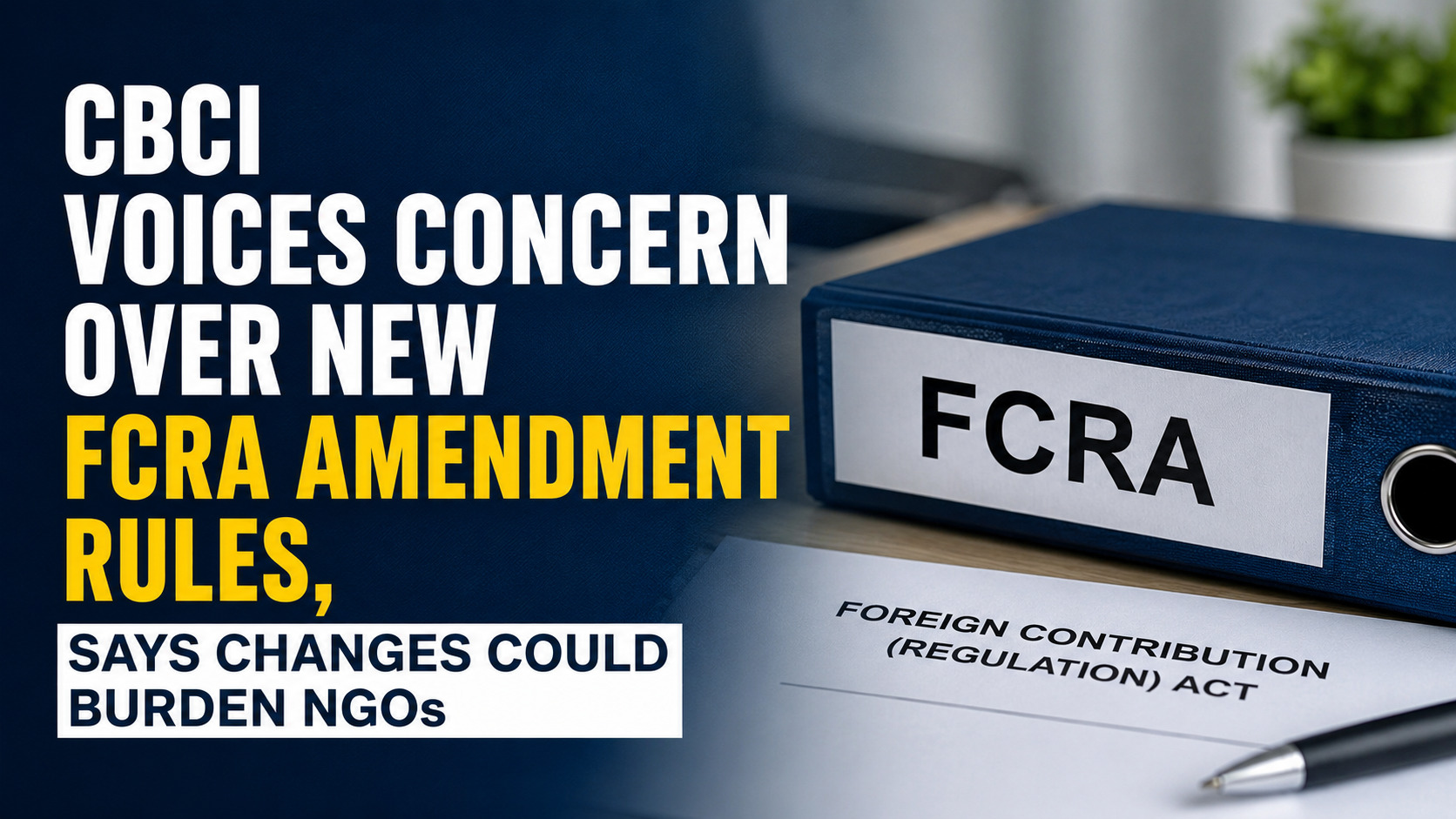
New Delhi, June 26, 2026: The Catholic Bishops’ Conference of India (CBCI) has expressed concern over the recently notified Foreign Contribution (Regulation) Amendment Rules, 2026, warning that the new provisions could place significant operational and financial burdens on non-governmental organisations and charitable institutions across the country.


Church leaders and minority groups have raised objections to several aspects of the amended rules, particularly provisions related to multiple registrations, restrictions on organisational activities, and financial eligibility requirements for NGOs receiving foreign contributions.
Speaking to Catholic Connect, Fr. Robinson Rodriques, Public Relations Officer of the CBCI, questioned the timing of the notification, noting that concerns over the proposed FCRA Amendment Bill are still being debated.


“It was not necessary at this juncture to introduce these amendment rules when opposition to the bill introduced in Parliament is already continuing,” he said.
(CLICK HERE to follow Catholic Connect for regular News and Content)
According to Fr. Rodriques, the new regulations could complicate the functioning of charitable organisations by requiring them to restrict their activities to specific approved purposes. He said NGOs wishing to undertake additional forms of service may have to seek separate approvals and incur additional costs.
He also pointed to the requirement for separate registrations in different states, describing it as an added administrative burden for organisations working across state boundaries.
The CBCI official expressed particular concern about the impact of the rules on emergency response and disaster relief efforts. He noted that organisations registered in one state may face procedural hurdles when attempting to provide immediate assistance in another state during natural disasters or humanitarian crises.
“Such requirements could delay relief work when time is of the essence,” he said.
Another issue highlighted by Fr. Rodriques is the reported requirement linked to a minimum expenditure threshold of ₹10 lakh for FCRA renewal. He argued that many smaller NGOs operating in rural and remote regions may not meet such expenditure levels despite carrying out valuable social and charitable work.
“Many organisations receive only modest foreign contributions and utilise those funds fully for community service. The proposed threshold may adversely affect their ability to continue functioning,” he said.
Fr. Rodriques further warned that the cumulative effect of multiple registrations and separate approvals for different activities could significantly increase costs for non-profit organisations already working with limited resources.
“If organisations are required to register separately in every state and for each purpose, it will become a huge financial burden on NGOs,” he said.
Appealing to the government to review the provisions, the CBCI official urged authorities to take into account the concerns raised by charitable institutions and civil society organisations.
“Our request to the government is to reconsider these rules,” he said, expressing hope that provisions causing concern could be revised to ensure that organisations engaged in social service are able to continue their work effectively.
The concerns raised by the CBCI come amid wider discussions on the impact of regulatory changes on charitable and development organisations that depend on foreign contributions to support education, healthcare, social welfare and humanitarian initiatives across India.
By Catholic Connect Reporter



© 2026 CATHOLIC CONNECT POWERED BY ATCONLINE LLP