- 20 August, 2026

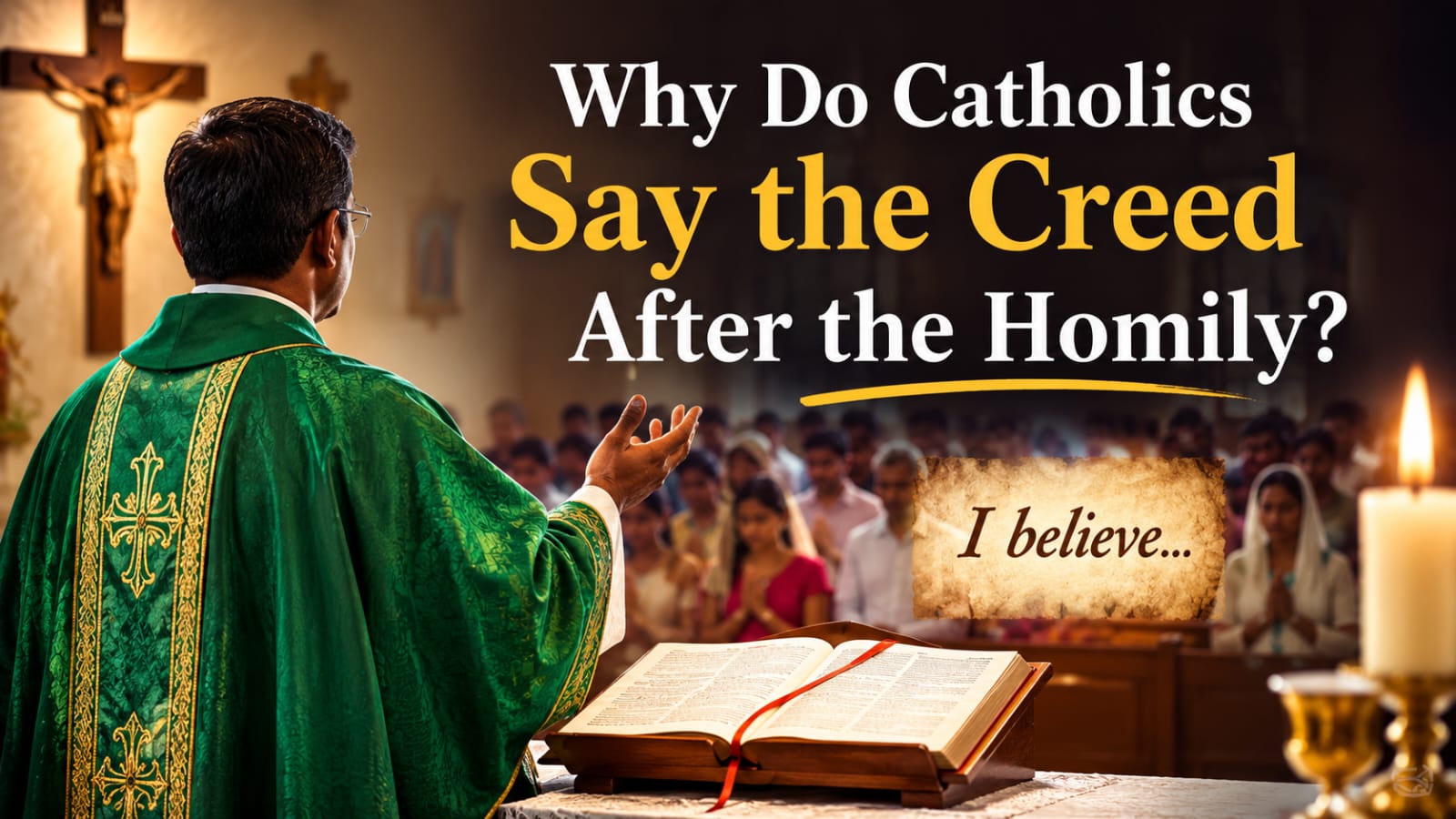
August 20, 2026: Have you ever wondered why Catholics stand and say, “I believe…” after the homily? Why does the Creed come at this particular moment in the Mass rather than before the readings or immediately before Holy Communion?


Its placement is not accidental. The Creed is the Church’s response to the Word of God proclaimed in Scripture and explained in the homily. After listening to God’s Word, the faithful respond by professing together the faith of the Church.
From Hearing to Professing
The Liturgy of the Word has a clear movement. Scripture is proclaimed, the Gospel is announced, and the homily helps the faithful understand God’s Word and apply it to Christian life.


Ordinarily, a brief period of silence follows the homily. This silence allows the Word received to take root in the hearts of the faithful and gives each person an opportunity to reflect on what God is saying.
Then the assembly makes its response in the Profession of Faith, or Creed. The movement is simple:
God speaks, we listen, and the Church responds by professing the faith.
The General Instruction of the Roman Missal says that the Creed enables the gathered people to respond to God’s Word and to recall and confess the great mysteries of the faith before those mysteries are celebrated in the Eucharist.
Why Do We Say It Together?
The Creed is not merely a private statement of personal belief. The entire congregation professes the same apostolic faith together. Although each person says, “I believe,” the words are spoken within the faith of the whole Church.
The Creed summarises the central mysteries of Catholic faith: God the Father, Jesus Christ, the Holy Spirit, the Church, Baptism, the resurrection of the dead and eternal life.
The Creed is professed especially on Sundays and solemnities. It may also be used at particularly solemn celebrations. It can be sung or recited by the whole assembly.
Which Creed Do Catholics Use?
The Creed commonly called the Nicene Creed is more precisely the Nicene-Constantinopolitan Creed. Its roots are found in the Council of Nicaea in 325 and the Council of Constantinople in 381. It clearly professes the divinity of Christ and the faith of the Church in the Holy Spirit.
The Apostles’ Creed is another approved expression of the Catholic faith. It is the ancient baptismal symbol of the Church of Rome and a faithful summary of the apostles’ faith.
After professing the faith, the Church offers the Prayer of the Faithful and proceeds toward the Liturgy of the Eucharist. The next time you say, “I believe,” remember that these words are the Church’s response to the Word of God proclaimed in the Scriptures, reflected upon in the homily, and received in faith.
By Catholic Connect Reporter
Read more:
Why Can’t We Skip the Homily at Sunday Mass?
Three Little Crosses Before the Gospel — But What Do They Mean?
Why Do Catholics Sit for the Readings but Stand for the Gospel?
Why Is There a Psalm Between the Readings?
Why Are There Usually Three Readings at Sunday Mass?
Why Does the Priest Say “The Lord Be with You” So Often at Mass?
Why Do We Keep Saying “Amen” at Mass? What Are We Really Saying?
The Prayer After “Let Us Pray” Changes at Mass—Do You Know Why?
Why Do Catholics Sing the Gloria—but Not at Every Mass?
Why Do We Confess Our Sins at the Start of Mass? The Deeper Meaning Explained
Why Does Mass Begin and End with the Sign of the Cross?
What Makes the Catholic Mass Different from Other Christian Worship Services?
Four Parts, One Beautiful Story: Understanding the Flow of the Mass
Why Does the Mass Follow the Same Order Every Time? The Church's Timeless Wisdom
Why Do Catholics Call It the Mass? The Answer Begins with Three Latin Words
How the Mass Developed Over 2,000 Years: A Journey Through History and Worship
If God Made the Seventh Day Holy, Why Do Catholics Worship on Sunday?


© 2026 CATHOLIC CONNECT POWERED BY ATCONLINE LLP