
- 20 August, 2026

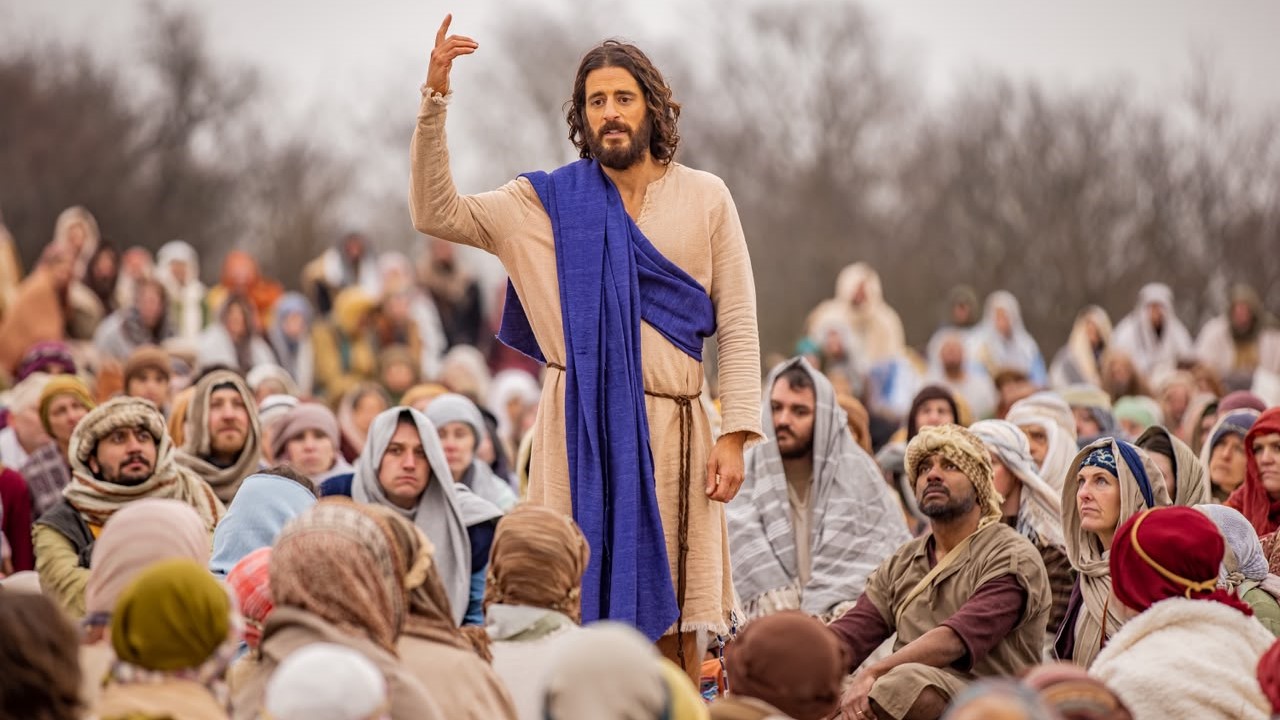
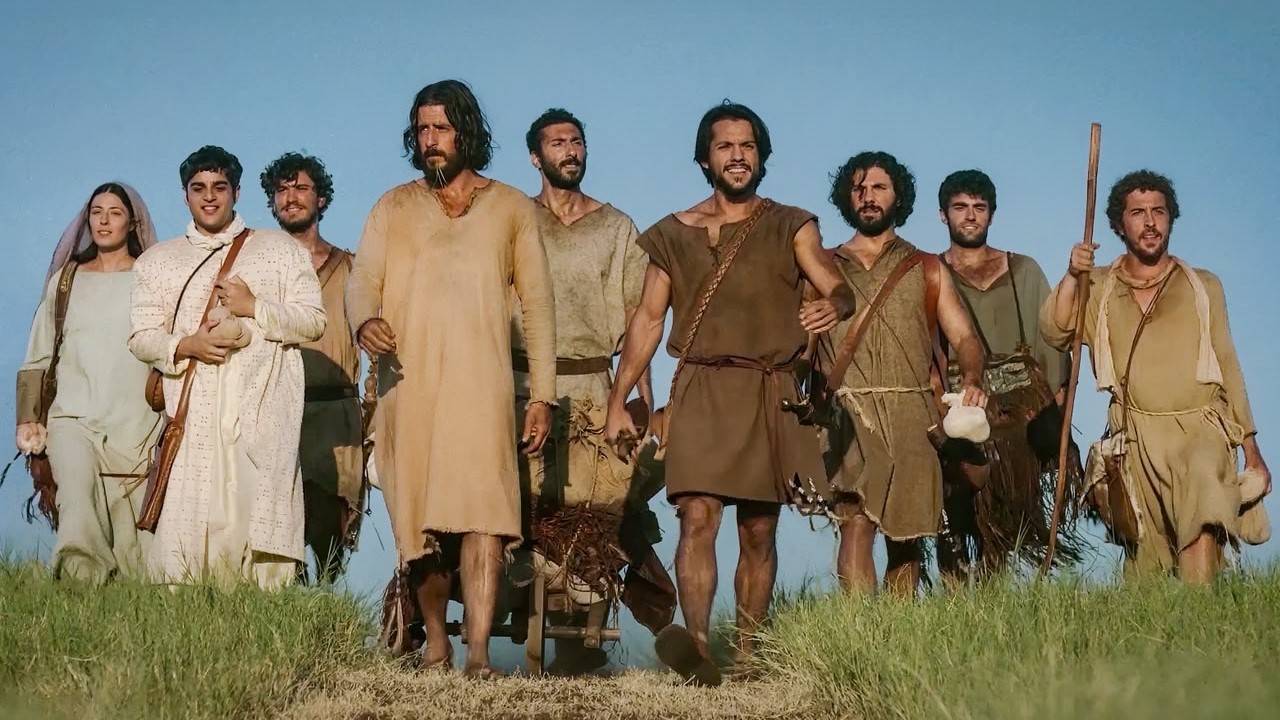
August 20, 2026: Questions and concerns have been raised regarding the possible promotion of the series The Chosen. The questions raised are not without merit, and the Church has always encouraged discernment when engaging with artistic portrayals of the life of Christ. We “need to be cautious,” which is different from outright rejection. At the same time, it may be helpful to respond to some of these points in light of sound Catholic theology and the Church’s long tradition of engaging with culture and art.


1. The Nature of Artistic Representations of the Gospel
From the earliest centuries, the Church has permitted and even encouraged artistic portrayals of biblical events. For the first 1,500 years, before the invention of the printing press and the widespread printing or publication of books, the Church relied greatly on art to tell the story of Jesus. The biblical narratives were brought to life through various artistic forms.
Sacred art, music, theatre, literature, and later cinema have always involved a degree of artistic imagination. Medieval mystery plays, Renaissance paintings, and modern films have all added contextual details not explicitly found in Scripture. Such additions are not intended to replace revelation but to help viewers contemplate the mysteries of the Gospel.


In Mel Gibson’s The Passion of the Christ, several scenes go beyond the strict narrative of the Gospels and use symbolic or artistic elements to convey theological meaning. For example, during the agony in Gethsemane, Satan is portrayed as appearing and tempting Jesus while He prays. The Gospel accounts describe Jesus praying in anguish and being strengthened by an angel (cf. Luke 22:43), but they do not record a visible encounter with Satan at that moment.
Similarly, the film includes the symbolic scene in which Jesus crushes a serpent beneath His foot, an image not found in the Passion narratives but clearly echoing the promise of victory over evil in the Book of Genesis (3:15), where the offspring of the woman crushes the serpent’s head. These elements, therefore, illustrate how the film employs artistic imagination and theological symbolism to deepen the emotional and spiritual impact of the narrative rather than strictly reproducing the biblical text. The Church’s teaching remains clear: Sacred Scripture and Apostolic Tradition are the normative sources of faith, not artistic depictions. A series such as The Chosen must therefore be understood as a devotional or inspirational interpretation, not as a doctrinal authority
2. The Ecumenical Context
The series was indeed created by Dallas Jenkins, who comes from an Evangelical Christian background. However, the Church has long encouraged collaboration and dialogue with other Christians. The Second Vatican Council's decree Unitatis Redintegratio acknowledges that elements of truth and sanctification exist outside the visible boundaries of the Catholic Church.
Participation by Christians of other traditions in artistic portrayals of the Gospel does not automatically render such works doctrinally unreliable. The Church frequently engages with cultural works produced outside Catholic circles, evaluating them prudently rather than dismissing them outright.
The Historical Critical Method was not used by the Catholic Church at first, it came from German Protestants, but Pope Leo XIII in Providentissimus Deus (1893), allowed for these methods to be used in the study and interpretation of the Bible.
3. Artistic Liberties and Narrative Development
The Gospel accounts themselves are selective narratives. As St. John the Apostle writes, many things Jesus did were not recorded (cf. Jn 21:25). Consequently, any dramatisation must necessarily construct dialogue, daily interactions, and personal dynamics among the disciples. Such narrative elaboration should not be interpreted as an attempt to replace Scripture but as a literary method to make the historical context more intelligible to contemporary audiences.
4. The Humanity of Christ
Concerns about the portrayal of Jesus as relatable or emotionally expressive deserve theological clarification. Catholic doctrine teaches the Hypostatic Union, according to which Jesus Christ is fully God and fully man. Because Christ truly assumed human nature, the Gospels themselves attest to His emotions: He wept at the tomb of Lazarus, experienced sorrow in Gethsemane, and expressed compassion for the crowds. Emphasising the humanity of Christ does not diminish His divinity; rather, it affirms the mystery of the Incarnation.
The tradition of the Church, especially in the theology of St Thomas Aquinas, indeed teaches that Christ possessed the beatific vision and infused knowledge. Yet this does not exclude the authentic human expression of thought, speech, and relational interaction. The concern about the “overly humanised nature of Jesus” does not really arise, because Jesus is truly human as well as truly divine. He is not a demigod in human figure, but the Word made flesh who fully assumed our human nature.
5. Marian Questions
Some concerns raised about the portrayal of the Blessed Virgin Mary stem from interpretations of devotional theology rather than from a definitive dogmatic definition. The Church teaches the doctrines of the Immaculate Conception and the Perpetual Virginity of Mary.
While certain theologians have argued that Mary was spared the pains of childbirth, the Magisterium has not defined this aspect as a dogma in the same definitive manner as her perpetual virginity. Consequently, artistic portrayals that attempt to express the human dimension of the Nativity do not necessarily constitute doctrinal contradiction.
6. Fictional Characters and Narrative Devices
The inclusion of fictional or composite characters is a common literary device used to illustrate themes present in Scripture. While such additions must be approached prudently, they can also serve pedagogical purposes by helping viewers reflect on faith, suffering, and discipleship.
The Church herself has often used narrative imagination in preaching and catechesis to illuminate Gospel truths. Using terms such as “theological slippage” and “not inherently sinful” is, in my view, rather irresponsible and appears to be coloured by a conservative and fundamentalist perspective.
7. The Role of Discernment
The most balanced ecclesial approach remains one of prudent discernment. The Church neither canonizes nor condemns most cultural works. Instead, she invites the faithful to evaluate them in the light of Scripture, Tradition, and the teaching authority of the Church. Used appropriately, such series can become a pastoral entry point for evangelization. Many viewers who previously had little contact with the Gospel have reported renewed interest in reading Scripture after encountering the series.
8. Pastoral Responsibility
Therefore, rather than uncritical promotion or outright rejection, a constructive pastoral approach may include:
• presenting the series as a creative interpretation of the Gospel narrative rather than a doctrinal authority;
• encouraging viewers to read the Gospel texts themselves;
• offering catechetical guidance where necessary.
In this way, the Church fulfils her mission of engaging culture while safeguarding doctrinal integrity. Seeing the painting of the Flight into Egypt by Artemisia Gentileschi as a seminarian in a museum in Vienna left a lasting impression on me. A friend who was with me pointed out how the work reflected the influence of humanism. Unlike traditional sacred art with majestic blues and deep reds, the painting used earthy, muted colours that gave the scene a striking realism. Joseph was depicted sitting on the pavement, leaning against a cracked wall, visibly tired from the journey, while Mary sat nearby with the child, breastfeeding him. The whole scene felt profoundly human and ordinary, highlighting the vulnerability and everyday reality of the Holy Family rather than presenting them in distant splendour.
Today, however, the cultural influences shaping artistic and media portrayals are quite different from those of the Renaissance. We are no longer primarily shaped by the philosophy of humanism, but by a world defined by information technology, where access to information—and even the control of information—has become a form of power. Fake news is the hallmark of the day! At the same time, there is a broader cultural atmosphere that Charles Taylor, in his book A Secular Age, describes as a kind of “disenchantment.” In many societies today, there is a deep erosion of trust: people often distrust political leaders, public institutions, bureaucracies, and sometimes even the clergy. This cultural climate inevitably shapes the way Jesus is portrayed in contemporary media and the digital world.
Just as Renaissance humanism influenced artists to depict sacred figures in more recognisably human and earthly ways, today’s digital culture tends to present Jesus in forms that resonate with a generation accustomed to immediacy, relatability, and personal storytelling. Media narratives, therefore, often emphasise the accessible, relational, and emotionally expressive dimensions of Jesus to speak to an audience shaped by skepticism, technological mediation, and a search for authenticity. Alternatively, we could simply remain silent and continue doing what we have always done—preaching our sermons from the pulpit while an increasing number of people no longer listen. The cultural gap between the Church and the younger generation is evident. As The Beatles poignantly expressed in their song Eleanor Rigby, “Father McKenzie writing the words of a sermon that no one will hear; no one comes near.” A whole generation today inhabits the digital world—formed by images, stories, and media rather than by traditional modes of communication. If the Church wishes to proclaim the Gospel meaningfully in such a context, she must seriously reflect on how to engage these spaces of culture and communication, finding ways to evangelise within the digital environment where so many people now live, search, and form their understanding of faith.
Conclusion
In summary, the concerns raised invite legitimate caution but do not necessarily justify a negative judgement. The Church has historically engaged artistic representations of the life of Christ with discernment, recognizing both their limitations and their pastoral value. If approached wisely, The Chosen can serve as a starting point for deeper evangelization, provided that the faithful are reminded that the definitive source of Christian faith remains Sacred Scripture interpreted within the living Tradition of the Church.
By Fr. Dr. Christopher Vimalraj
Associate Deputy Secretary General, CCBI & CCBI’s Ecclesiastical Advisor to The Chosen in India




© 2026 CATHOLIC CONNECT POWERED BY ATCONLINE LLP