- 20 June, 2026

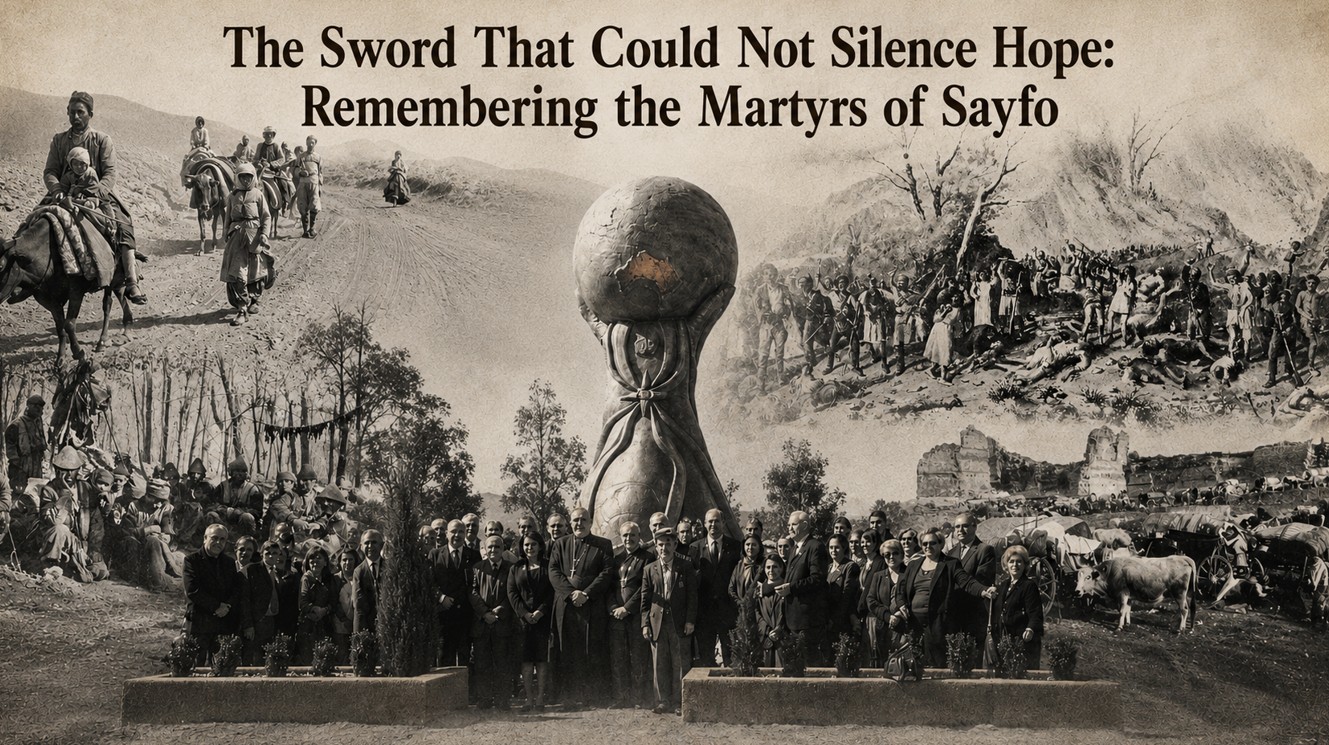
June 19, 2026: More than a century ago, the ancient Christian communities of the Middle East faced one of the darkest chapters in their history. During the First World War, the Ottoman Empire became the setting for widespread violence against Syriac, Assyrian, and Chaldean Christians. Known as the Sayfo Genocide—“Sayfo” meaning “sword” in Syriac—the tragedy involved mass killings, forced deportations, starvation, and the destruction of communities that had preserved their faith and culture for centuries.


The genocide occurred during a period of political instability, rising nationalism, and war. Ottoman authorities viewed some Christian populations living near military frontiers with suspicion, accusing them of possible cooperation with foreign powers. These fears were intensified by the collapse of the empire and the ambitions of nationalist movements within the ruling structures. As a result, Christian communities became targets of systematic persecution.
Between 1915 and 1918, Ottoman forces and allied irregular groups carried out campaigns of violence against Syriac and Assyrian populations across regions including Tur Abdin, Mardin, Hakkari, Diyarbakir, Urfa, and northern Mesopotamia. Estimates suggest that hundreds of thousands of Syriac, Assyrian, and Chaldean Christians were killed, displaced, or forced into exile.


The roots of the Sayfo Genocide were connected to several political, military, and social factors. The First World War created an atmosphere of fear and uncertainty throughout the Ottoman Empire. The ruling Committee of Union and Progress government pursued policies aimed at strengthening Turkish nationalism, and minority Christian populations increasingly became viewed as obstacles to this vision.
One major factor was the belief among Ottoman officials that some Christian communities could support enemy nations during wartime. Syriac and Assyrian Christians living near the borders of the empire were especially vulnerable because their regions were close to conflict zones involving Russia and Persia.
Another cause was the broader pattern of violence against Christian minorities during the final years of the Ottoman Empire. The Sayfo occurred alongside the persecution of Armenians and Greeks, forming part of a wider campaign that devastated many indigenous Christian communities of Anatolia and Mesopotamia.
The year 1915 became the most devastating period of the genocide. Mass arrests targeted community leaders, intellectuals, clergy, and influential figures. Churches and monasteries that had served as centers of education, spirituality, and cultural preservation were attacked. The survivors later referred to this period as the “Year of the Sword.”
(CLICK HERE to follow Catholic Connect for regular News and Content)
The effects of Sayfo were devastating. Entire villages disappeared, families were separated, and survivors were forced to leave their ancestral lands. Many refugees travelled through harsh conditions, facing hunger, disease, and continued violence.
The destruction was not only physical but also cultural. Ancient churches, monasteries, libraries, and manuscript collections were damaged or destroyed. Important centers of Syriac learning lost priceless religious and historical documents. Communities that had preserved the Syriac language, traditions, and Christian practices for generations were scattered across the Middle East and beyond.
Historic regions such as Tur Abdin became symbols of both suffering and survival. Monasteries including Mor Gabriel Monastery and Mor Hananyo Monastery remain reminders of the ancient Syriac presence that endured despite persecution.
After the violence ended, many survivors struggled to rebuild their lives. The political changes following the First World War transformed the region, but displaced Syriac and Assyrian families often found themselves without homes or protection.
Many refugees settled in Syria, Iraq, Lebanon, and other parts of the world. New communities were established in cities such as Damascus and Qamishli, while others migrated to Europe, North America, and Australia.
The Syriac Orthodox Church also experienced major changes. After losing its historical centers, the patriarchal administration eventually moved to Damascus, where the Syriac Orthodox Patriarchate of Saint George became an important spiritual center for Syriac Christians worldwide.
Despite the losses, Syriac and Assyrian communities continued preserving their language, traditions, religious practices, and memories of their ancestors.
Every year on June 15, Syriac and Assyrian communities around the world observe Sayfo Genocide Remembrance Day. The date has become a day of mourning, prayer, remembrance, and a call for recognition of the suffering experienced by their ancestors. 2026 marks the 111th anniversary of the massacres.
Across Syria, the Middle East, Europe, North America, and Australia, communities hold memorial services, Divine Liturgies, candlelight ceremonies, and educational events. The purpose is not only to remember those who were killed but also to honor the survival of a people whose identity endured through hardship.
In Damascus, one of the central commemorations takes place at the Syriac Orthodox Patriarchate of Saint George. Bishops, clergy, deacons, and hundreds of faithful gather for a solemn Divine Liturgy. Following the service, participants join a procession accompanied by the Patriarchal Syriac Scout Band of Saint Ephrem, moving toward Al-Qishla.
The remembrance concludes at the Garden of the Syriac Martyrs, where participants light a central flame and hold candles as symbols of faith, memory, and hope. These ceremonies express grief for the past while also celebrating the continued existence of Syriac Christianity.
Other important remembrance gatherings take place in communities with strong Syriac and Assyrian populations, including cities throughout Syria, Iraq, Lebanon, Europe, the United States, Canada, and Australia. Churches, cultural organizations, and community groups organize prayers, lectures, exhibitions, and memorial programs.
The historic homeland regions—including southeastern Turkey, northern Syria, and northern Iraq—remain especially meaningful because they contain ancient monasteries, churches, and archaeological sites connected to Syriac Christian history.
The story of Sayfo is a story of immense suffering, but it is also a story of survival. The communities that experienced destruction more than a century ago continue to celebrate their faith, protect their heritage, and teach future generations about their history.
Remembering the martyrs of Sayfo is not only about looking back at tragedy. It is also about recognizing the strength of people who preserved their identity despite unimaginable challenges. Every candle lit on June 15 represents a life remembered, a culture protected, and a hope that justice and peace can grow from the lessons of history.
The sword brought suffering, but it could not erase the spirit of the Syriac and Assyrian people. Through remembrance, faith, and unity, the legacy of the martyrs continues to inspire a future built on dignity, understanding, and hope.
By Catholic Connect Reporter
© 2026 CATHOLIC CONNECT POWERED BY ATCONLINE LLP