- 20 June, 2026

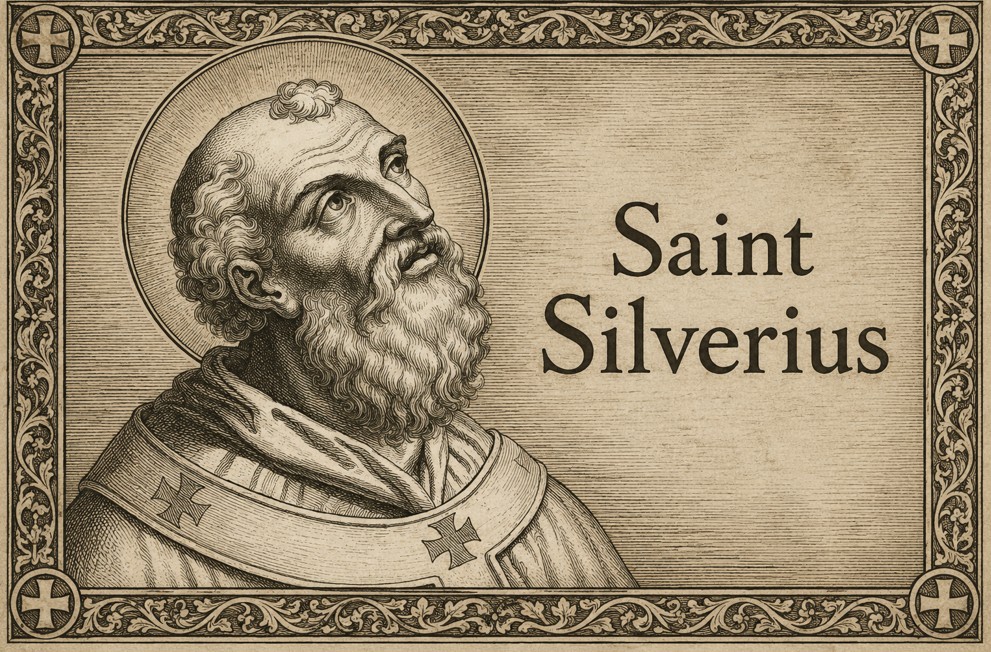
Italy, June 20, 2026: Why is Saint Silverius remembered as a courageous shepherd who guided the Church during one of the most difficult periods in Christian history? Discover the inspiring story of the 58th Pope, a man who defended the truth of the faith, endured political pressure, suffered exile, and remained faithful to Christ until the end of his life.


Feast Day: 20 June
Born: Unknown, Italy (approximately 6th century)
Died: 20 June 537, Italy
Pope: 58th Pope of the Catholic Church (536–537)


Patron of: Those seeking protection from earthquakes, illness, and difficult circumstances
Known For: Defending Church teaching, maintaining unity, resisting political interference, and remaining faithful during persecution
Title: Faithful Shepherd and Defender of the Church
Saint Silverius served as Pope during one of the most challenging periods in the history of the Church. The sixth century was an era marked by political conflicts, wars, theological disputes, and uncertainty throughout the Roman Empire.
Although his papacy lasted only about one year, Silverius left behind a powerful example of courage, humility, and faithfulness.
He faced pressure from powerful rulers who attempted to influence Church decisions, yet he remained committed to defending the teachings of Christianity. His life reminds believers that true leadership requires courage, even when standing for the truth brings suffering.
Very little is known about the early life of Saint Silverius.
Historians believe he was born in Italy during the late fifth or early sixth century. He was the son of Pope Hormisdas, who had served as Bishop of Rome before him.
Growing up in a deeply Christian environment, Silverius was formed in the traditions of the Church and developed a strong commitment to serving God.
Before becoming pope, he served as a subdeacon in Rome, faithfully carrying out his responsibilities and preparing for the greater mission that awaited him.
Saint Silverius became Pope on 8 June 536, succeeding Pope Agapetus I.
His election took place during a period of great political tension. The Roman Empire was divided, and powerful rulers often attempted to influence the decisions of Church leaders.
At the same time, the Church faced theological controversies that threatened Christian unity.
Silverius inherited these challenges and immediately found himself responsible for guiding the faithful through a difficult moment in history.
Despite the dangers around him, he remained focused on protecting the Church and serving God's people.
One of the greatest challenges of Pope Silverius’ papacy involved conflicts surrounding the teachings of the Church.
During this period, some groups promoted theological positions that the Church considered harmful to the true understanding of Christ.
Silverius defended the Catholic faith and supported the decisions of previous Church councils that affirmed the full divinity and humanity of Jesus Christ.
His commitment was not based on politics or personal advantage. He believed that preserving the truth of the Gospel was essential for the unity of the Church.
Saint Silverius faced serious opposition from political authorities, especially during the conflicts between the Eastern Roman Empire and the Gothic rulers of Italy.
The Byzantine general Belisarius and influential figures at the imperial court became involved in Church affairs, placing pressure on the pope.
According to historical accounts, Silverius refused to compromise his responsibilities as Bishop of Rome.
Because of his resistance, he was accused of political disloyalty and was eventually removed from the papal office.
His suffering showed his willingness to endure hardship rather than abandon his principles.
After being forced from Rome, Saint Silverius was sent into exile.
Tradition holds that he was taken to the island of Ponza, where he experienced great hardship and isolation.
Despite his suffering, Silverius remained faithful and continued trusting in God.
His exile became a testimony of perseverance. Like many early Christian leaders before him, he showed that the strength of the Church does not depend only on earthly power but on faithfulness to Christ.
Although Saint Silverius faced political struggles, he was remembered as a compassionate pastor.
He cared deeply for the people of Rome and the needs of the Christian community.
During a time when wars and instability caused suffering, the Church worked to provide assistance to the poor and vulnerable.
Silverius understood that a shepherd’s duty was not only to defend doctrine but also to care for the people entrusted to him.
After political circumstances changed, Silverius was briefly restored, but his situation remained uncertain.
Eventually, he was taken away again and sent into exile.
Saint Silverius died on 20 June 537, likely on the island of Ponza.
The Church later honoured him as a martyr because he suffered greatly for his loyalty to the faith and his refusal to abandon his responsibilities as pope.
Saint Silverius may not be among the most widely known popes in history, but his example remains deeply meaningful.
He lived during a time when political forces attempted to control the Church, yet he remained committed to truth and unity.
His life teaches that holiness often requires patience, courage, and trust in God during difficult circumstances.
The memory of Saint Silverius continues in the Church as an example of faithful leadership.
He reminds bishops, priests, and all Christians that authority is not about power but about service.
His story also shows that defending faith does not always lead to immediate success or recognition. Sometimes faithfulness requires sacrifice.
Through his suffering, Silverius became a witness to the strength of Christian hope.
The life of Saint Silverius offers many lessons for believers:
Saint Silverius reminds Christians that God works through faithful people even in the most challenging moments of history.
In a world where truth is often challenged and leadership can be difficult, Saint Silverius remains a powerful example of courage and integrity.
He was a pope who faced political struggles, a shepherd who cared for his flock, and a Christian who remained faithful until death.
From the ancient streets of Rome to the Church today, his witness continues to inspire believers to defend the faith with humility, love, and courage.
Saint Silverius teaches a timeless lesson: a faithful heart can remain strong even when surrounded by uncertainty.
To know about more saints please visit the spiritual section.
By Catholic Connect Reporter
Saint Silverius, Pope Silverius, Saint Silverius feast day, early Church popes, Catholic martyrs, saints of June, defenders of faith, Byzantine Church history, ancient Christian saints, papal history, Catholic Church martyrs, faithful shepherds
© 2026 CATHOLIC CONNECT POWERED BY ATCONLINE LLP