- 20 June, 2026

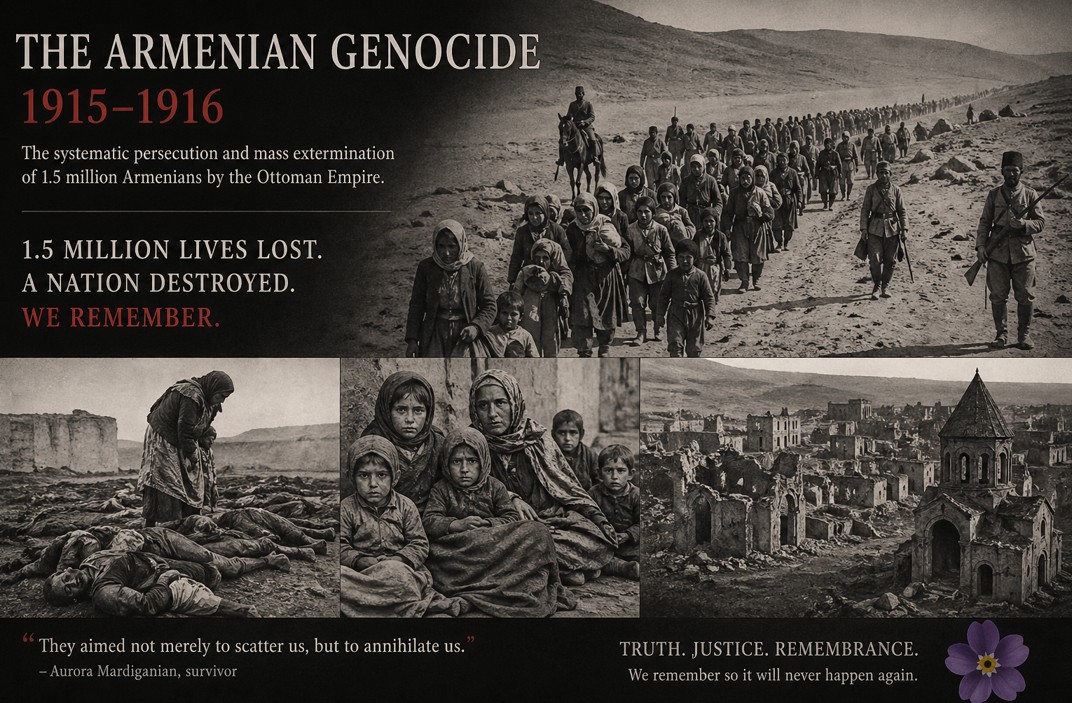
Turkey, 28 April 2026: The day April 24, 2026 marks 111 years since one of the darkest chapters in human history—the Armenian Genocide—when over a million Armenian Christians were systematically persecuted, deported, and killed in the final years of the Ottoman Empire.


What began as arrests of intellectuals in Constantinople on April 24, 1915, soon turned into a widespread campaign of destruction against an entire people—targeted not only for their ethnic identity but also for their Christian faith.
Today, the wounds have not fully healed. The memories remain alive—in stories whispered across generations, in churches rebuilt from ashes, and in the silent cries of mass graves scattered across regions of modern-day Turkey and beyond.
The Armenian Genocide was not a sudden outbreak of violence—it was a calculated and organized effort led by the ruling Committee of Union and Progress. Armenian Christians, who had lived for over two millennia in their ancestral lands, were seen as a threat in a rapidly changing political landscape.
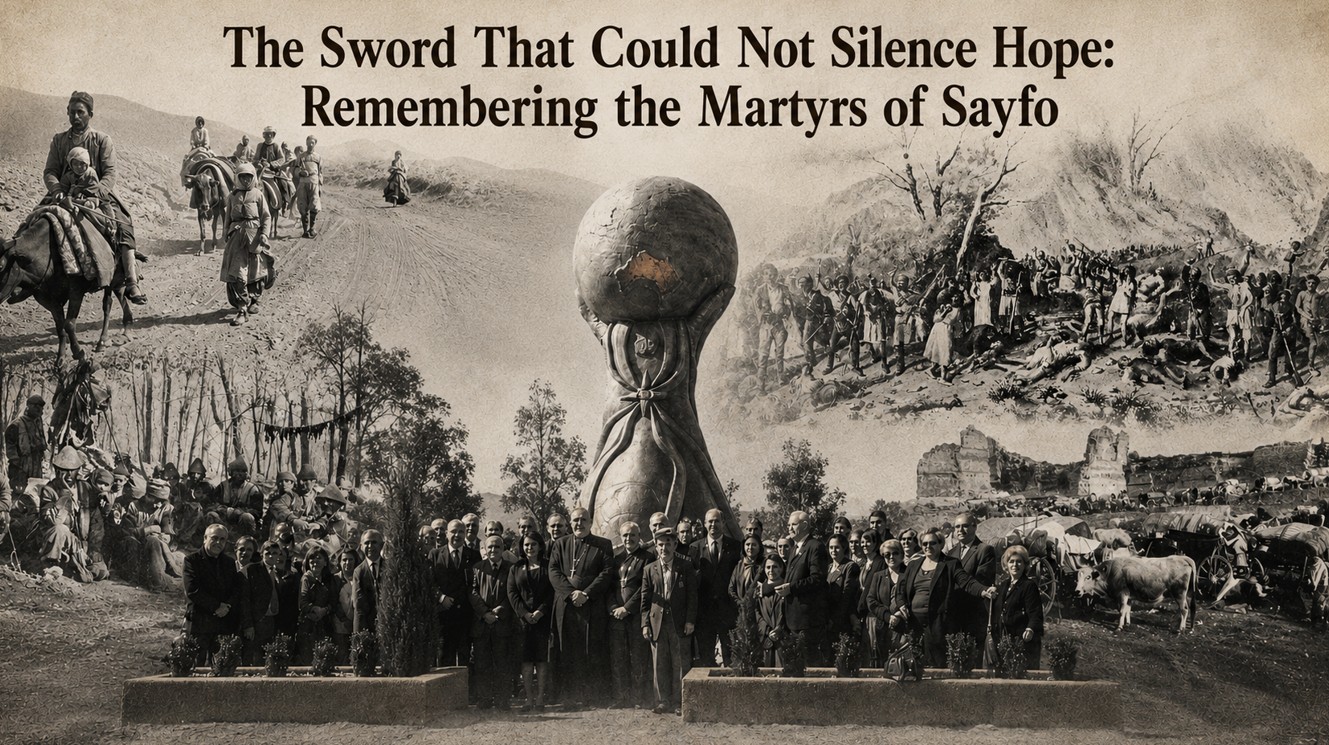
Beginning in 1915, Armenian men were separated and executed. Women, children, and the elderly were forced into brutal death marches toward the Syrian desert. Deprived of food, water, and dignity, countless perished along the way.


Churches were desecrated. Homes were looted. Entire villages vanished.
The strategy was chillingly clear: destroy the people, erase their culture, and silence their faith.
Yet, even in the face of annihilation, the Armenian Christian spirit endured.
Understanding the genocide requires confronting painful truths about fear, power, and prejudice.
1. Religious Identity and Discrimination:
As one of the earliest Christian nations, Armenia held a distinct religious identity in a predominantly Muslim empire. While Armenians were tolerated under the millet system, they remained second-class citizens, vulnerable to discrimination and violence.
2. Rising Nationalism:
In the early 20th century, the Ottoman leadership embraced an aggressive form of nationalism. Christian minorities, especially Armenians, were increasingly viewed as outsiders who did not belong in a vision of a unified Turkish state.
3. Political Fear and Suspicion:
During World War I, Ottoman authorities accused Armenians of siding with enemy forces like Russia. Isolated incidents were exaggerated into a narrative of rebellion, used to justify mass persecution.
4. Economic Motives:
Armenians were often successful in trade and commerce. Confiscating their land, homes, and businesses provided both incentive and opportunity for others to rise economically.
5. Desire for Demographic Control:
The systematic deportations and killings were part of a broader effort to reshape the population—removing Christian presence and replacing it with a more homogeneous identity.
Across southeastern Turkey, unmarked mass graves still bear silent witness to the atrocities. In places like Tur Abdin, stories passed down through families recall loved ones who disappeared—never to return.
The suffering was not limited to Armenians alone. Other Christian communities, including Syriac and Greek Christians, also faced persecution during this period. Entire civilizations that had flourished for centuries were nearly erased.
Women and children endured unimaginable horrors—forced conversions, separation from families, and lives of servitude. Yet even in captivity, many held onto their faith in secret, whispering prayers in the darkness.
What makes this tragedy even more profound is not just the scale of suffering—but the resilience that followed.
Despite attempts to eliminate them, Armenian Christians rebuilt their lives across the world. From the Middle East to Europe, from the Americas to Asia, the Armenian diaspora became a living testimony to survival.
Churches were rebuilt. Traditions preserved. Faith passed on.
The words of the Psalms echo through this history: “The Lord is close to the brokenhearted…” For Armenians, this was not just scripture—it was their lifeline.
Even after 111 years, the Armenian Genocide remains a subject of global debate. While many countries and historians recognize it as genocide, others continue to deny or downplay the events.
This denial adds another layer of pain for descendants—because remembrance is not just about the past, but about dignity, truth, and justice.
Recognition is not about blame—it is about acknowledging suffering and ensuring such atrocities are never repeated.
Today, as the world marks 111 years, this is more than a historical remembrance—it is a moment of reflection, mourning, and prayer.
We remember the fathers who never returned.
The mothers who walked until they collapsed.
The children who cried out in hunger and fear.
We remember the churches that once rang with hymns, now reduced to silence.
We remember the faith that refused to die.
To the souls who were lost—we have not forgotten you.
To the families who still carry the pain—you are not alone.
Your suffering is not erased. Your story is not buried.
And your faith—your unshakable faith—continues to inspire generations.
The Armenian Genocide is not just Armenian history—it is human history. It is a warning of what happens when hatred, fear, and silence are allowed to grow unchecked.
Today, the call is simple but urgent:
Remember the victims
Honor their faith
Stand against persecution everywhere
Speak truth, even when it is uncomfortable
Because silence, in the face of injustice, allows history to repeat itself.
Even after 111 years, hope remains.
The Armenian Church continues to stand.
The faith of its people continues to shine.
And the memory of the martyrs continues to call the world toward justice, compassion, and truth.
As the Romans reminds us: “Be faithful in prayer.”
And so today, we pray—for the departed, for the living, and for a world where such darkness never rises again.
111 years later, the world remembers. And it must never forget.
By Catholic Connect Reporter
© 2026 CATHOLIC CONNECT POWERED BY ATCONLINE LLP