- 13 June, 2026

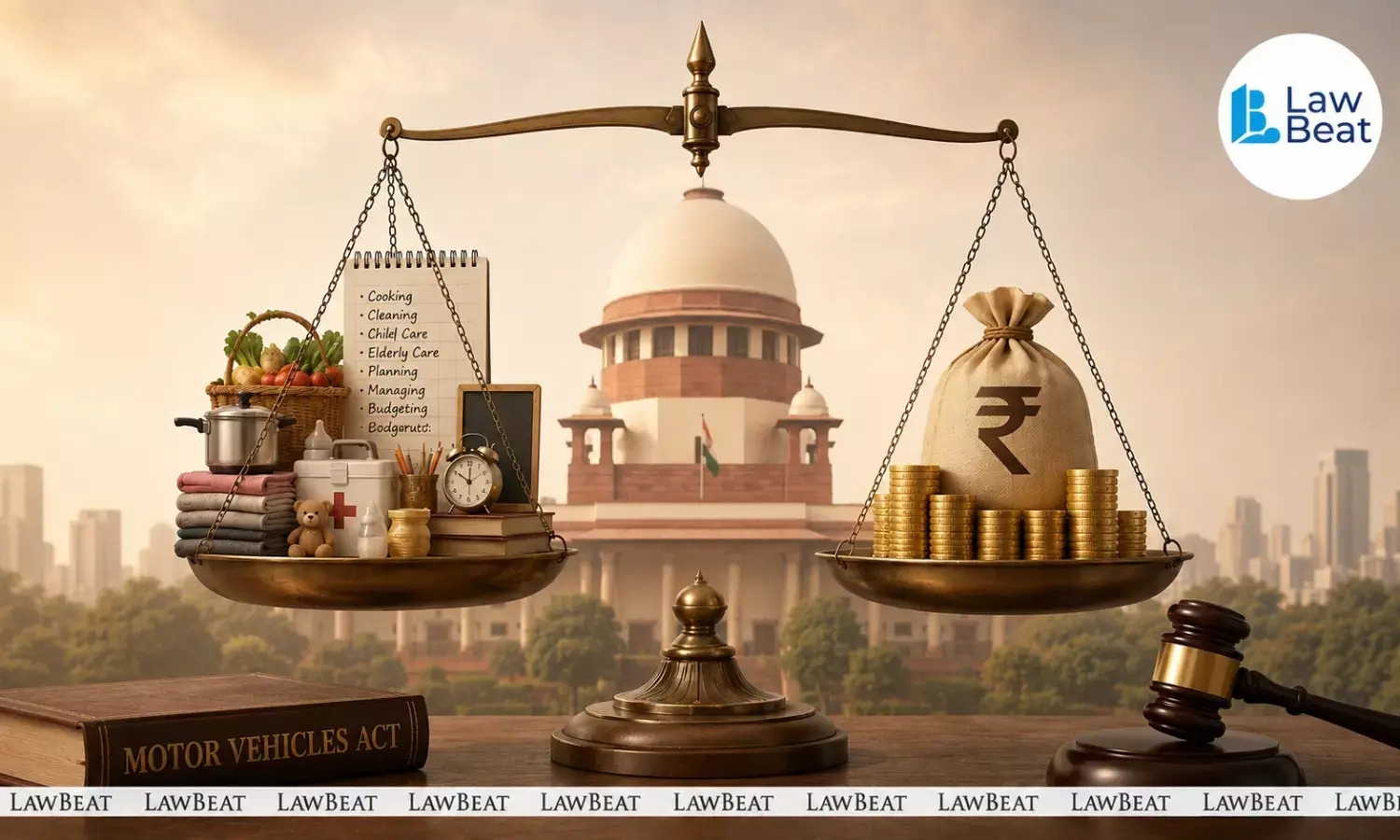
NEW DELHI, June 13, 2026: Recognising the value of unpaid domestic labour, the Supreme Court has held that homemakers are “nation builders” and fixed ₹30,000 per month as the minimum value of their services for compensation claims under the Motor Vehicles Act where they have no independent income.


A Bench of Justices Sanjay Karol and N Kotiswar Singh ruled that in cases where a homemaker has no direct monetary income, ₹30,000 per month shall be treated as a “stand-in” or basic minimum monthly income for calculating compensation towards loss of domestic care.
The Court clarified that where a homemaker is also part of the workforce, compensation for loss of domestic care would be calculated in addition to her proven income.


The ruling came while deciding an appeal seeking enhancement of compensation in a motor accident case involving a homemaker who died in a road accident on November 25, 2001.
Observing that Indian society often refers to the woman of the house as “grihaswamini”, the Bench said her contribution continues to remain inadequately recognised in legal and economic terms.
“In our view, it is ironic to describe a homemaker as dependant on earning members, when, in reality the household's functioning depends substantially on the homemaker. The earning members are in fact solely dependent on the homemaker but alas, this reality does not receive the acknowledgment it deserves,” the Court said.
Highlighting the scale of unpaid domestic labour, the Court noted that around 16 billion hours are spent globally every day on unpaid domestic work and care. It further observed that women’s unpaid caregiving work is estimated to contribute between 15 per cent and 17 per cent of India’s GDP despite remaining unpaid and largely unrecognised.
Drawing an analogy, the Court said a homemaker is like a potter while the home is a lump of clay shaped through care, effort and dedication. “It is high time now that the invisible is made visible,” the Bench said.
Emphasising that homemakers are “nation builders”, the Court said their contribution extends far beyond biological reproduction, enabling family members to pursue education, professions and livelihoods.
“In enabling the direct contribution today of their husbands and tomorrow of their children, they are the building blocks for the nation's road to holistic progress,” the Bench observed.
Expressing hope for a change in societal perception, the Court added: “It is our hope that the word housewife/homemaker, is in future, in recognition of the contributions of the lady of the house is now used as ‘Nation Builder’.”
The dispute arose from a compensation claim filed by the legal heirs of a deceased homemaker. While the Motor Accident Claims Tribunal awarded ₹2.42 lakh in 2003, the High Court later enhanced it to ₹8.43 lakh with 7.5 per cent interest. Upon reassessing the claim, the Supreme Court enhanced the compensation payable to the family to ₹62,77,900.
The Bench also expressed concern over prolonged delays in motor accident compensation cases, noting that the average pendency of such matters is around eight years before High Courts and six years before tribunals. It directed Chief Justices of all High Courts to prioritise long-pending appeals and assess whether additional benches dealing with MACT compensation matters are required to reduce pendency.
The judgment places renewed focus on the recognition of unpaid domestic labour while setting a benchmark for compensation claims involving homemakers under the Motor Vehicles Act.
Courtesy: LawBeat



© 2026 CATHOLIC CONNECT POWERED BY ATCONLINE LLP