- 26 June, 2026




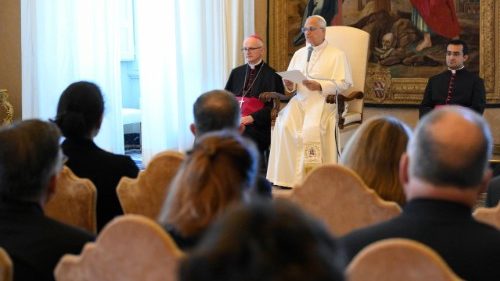
Vatican, June 26, 2026: By encouraging the pursuit of truth, standing close to those on the margins and accompanying young people, while also working to safeguard the environment, colleges and universities become significant spaces for addressing the challenges confronting humanity today, Pope Leo XIV said on Thursday, June 25.


“Your institutions are called not only to teach your students about the injustices faced by those on the margins of society, but also to be powerful channels in promoting systemic change through proposing new models rooted in solidarity and the common good,” the Pope said during a meeting at the Vatican with presidents and representatives of Jesuit colleges and universities in North America.
In his address, Pope Leo outlined a path through which these institutions can assist their communities in responding to society’s most urgent concerns.


The Pope drew inspiration from the Jesuits’ four Universal Apostolic Preferences, themes introduced in 2019 to guide the mission of the Society of Jesus over a ten-year period.
The Preferences are: showing the way to God, walking with the excluded, journeying with youth, and caring for our common home.
An age of epochal change
Pope Leo XIV opened his address by referring to the “multitude of challenges facing humanity today” in what “has been called an age of epochal change.”
He pointed out that societies are becoming increasingly secularised, “with many seeking to push any mention of God out of the public sphere and beyond popular culture,” while political systems often fail to respond to the “cry of the poor, migrants, and those whom the world considers to be outcasts.”
The Pope stressed that many young people lack hope for a brighter future and observed that the planet’s resources are frequently exploited for individual interests.
He also highlighted the increasing influence of artificial intelligence on humanity.
In this context, he said the Jesuits’ four Universal Apostolic Preferences can help in responding to these concerns.
Speaking about the theme of walking with the poor, the Pope emphasised its importance “in a time when record numbers of our brothers and sisters are living in poverty.”
He noted that many people are compelled to leave their homes because of war, religious or political persecution, hunger, or climate change.
The Pope insisted that Jesuit higher education institutions are called not only to advance solidarity and the common good, but also “to offer opportunities for immigrants, refugees, and those of a lower socio-economic status to have the benefit of an advanced education.”
“In this way, they will be able to integrate more fully into the societies in which they live as well as enrich the wider student bodies with their diverse experiences and perspectives,” he continued.
The negative and positive consequences of AI
Although artificial intelligence is not specifically included among the Jesuits’ Preferences, the Pope also reflected on its impact, noting that colleges and universities can play a unique role in addressing both the negative and positive consequences of this technological development.
He explained that these institutions can provide a “fresh impetus to the principles of the Church’s Social Doctrine “in a way that will be relevant and effective in addressing the digital revolution.”
Create hope in young peopl
Referring to the theme of accompanying young people, the Pope stressed that colleges and universities are natural settings for nurturing hope in a better future.
He observed that students often begin their academic journeys with enthusiasm and idealism and, through their studies and relationships, discover a renewed sense of hope in transforming the world for the better.
“I invite you to continue to foster that sense of hope among those in your communities through opportunities for dialogue, service, and prayer, remembering always that the resurrection of Christ is the ultimate source of hope and that with him all things are possible,” the Pope said.
In caring for creation, lead by example
Turning to the theme of caring for creation, Pope Leo encouraged Jesuit-run institutions to “instruct by example, and not solely in theory,” particularly in light of climate change and “the exploitation of resources by a few at the expense of the common good.”
“I encourage you to persevere with your efforts to educate those on your campuses regarding these current dangers, but also to let your communities be examples of ecological sustainability, simplicity, and gratitude for God’s gifts,” he said.
Those who seek the truth seek God
Addressing the theme of showing the way to God, the Pope remarked that “those who conduct research, those who pursue studies, and those who seek the truth are ultimately seeking God, whether they realize it or not.”
He underlined the importance of building academic communities where members can come to know “the One who is Truth,” while responding to the growing spiritual hunger among young people.
In this regard, the Pope urged Jesuits to promote broader participation in the Spiritual Exercises, which can also provide discernment in making important decisions.
The Pope concluded his speech by calling on the Society of Jesus, with the guidance of their founder St. Ignatius of Loyola, to “continue the Jesuit tradition” of forming those entrusted to their care “to be ‘men and women for others’.”
Courtesy: Vatican News




© 2026 CATHOLIC CONNECT POWERED BY ATCONLINE LLP