- 26 June, 2026

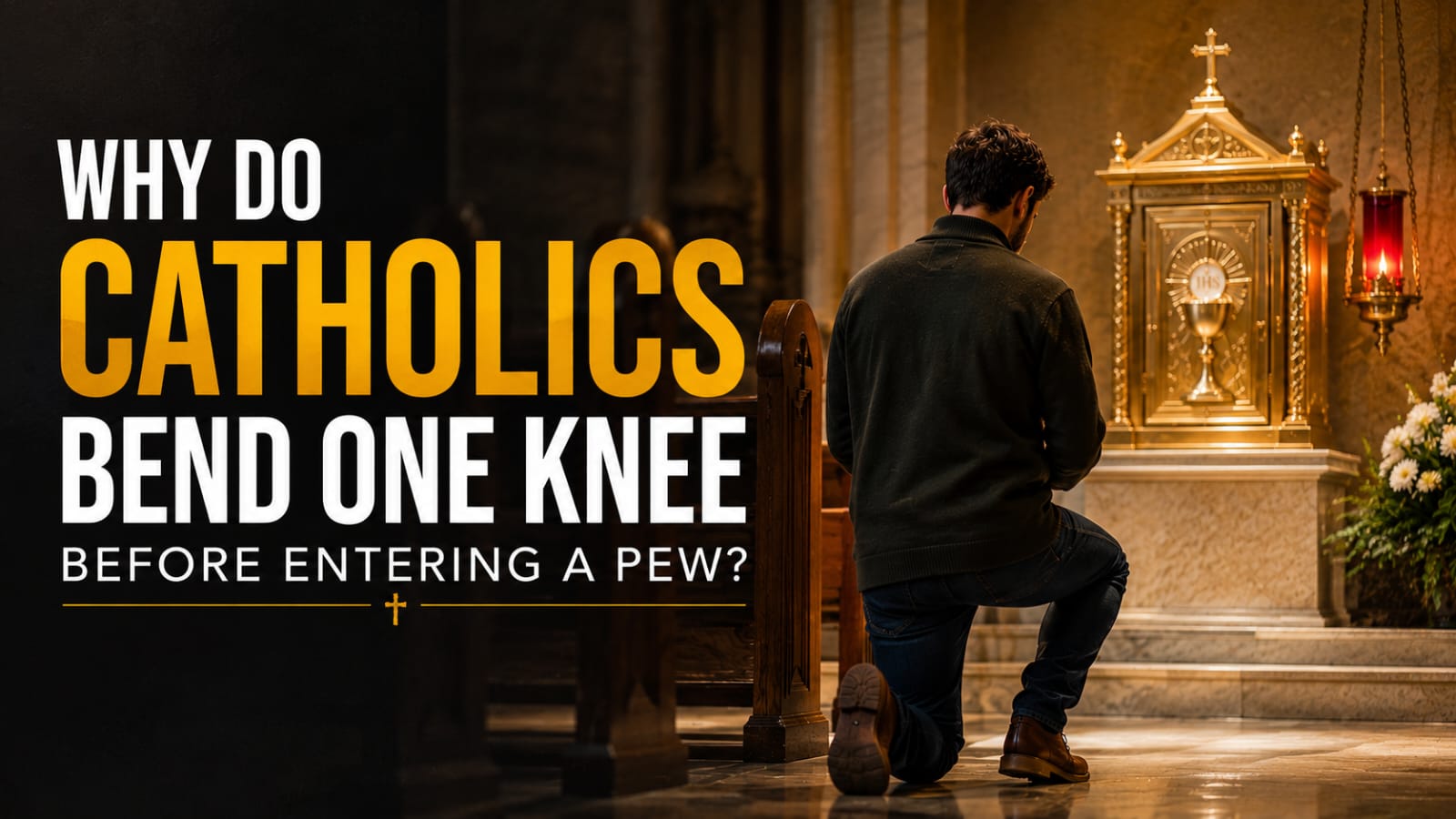
June 26, 2026: Have you ever noticed Catholics bend one knee before entering their pew? Why do they do it? Why is it always the right knee? When did this practice begin—and why do fewer Catholics seem to observe it today? The answer lies in a centuries-old gesture called genuflection.


Derived from the Latin words genu (knee) and flectere (to bend), it literally means "to bend the knee." Though it lasts only a second, genuflection is one of the Church's most profound acts of reverence, expressing the Catholic belief that Jesus Christ is truly present in the Eucharist.
More Than Just Bending a Knee
Genuflection is the act of bending the right knee before entering or leaving a pew in a Catholic church where the Blessed Sacrament is reserved in the tabernacle. Catholics do this because they believe the consecrated Eucharist is not merely a symbol but the true Body, Blood, Soul and Divinity olf Jesus Christ. Before taking their place, they pause to acknowledge His presence in a silent act of adoration.


The Church explains its meaning in the General Instruction of the Roman Missal: "A genuflection, made by bending the right knee to the ground, signifies adoration." (GIRM 274)
Why the Right Knee?
Why the right knee and not the left? While the Church does not assign a separate theological meaning to the right knee itself, it has long prescribed it as the customary gesture of offering the highest form of reverence to Christ present in the Blessed Sacrament.
The practice also has deep biblical roots. The Psalmist invites believers, "Come, let us bow down in worship, let us kneel before the Lord our Maker" (Psalm 95:6), while St. Paul writes that "at the name of Jesus every knee should bend" (Philippians 2:10). Christians have knelt in prayer since the earliest centuries of the Church, and as devotion to the Eucharist grew during the Middle Ages, genuflection became the Church's distinctive act of adoration.
When Catholics Bow Instead
Catholics genuflect only when the Blessed Sacrament is present in the tabernacle because the tabernacle houses Christ's true presence in the Eucharist.
If there is no tabernacle in the church, or if the Blessed Sacrament is not reserved there—such as during parts of the Sacred Paschal Triduum—the appropriate gesture is a profound bow toward the altar.
The distinction is important. Catholics bow to the altar because it symbolises Christ and is the place where the Eucharistic sacrifice is celebrated. They genuflect before the tabernacle because it contains the Blessed Sacrament—the true presence of Christ. Those who cannot genuflect because of age or illness may make a respectful bow instead.
(CLICK HERE to follow Catholic Connect for regular News and Content)
A Forgotten Act of Faith
For generations, genuflection was second nature to Catholics entering a church. Today, however, the practice is becoming less common, and many have forgotten its meaning.
Yet this quiet gesture continues to speak volumes. In a movement lasting barely a second, Catholics profess with their bodies what they believe in their hearts: that Christ is truly present in the Eucharist. It is a simple tradition, but one that continues to invite every believer to pause, adore and remember.
By Catholic Connect Reporter






© 2026 CATHOLIC CONNECT POWERED BY ATCONLINE LLP