- 15 June, 2026

Gulf of Oman, June 14 2026: The deaths of three Indian seafarers after a US military strike in the Gulf of Oman have triggered deep concern in India and raised serious questions about the safety of civilian sailors caught in escalating geopolitical conflicts.


The incident, which involved a commercial vessel targeted during US operations in the region, has led the Indian government to formally protest with Washington. New Delhi has questioned the justification behind the attack, stressing that commercial shipping carrying civilian crew members must not become a casualty of military action.
The deaths have not only caused grief among the families of the sailors but have also intensified debate over the protection of international maritime workers operating in increasingly dangerous waters.
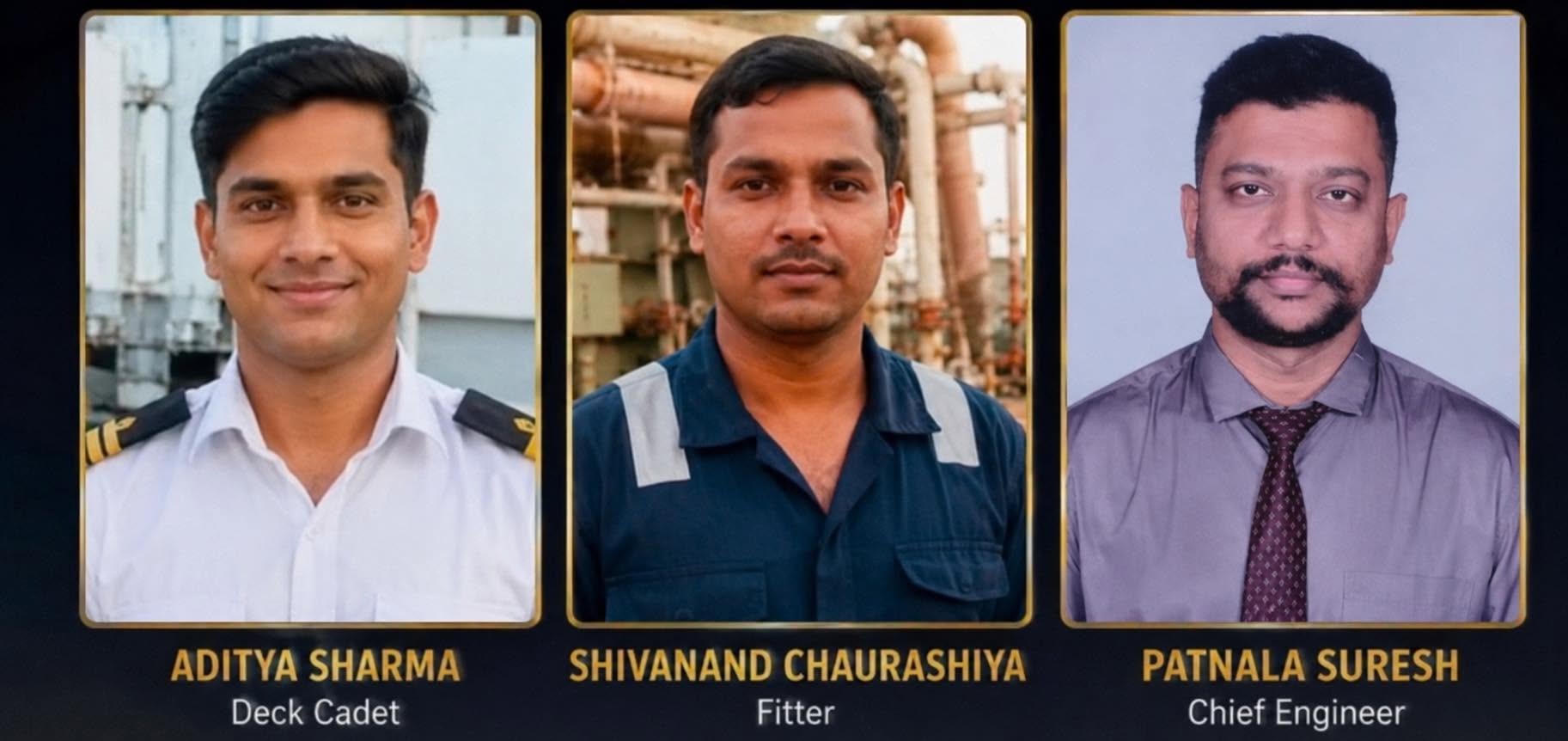
The three Indian sailors killed in the strike have been identified as Aditya Sharma, Shivanand Chaurasiya, and Patnala Suresh. They were serving aboard the commercial vessel MT Settebello when the ship was struck in the Gulf of Oman.


The attack resulted in the deaths of the three Indian crew members, while other sailors aboard the vessel were rescued. Their loss has left their families demanding answers about what happened, why the vessel was targeted and whether sufficient measures were taken to protect civilian lives.
Reports indicated that the victims were ordinary maritime workers carrying out their professional duties in one of the world’s most strategically sensitive shipping regions.
For their families, the incident has become a painful reminder that global conflicts often have consequences far beyond battlefields. Sailors, traders and transport workers can become vulnerable even while operating outside direct combat zones.
A family of one of the deceased sailors from Himachal Pradesh has reportedly sought a detailed investigation, raising concerns about the circumstances surrounding the attack and the response following the incident.
The deaths prompted immediate diplomatic action from New Delhi. External Affairs Minister S. Jaishankar raised the issue with US Secretary of State Marco Rubio, formally expressing India’s objection to the attack.
India’s position was that military action resulting in civilian deaths aboard commercial vessels could not be considered acceptable without clear justification and accountability.
The government also summoned a senior US diplomatic representative in India as part of its protest, reflecting the seriousness with which New Delhi viewed the deaths of its citizens.
The incident has created a difficult diplomatic situation between two countries that have strengthened strategic cooperation in recent years, particularly in areas such as defence, technology and regional security.
However, India has maintained that strong partnerships must also include respect for civilian safety and international maritime law.
Following the deaths, the Indian government assured support for the families of the three deceased sailors.
Union Shipping Minister Sarbananda Sonowal said that the government stood with the bereaved families and that necessary assistance would be provided to the next of kin.
Reports stated that an ex-gratia compensation of ₹10 lakh for each deceased sailor’s family was announced as relief support.
The families have also sought clarity on long-term support, accountability for the incident and a detailed investigation into the circumstances that led to the deaths.
India is one of the world’s largest sources of maritime workers, with thousands of Indian sailors serving on commercial vessels across international waters. Their contribution supports global trade networks, but their profession often places them in areas affected by political tensions and military confrontations.
The Gulf region is especially important for international shipping because of its proximity to major energy routes. Any military escalation in these waters can immediately affect commercial vessels and their crews.
The deaths of the three Indian sailors have renewed calls for stronger international safeguards to protect merchant ships during periods of conflict.
Maritime experts argue that clear communication between military forces and commercial shipping operators is essential to prevent civilian casualties.
Following the strike, attention has turned towards establishing the facts surrounding the attack.
Key questions remain:
India has called for transparency, while families of the victims have sought a full investigation into the circumstances surrounding the tragedy.
International maritime organisations and governments will be closely watching developments, as the incident could influence future discussions on protecting civilian shipping in conflict zones.
The deaths of the three Indian sailors highlight a growing challenge in modern conflicts — the increasing difficulty of separating military operations from civilian life.
Commercial ships, humanitarian workers and ordinary citizens often operate near regions of strategic importance. When tensions rise, the consequences can reach people who have no involvement in political or military disputes.
The Gulf of Oman has witnessed increasing security concerns in recent years, making maritime safety a major international issue.
For India, the incident is not only about diplomacy but also about protecting the lives and dignity of its citizens working overseas.
The deaths of Aditya Sharma, Shivanand Chaurasiya and Patnala Suresh in the Gulf of Oman have created grief for families and a serious diplomatic challenge for governments involved.
India’s response reflects a demand for accountability and a reminder that civilian lives must remain protected even during periods of military confrontation.
While financial assistance has been announced for the victims’ families, questions remain about responsibility, investigation and stronger protections for Indian seafarers working in dangerous regions.
As investigations continue, the focus must remain on uncovering the truth, supporting the affected families and ensuring stronger safeguards for seafarers worldwide.
The oceans connect nations through trade and cooperation. They should not become places where innocent workers pay the price for conflicts they did not create. The loss of these three Indian sailors must strengthen international efforts to ensure that commercial shipping remains protected, and that every sailor returning home has the right to safety.
By Catholic Connect Reporter
Picture Courtesy : Marine Guru
© 2026 CATHOLIC CONNECT POWERED BY ATCONLINE LLP