- 15 June, 2026

June 15, 2026 : For generations of Catholic families across Britain and beyond, the home was more than a place of comfort and shelter — it was a small sanctuary where faith was lived every day. One of the most beautiful expressions of this domestic devotion was the enthronement of the Sacred Heart of Jesus, a solemn ceremony in which families welcomed Christ as the spiritual King of their household.


In many Catholic homes, especially during the late 19th and early 20th centuries, a blessed image of the Sacred Heart held a special place in the family room. It was not simply a religious picture hanging on a wall; it was a visible reminder that Jesus was present in the joys, struggles, celebrations and sorrows of family life.
Through enthronement, families publicly dedicated their homes, relationships and daily routines to the loving heart of Christ. The home became what many called a “domestic church” — a place where prayer, forgiveness, compassion and faith could grow.
(CLICK HERE to follow Catholic Connect for regular Catholic News & Content)


The tradition developed from the revelations of Jesus to St Margaret Mary Alacoque in 17th-century France, where Christ revealed His Sacred Heart as a symbol of His burning love for humanity. Among the promises associated with this devotion was the assurance that homes where the image of His Sacred Heart was honoured would receive His blessings.
Over time, this practice travelled across Catholic communities, becoming a treasured family tradition that connected generations through prayer and devotion.
The enthronement ceremony was a deeply meaningful event, carefully prepared by the whole family. It was not treated as an ordinary blessing but as a moment when the household openly placed itself under the loving care of Jesus.
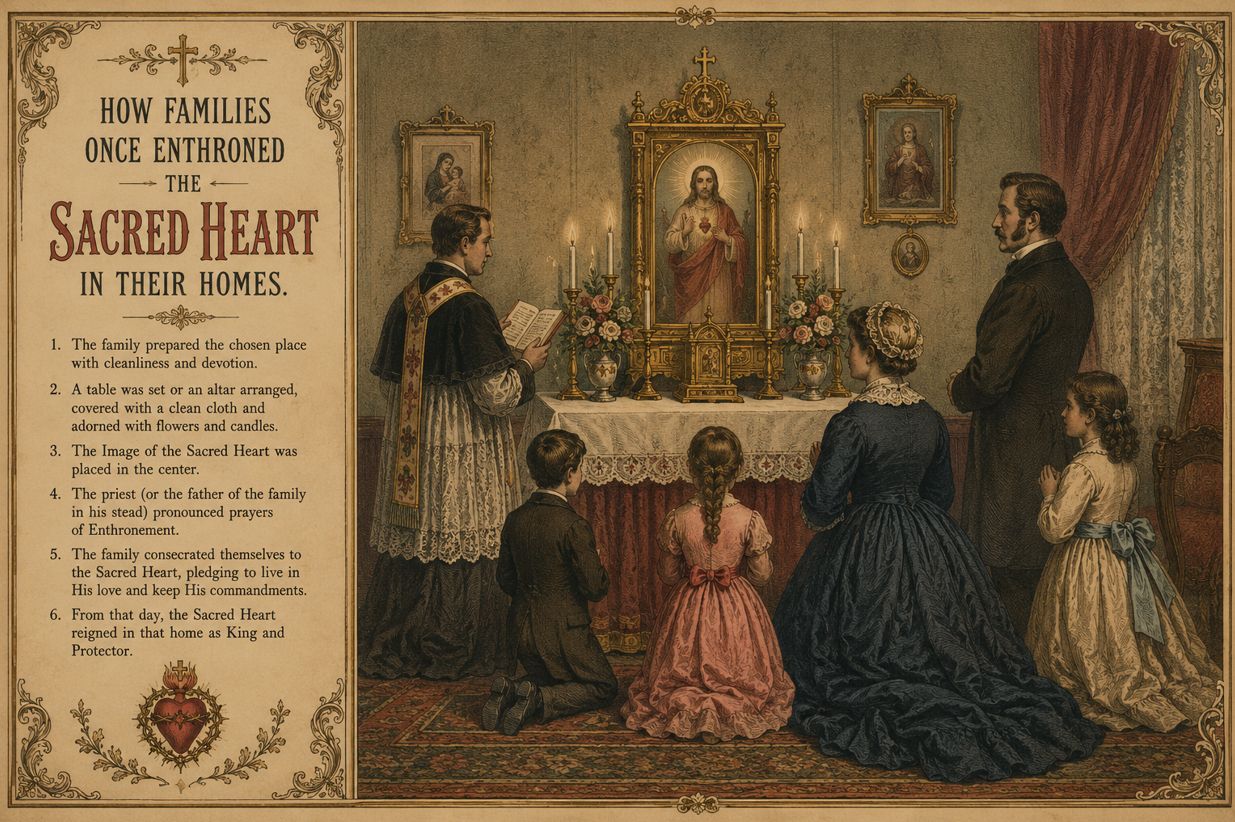
Before the priest arrived, families prepared both their homes and their hearts. A special place was chosen, often above the fireplace, in the sitting room, or on a dedicated prayer wall. This “throne” was decorated with a white cloth, candles, flowers and holy water, creating a beautiful setting worthy of the occasion.
Many families also surrounded the image with reminders of their family story. Photographs of loved ones, including those who had passed away, marriage certificates and treasured family memories were placed nearby. This symbolised that every member of the family — past, present and future — was included in Christ’s loving protection.
The spiritual preparation was equally important. Families often attended Mass together beforehand and received Holy Communion, preparing themselves to make a sincere commitment to Christ.
During the ceremony, usually led by a parish priest, the image of the Sacred Heart was blessed and carried into the home. The family welcomed it with reverence before placing it in its honoured position.
The head of the household traditionally installed the image, followed by prayers of dedication. The family recited the Apostles’ Creed and made an Act of Consecration, offering their home, work, friendships and relationships to the mercy and love of Jesus.
The enthronement of the Sacred Heart reflected an important part of Catholic family culture in Britain. At a time when many families centred their lives around the church calendar, household prayer and shared religious customs, the Sacred Heart image became the spiritual heart of the home.
The practice strengthened the connection between parish life and family life. The parish priest entering the home represented a bridge between the wider Catholic community and the individual household. Faith was not limited to Sunday Mass; it became part of everyday living.
The Sacred Heart also gave families a shared identity. Generations gathered around the same image to pray, celebrate feast days and seek comfort during difficult moments. Children grew up seeing the Sacred Heart as a symbol of love, protection and belonging.
In many British Catholic homes, the image became part of the landscape of family memories — alongside wedding photographs, treasured furniture and heirlooms passed from parents to children.
The enthronement ceremony also reflected a wider cultural belief that the home itself could be a place of holiness. The ordinary routines of cooking, raising children, welcoming guests and supporting one another were understood as opportunities to live out Christian love.
At its heart, enthronement was an act of devotion. Families were not simply displaying a religious image; they were making a commitment to allow Christ’s love to guide their lives.
The Sacred Heart represented the compassion and mercy of Jesus — a heart open to humanity’s suffering and filled with unconditional love. For families facing illness, financial hardship, bereavement or uncertainty, the image offered a reminder that they were never alone.
The devotion was closely connected with the Twelve Promises of the Sacred Heart, which encouraged Catholics to trust in Christ’s love and seek spiritual strength through prayer and faith.
Daily life often included prayers before the image, especially morning and evening prayers, family rosaries, thanksgiving and prayers for those in need. The Sacred Heart became a place where families brought their hopes and fears.
For many Catholics, enthronement also encouraged forgiveness within the family. By placing Jesus at the centre of the home, family members were reminded to practise patience, kindness and reconciliation.
Throughout Catholic history, many families have shared stories of comfort, healing and spiritual renewal connected with Sacred Heart devotion.
Some families have spoken of experiencing unexpected peace during times of illness after gathering together in prayer before the Sacred Heart image. Others have remembered how the devotion helped families remain united during wars, economic struggles and personal tragedies.
During periods such as the First and Second World Wars, many Catholic households looked to the Sacred Heart as a source of hope. Families placed photographs of loved ones serving overseas near their sacred images, praying for their protection and safe return.
Although individual experiences of miracles and answered prayers vary, the enduring story of the Sacred Heart devotion is one of faith sustaining families through challenging times.
For many older Catholics, the memory of a Sacred Heart image in the family home carries a powerful sense of nostalgia.
It recalls evenings when families gathered together for prayer, grandparents passing down traditions, children learning simple prayers and homes filled with the familiar rhythms of Catholic life.
The Sacred Heart was often part of important family moments — baptisms, marriages, anniversaries and times of mourning. It witnessed generations growing, changing and returning to faith.
The ceremony itself was often followed by a joyful family gathering. Relatives and friends would share a meal, enjoy special desserts and exchange stories. The enthronement was not remembered as a strict religious duty but as a celebration of love, family and belonging.
For many people today, memories of these homes represent a time when faith was woven naturally into everyday life.
Although many households no longer practise enthronement as previous generations did, the message behind the tradition remains deeply relevant.
Modern families still face many challenges: loneliness, uncertainty, busy lifestyles and the search for meaning. The Sacred Heart devotion offers a simple reminder that homes can once again become places of prayer, peace and connection.
Reintroducing the Sacred Heart into the home does not require a complicated ceremony. A family can begin with a blessed image, a moment of prayer and a sincere desire to welcome Christ into daily life.
For Catholics who have drifted away from regular practice, enthroning the Sacred Heart can be a gentle way to reconnect with the faith of their parents and grandparents. It can become a meaningful step back towards prayer, community and a deeper relationship with Jesus.
The enthronement of the Sacred Heart was never only about placing an image on a wall. It was about placing love, mercy and faith at the centre of family life.
For generations of Catholic families, the Sacred Heart reminded them that Christ belonged not only in churches but also in kitchens, living rooms and family conversations. It transformed ordinary homes into places where faith could be nurtured and shared.
Today, families can rediscover this beautiful tradition as a source of hope and renewal. By welcoming the Sacred Heart once more, households can create spaces where prayer returns, relationships are strengthened and the love of Christ becomes a daily presence.
A forgotten tradition can become a renewed blessing — bringing the warmth of faith back into the heart of the home.
By Catholic Connect Reporter
© 2026 CATHOLIC CONNECT POWERED BY ATCONLINE LLP