- 15 June, 2026

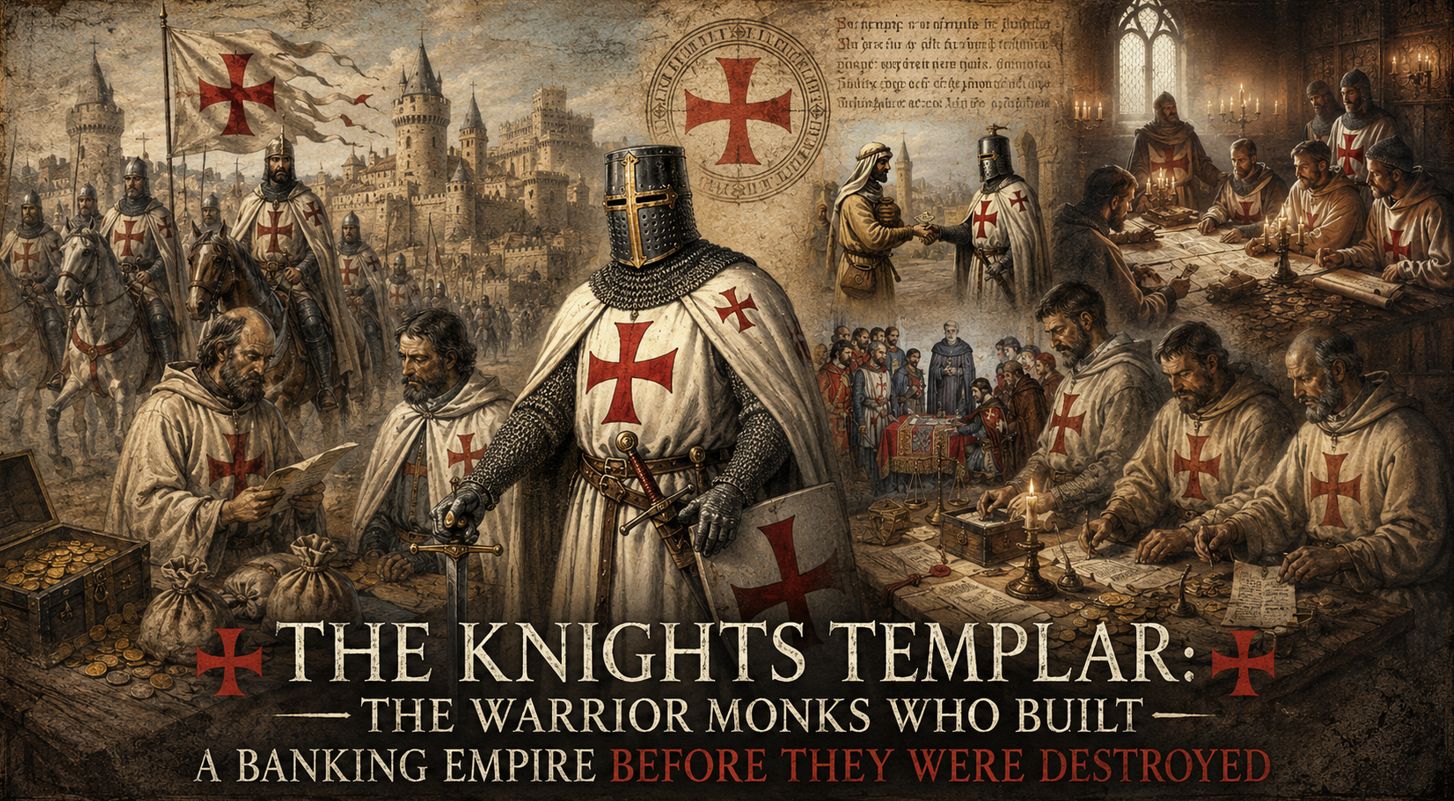
June 15, 2026: The story of the Knights Templar is one of the most fascinating chapters of medieval history. They were warriors, monks, protectors of pilgrims, and administrators of one of the most advanced financial systems of their time. Founded during the religious conflicts of the Middle Ages, the Knights Templar rose from a small group of devoted knights into a powerful international organization with wealth, influence, and a financial network that helped shape the foundations of modern banking.


Their rise was connected to faith, courage, and service, but their fall was caused by political fear, financial rivalry, and accusations that destroyed their reputation. Although the order disappeared more than 700 years ago, many of their ideas about money transfer, security, record keeping, and international finance continued to influence future generations.
The Knights Templar was founded around 1119 in Jerusalem after the First Crusade. Their original purpose was to protect Christian pilgrims traveling to the Holy Land. These journeys were dangerous because travelers faced attacks from bandits and hostile forces. A group of knights, led by Hugh de Payens, created a religious military order that combined the lifestyle of monks with the duties of soldiers.


The Templars followed strict religious rules based on discipline, obedience, and devotion. They lived simply, prayed regularly, and dedicated their lives to defending Christianity. Their combination of religious commitment and military skill made them highly respected throughout Europe.
As their reputation grew, European nobles, kings, and ordinary believers donated land, money, and resources to support their mission. The order quickly expanded across Europe and the Middle East.
They established castles, farms, churches, and administrative centers. Their wealth allowed them to maintain armies and provide assistance during the Crusades.
The Templars became one of the most powerful organizations of the medieval world because they combined spiritual dedication with efficient management and international cooperation.
(CLICK HERE to follow Catholic Connect for regular Catholic News & Content)
Before the Templars developed their financial methods, long-distance money movement was difficult and dangerous. Medieval travelers often had to carry gold and silver coins with them when traveling. This created serious risks because roads were unsafe, and travelers could be robbed or lose their wealth.
Merchants and pilgrims needed a safer way to access money in different locations. Early financial activities existed through money changers and merchants, but there was no widespread system that allowed people to securely transfer wealth across large distances.
The problem became especially important for pilgrims traveling from Europe to Jerusalem. Carrying enough money for a long journey was risky, but having no money upon arrival created difficulties. The Templars developed solutions that helped solve this problem.
The Knights Templar created one of the earliest organized international financial networks. Their system worked through their many locations across Europe and the Middle East. A traveler could deposit money at a Templar location in one country and receive access to funds at another location.
Instead of carrying large amounts of gold, a pilgrim could use written documents that confirmed their financial resources. These documents functioned similarly to early forms of banking notes. The Templars kept detailed records, verified identities, and maintained communication between their different branches.
Their financial system included several important ideas that resemble modern banking:
The Templars were not a modern bank in the same way as today’s financial institutions, but their methods represented an important development in financial organization. Their success demonstrated the importance of trust, documentation, and secure systems in managing wealth.
The success of the Templars brought enormous wealth and influence. They owned large estates, controlled valuable resources, and became financial advisors to European rulers. Monarchs sometimes borrowed money from them, and their financial expertise made them an important part of medieval society.
However, their growing power also created enemies. Some rulers admired the Templars, while others viewed them as a threat. Their independence, wealth, and military strength placed them in a unique position between the Church, governments, and economic institutions.
Power brought success, but it also created vulnerability.
The downfall of the Knights Templar began in the early 14th century. One of their greatest enemies was King Philip IV of France, who owed significant debts to the order. Seeking financial relief and greater control, Philip moved against the Templars.
On October 13th, 1307, many Templars in France were arrested. They were accused of crimes including heresy and corruption. Many historians believe that the accusations were politically motivated and connected to the king’s desire to eliminate a powerful organization.
The Templars faced trials, imprisonment, and torture. In 1312, Pope Clement V officially dissolved the order. In 1314, the last Grand Master of the Knights Templar, Jacques de Molay, was executed.
The fall of the Templars showed how political conflicts could destroy even the most powerful institutions. Their disappearance ended their military role, but their financial ideas continued to influence Europe.
The financial practices developed by the Templars helped inspire later banking systems. Their emphasis on written records, secure transactions, and international financial communication became important principles in European commerce.
Later banking families and financial organizations continued developing these concepts. The idea that money could move safely through trusted networks became essential for global trade and modern financial institutions.
The Templars demonstrated that successful financial systems depend not only on wealth but also on organization, reliability, and public confidence.
The history of the Knights Templar provides valuable lessons for modern life. Their success teaches the importance of discipline, teamwork, responsibility, and innovation. They created solutions to problems by combining knowledge, organization, and service.
Their story also reminds us that power must be handled carefully. Organizations that become successful must maintain honesty, accountability, and humility.
The Templars’ fall shows that reputation and trust are among the most valuable assets any institution can possess.
In everyday life, their example encourages people to develop strong values, manage resources wisely, support communities, and use knowledge to create positive change.
The Knights Templar represent a significant example of how Catholic figures, events, values, and traditions influenced the course of history. Their commitment to faith, service, charity, discipline, and protection of others shaped their mission and helped them create systems that affected society far beyond the medieval period.
Although the Templars experienced a dramatic rise and a tragic fall, their contributions to organization, finance, and international cooperation remain historically important. Their story demonstrates that religious communities and cultural movements can influence not only spiritual life but also politics, economics, and human progress.
The legacy of the Knights Templar reminds us that history is shaped by people who combine beliefs with action. Their journey from warrior monks to pioneers of early banking shows how values, innovation, and dedication can leave an impact that continues for centuries.
Courtesy BBC News
© 2026 CATHOLIC CONNECT POWERED BY ATCONLINE LLP