- 25 August, 2026

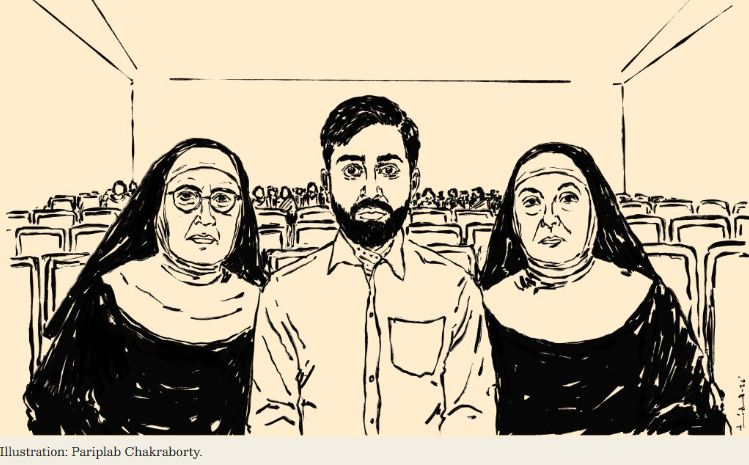
AJMER, August 24, 2026: In the social landscape of 1970s India, where opportunities for young men and women to meet informally were limited, two young masters at Mayo College, Ajmer, devised what they believed was an ingenious plan to bridge the divide between the all-male school and Sophia College, an institution run by French nuns.


What they did not anticipate was that the women religious who ran Sophia College had their own plans — and a far better understanding of the situation.
Journalist and author Rahul Bedi recalls the episode from his years as an assistant master at Mayo College. His account is less a story of youthful mischief than a charming portrait of the quiet authority, discretion and strategic intelligence of the French nuns who ran Sophia College.


A Schoolmaster’s Social Strategy
Mayo College in the 1970s was a world of imposing buildings, traditional routines and a distinctly male culture. For young, unmarried teachers, social opportunities beyond the college were limited.
Bedi’s friendship with Howard Solverson, a young Canadian volunteer known as Howie, soon provided companionship — and an accomplice in their search for a wider social life.
Solverson had arrived in India through Canadian Crossroads International, a volunteer organisation that sent young Canadians abroad for educational and community work. Tall and lanky, with a drooping moustache and a guitar in hand, he was known for performing folk and country songs.
The two young men eventually turned their attention to Sophia College, then located on the outskirts of Ajmer.
They understood that a direct social approach would hardly fit the conventions of the time. So they devised a more respectable route: an educational and cultural collaboration.
The Mother Superior Welcomes Them
The two visited Sophia College and were received warmly by the Mother Superior, who personally showed them around the campus and hostel.
The welcome encouraged them.
They soon proposed a joint theatrical production involving students from Mayo College and Sophia College. The idea had a legitimate educational basis. Mayo’s theatrical productions traditionally involved boys playing female roles, and Bedi and Solverson argued that involving Sophia students would add an authentic dimension to the performances.
The proposed play was Charley’s Aunt, a Victorian comedy built around disguise, romance and mistaken identities.
The young masters presented the proposal with an air of educational seriousness. Copies of the play were sent to Sophia, accompanied by explanations of its cultural and educational value.
When the Mother Superior indicated that the proposal appeared acceptable in principle, the two men believed they had succeeded.
But the nuns had evidently understood the situation rather differently.
A Different Invitation
Instead of proceeding immediately with the play, the Mother Superior invited Bedi and Solverson to spend an evening at Sophia entertaining the students with songs.
There was one conspicuous omission: Charley’s Aunt was not mentioned.
The two young men nevertheless accepted the invitation enthusiastically.
It was, in their view, an opportunity to meet the students in a relaxed setting.
They were about to discover how carefully the evening had been planned.
The Nuns Take Control
When the two arrived at Sophia, they were received with courtesy and offered soup and bread before being taken to the hostel common room.
The students gradually entered.
For a moment, everything appeared to be going according to plan.
Then the seating arrangement became clear.
The students were seated several rows behind the visitors, with a wide expanse of empty chairs separating them. Solverson was directed towards a small stage at the far end of the room with his guitar.
Bedi was placed in the front row — surrounded by nuns.
The Mother Superior remained close by, supervising the proceedings.
There was nothing improper about the arrangement. There was also no possibility of the informal interaction the two young masters had hoped for.
The nuns had achieved the result without issuing a prohibition or causing embarrassment.
Even the Songs Were Screened
The nuns’ supervision did not end with the seating.
Some of Solverson’s planned songs were quietly judged unsuitable for the occasion. His repertoire was consequently reduced to a more appropriate selection.
He sang.
Bedi listened and applauded.
The students watched.
The evening proceeded with impeccable decorum.
And then it ended.
There was no confrontation. No stern rejection of the theatrical proposal. No explicit discussion of the young men’s motives.
There was simply no Charley’s Aunt.
The proposed collaboration quietly disappeared.
A Masterclass in Quiet Authority
In Bedi’s recollection, the episode became a humorous lesson in youthful confidence and the effectiveness of experienced leadership.
The two young masters had believed they were cleverly presenting a social ambition as an educational initiative. The French nuns, however, appear to have recognised the underlying intention without needing to challenge it openly.
Their response was neither dramatic nor authoritarian.
Instead, they used hospitality, courtesy, supervision and organisation to ensure that the evening remained exactly what they wanted it to be.
The students were safe, the visitors were treated respectfully, the evening remained pleasant — and the intended social encounter never materialised.
The nuns had outmanoeuvred the two young men without humiliating them.
The Memory Endures
For Bedi, the incident remained one of the memorable episodes of his Mayo College years — a story of youthful optimism meeting mature discretion.
Solverson eventually returned to Canada with his guitar, while Bedi went on to build a career in journalism.
The episode also offers a glimpse into the distinctive role played by women religious in educational institutions in India. Behind the formal discipline of schools and colleges was often a quiet but formidable administrative authority exercised by women who knew their students, understood their surroundings and could handle delicate situations without unnecessary confrontation.
The two young masters may have arrived in Ajmer believing they had devised the perfect strategy.
The Mother Superior and her fellow nuns simply allowed them to discover otherwise.
Courtesy : The Wire (Rahul Bedi)
Picture Courtesy : Pariplab Chakraborty





© 2026 CATHOLIC CONNECT POWERED BY ATCONLINE LLP