- 24 August, 2026
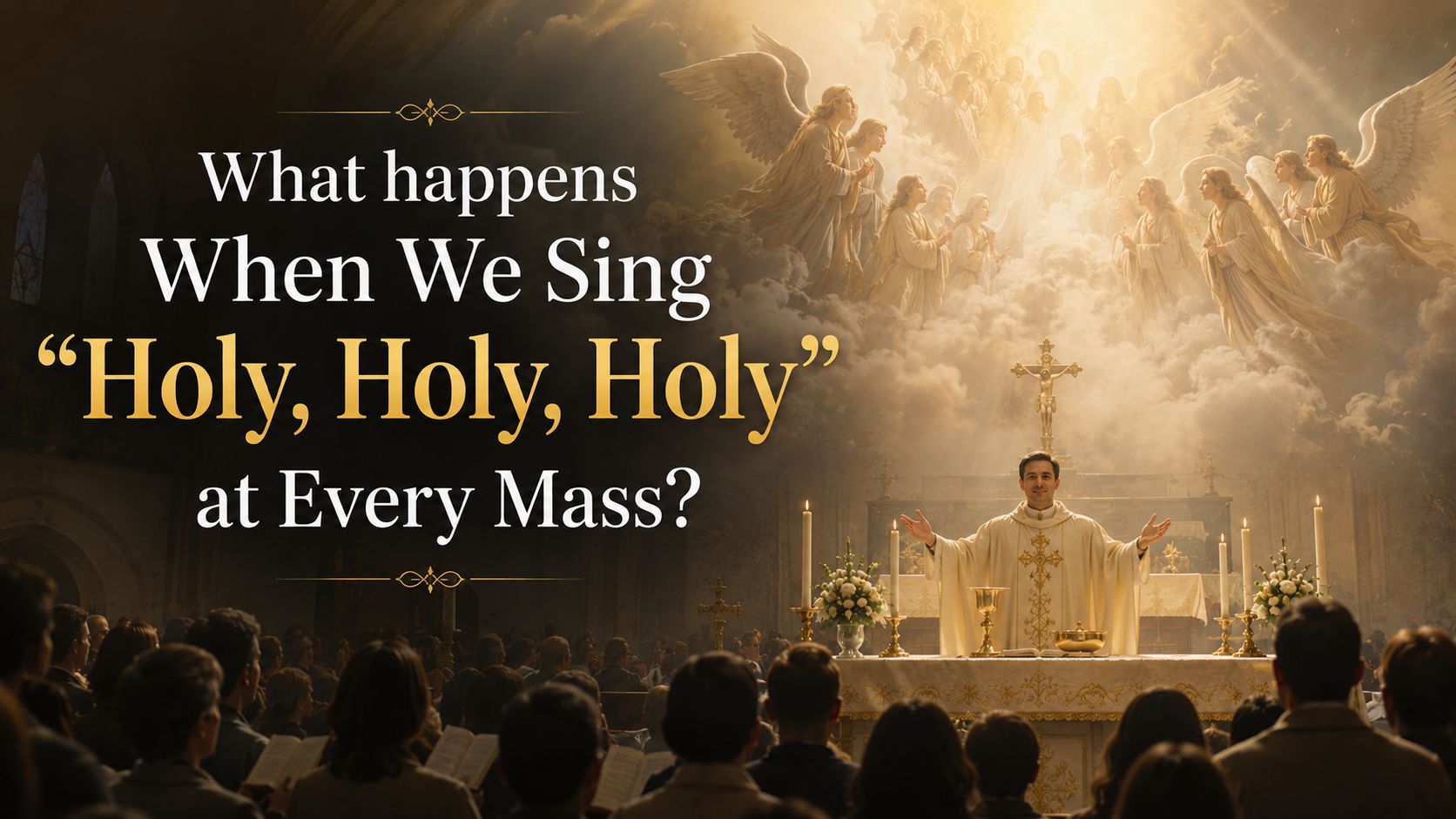
August 24, 2026: Imagine someone announcing that there is a place where human beings and the angels of heaven come together and sing in one voice. Wouldn’t people flood to that place? Wouldn’t we want to see it for ourselves — to stand there and hear heaven and earth praising God together?

What if I told you that you don’t have to travel anywhere to witness it? It happens at every Mass. Right there in your parish church.
When we listen carefully to what the priest says just before the “Holy, Holy, Holy.” He invites us to join “with Angels and Archangels, with all the company of heaven” in singing God’s glory. And then we sing: “Holy, Holy, Holy Lord God of hosts...” For many of us, these words have become so familiar that we simply repeat them out of habit. But stop for a moment: what are we actually doing?

We are joining the worship of heaven. The Sanctus is not simply another hymn inserted into the Mass. It is an integral part of the Eucharistic Prayer, in which the congregation joins the heavenly powers in praising God.
(Click Here to follow Catholic Connect for regular News and Content)
Why do we say “Holy” three times?
The words come from Isaiah’s vision of heaven. The seraphim surrounding God proclaim: “Holy, holy, holy is the Lord of hosts” (Isaiah 6:3).
The threefold repetition emphasises the absolute holiness and majesty of God. It can also remind Christians of the Trinity, though its primary biblical meaning is the overwhelming holiness of God. The same threefold acclamation appears in the heavenly worship described in Revelation. ([USCCB][2])
But here is something else to think about: Can we simply sing any hymn containing the words “Holy, Holy, Holy” at this point in the Mass? No. The Sanctus is not merely a hymn chosen because it sounds beautiful. It is a specific liturgical acclamation within the Eucharistic Prayer, rooted in Scripture and the Church’s liturgical tradition.
So when the priest says we are joining the angels and all the company of heaven, he is not merely using poetic language. He is telling us what the liturgy is doing. And then we actually join in.
What does “Hosanna in the highest” mean?
Then comes another phrase we can easily sing without thinking: “Hosanna in the highest.”
The Hebrew expression behind “Hosanna” is an urgent plea meaning “O Lord, save us, please” or “O Lord, grant salvation.” It later became an expression of joyful praise and acclamation. That is why the crowds cried “Hosanna to the Son of David!” when Jesus entered Jerusalem (Matthew 21:9). Their cry combined joyful welcome with a longing for salvation.
The Mass follows it with: “Blessed is he who comes in the name of the Lord.”
These words come from Psalm 118 and were used by the crowds welcoming Jesus. At Mass, they become our joyful acclamation of Christ as we enter more deeply into the Eucharistic mystery. The official text of the Mass preserves both “Hosanna in the highest” and “Blessed is he who comes in the name of the Lord.”
So “Hosanna in the highest” is more than a simple expression of praise. It carries a cry for salvation and the joy of recognising the One who comes to save.
The Sanctus therefore moves from God’s holiness, to His glory filling heaven and earth, to our cry for salvation, and finally to Christ who comes in the name of the Lord.
The next time the priest says that we are joining “with Angels and Archangels, with all the company of heaven,” listen. And when you sing “Holy, Holy, Holy,” don’t let familiarity make the moment ordinary.
You are joining your voice to the worship of heaven. Perhaps that is why the Sanctus deserves our attention, our wonder and our wholehearted participation. Because when we realise what we are singing, “Holy, Holy, Holy” can never be just another part of the Mass.
By Catholic Connect Reporter
Read More:
Why does the Priest Wash His Hands During Mass?
Why Did Jesus Choose Bread and Wine for the Eucharist?
Why Does the Church Pray for the Whole World at Mass?
Why Do Catholics Say the Creed After the Homily?
Why Can’t We Skip the Homily at Sunday Mass?
Three Little Crosses Before the Gospel — But What Do They Mean?
Why Do Catholics Sit for the Readings but Stand for the Gospel?
Why Is There a Psalm Between the Readings?
Why Are There Usually Three Readings at Sunday Mass?
Why Does the Priest Say “The Lord Be with You” So Often at Mass?
Why Do We Keep Saying “Amen” at Mass? What Are We Really Saying?
The Prayer After “Let Us Pray” Changes at Mass—Do You Know Why?
Why Do Catholics Sing the Gloria—but Not at Every Mass?
Why Do We Confess Our Sins at the Start of Mass? The Deeper Meaning Explained
Why Does the Priest Kiss the Altar at Mass?
Why Does Mass Begin and End with the Sign of the Cross?
What Makes the Catholic Mass Different from Other Christian Worship Services?
If God Made the Seventh Day Holy, Why Do Catholics Worship on Sunday?
Four Parts, One Beautiful Story: Understanding the Flow of the Mass
Why Does the Mass Follow the Same Order Every Time? The Church's Timeless Wisdom
Why Do Catholics Call It the Mass? The Answer Begins with Three Latin Words
How the Mass Developed Over 2,000 Years: A Journey Through History and Worship
If God Made the Seventh Day Holy, Why Do Catholics Worship on Sunday?


© 2026 CATHOLIC CONNECT POWERED BY ATCONLINE LLP