- 03 June, 2026

June 3, 2026: The bells ring. The congregation kneels. A deep silence fills the church.


For many Catholics, these moments are familiar. They happen at every Mass. Yet if someone were to ask, "What exactly is happening during the Consecration?" many might find it difficult to explain.
The Consecration is the holiest moment of the Mass. It is the moment when the Church believes that Jesus Christ becomes truly present in the Eucharist.

The Moment Everything Leads To
The Mass is filled with prayers, readings, hymns, and responses. But everything gradually leads to one sacred moment.
After the congregation sings the Holy, Holy, Holy, the priest stretches his hands over the bread and wine placed on the altar. It is a gesture that can easily go unnoticed, yet it carries profound meaning.
The Church is asking God the Father to send the Holy Spirit upon these gifts so that they may become the Body and Blood of Christ. This prayer reminds us that the Eucharist is God's work, not a human achievement.
The Words That Changed History
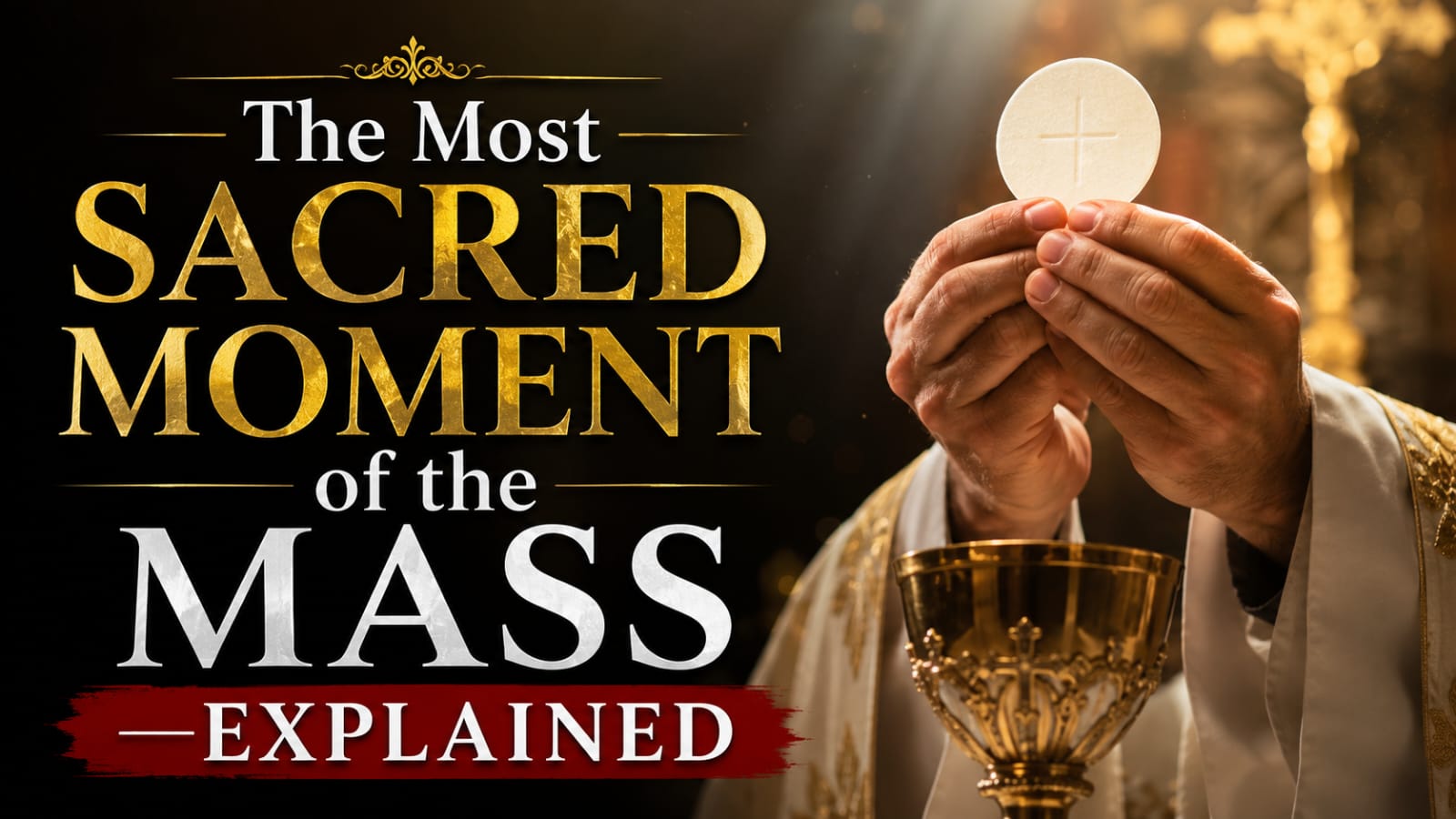
The priest then takes the bread into his hands and repeats the words Jesus spoke at the Last Supper:
"Take this, all of you, and eat of it, for this is my Body."
Moments later, he takes the chalice and says:
"Take this, all of you, and drink from it, for this is the chalice of my Blood."
These are not simply words remembered from history. The Church teaches that the priest is acting in persona Christi—in the person of Christ. In other words, Christ Himself is working through the priest.
This is why Catholics pay such close attention during these words. They are the same words spoken by Jesus on the night before He gave His life for the salvation of the world.
What Changes?
At first glance, nothing seems different.
The host still looks like bread. The wine still appears to be wine.
Yet the Church teaches that something extraordinary has taken place. While the appearance remains unchanged, their deepest reality has been transformed into the Body and Blood of Jesus Christ.
This teaching is known as Transubstantiation.
It may sound like a complicated theological term, but its meaning is simple: what was once bread and wine is now Christ truly present among His people.
That is why Catholics do not see the Eucharist as merely a symbol or reminder of Jesus. The Church teaches that He is truly, really, and substantially present.
Why Does the Priest Raise the Host and Chalice?
Immediately after the Consecration, the priest genuflects in adoration and then raises the Host for everyone to see. He later does the same with the Chalice.
The ringing of the bells often accompanies these elevations, drawing the attention of the faithful to the mystery unfolding before them.
This is not simply a pause in the liturgy. It is an invitation to worship.
For centuries, Catholics have looked upon the elevated Host and quietly prayed words such as, "My Lord and my God," echoing the profession of faith made by St. Thomas after encountering the risen Christ.
More Than Something to Watch
One common misconception is that the congregation is merely observing a sacred ritual.
The Church teaches something much deeper.
The Consecration invites every believer to unite their own life with Christ's offering. Our joys, struggles, hopes, fears, and prayers can all be placed spiritually on the altar.
As Christ offers Himself to the Father, we are invited to offer ourselves as well.
The Heart of the Mass
The next time the bells ring and silence fills the church, take a moment to reflect on what is happening before your eyes.
What may appear to be a simple ritual is, for Catholics, the greatest mystery of faith. Through the power of the Holy Spirit and the words of Christ spoken by the priest, bread and wine become the Body and Blood of the Lord.
It is the moment toward which the entire Mass moves and from which every grace of the Eucharist flows.
In those few sacred minutes, heaven touches earth, and Christ becomes truly present among His people.
By Catholic Connect Reporter
© 2026 CATHOLIC CONNECT POWERED BY ATCONLINE LLP