- 30 April, 2026

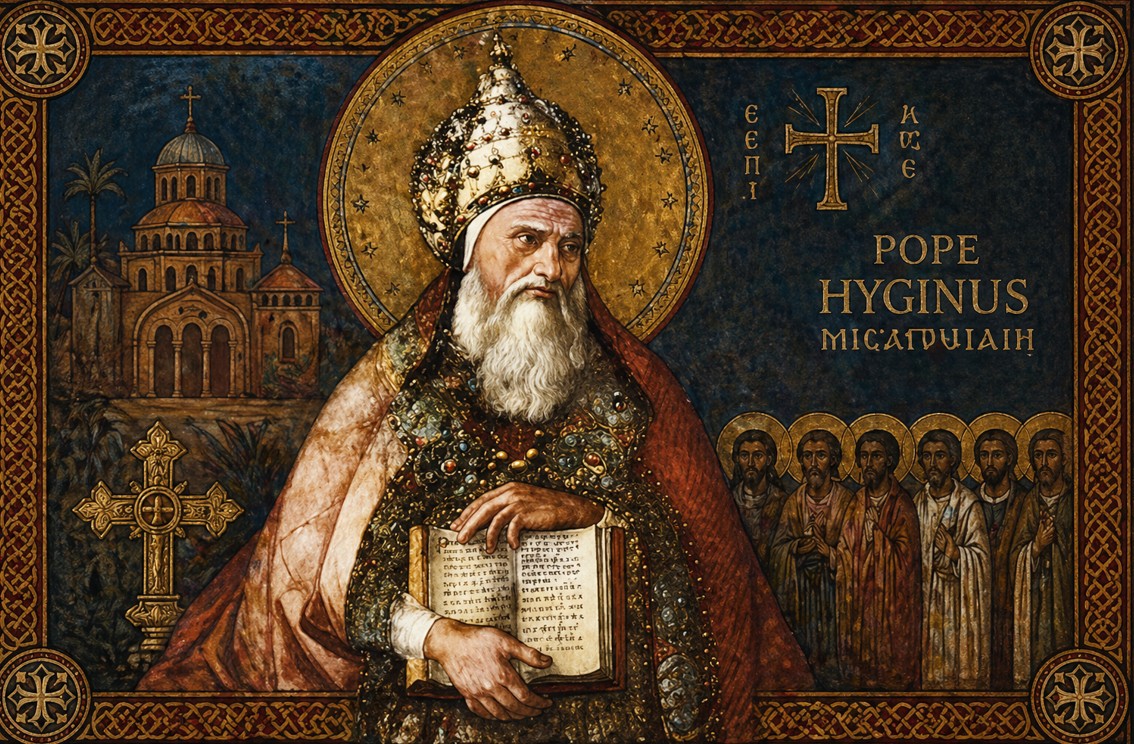
Pope Hyginus, the ninth successor of Saint Peter, is remembered for organizing the early Church’s structure at a time when Christian communities were rapidly growing and facing internal challenges.

As the Church continued to expand beyond its earliest foundations, Hyginus played a key role in bringing order and clarity to its leadership and organization. His papacy came at a time when unity and structure were becoming increasingly important for the survival and growth of Christianity.
Pope Hyginus served from around 136 AD to 142 AD. He is known for helping organize the Church’s hierarchy and addressing early theological challenges, especially as Christianity spread across different regions.


Hyginus is believed to have been of Greek origin, possibly from Athens. Some traditions suggest he had a philosophical background before converting to Christianity. This intellectual formation may have helped him address emerging theological questions within the Church.
After the martyrdom of Pope Telesphorus, Hyginus was elected as Bishop of Rome. His leadership continued the apostolic succession, ensuring that the teachings of the apostles remained central to the Church’s identity.
Hyginus led the Church during the mid-second century under the Roman Empire.
During his time, the Church encountered early forms of Gnosticism, which challenged core Christian teachings and required strong leadership to preserve doctrinal unity.
Hyginus is traditionally credited with strengthening the organization of the Church:
These contributions were crucial because they ensured unity in belief and leadership, preventing confusion as Christianity expanded.
Hyginus is remembered for:
His spirituality reflects a balance between intellectual clarity and pastoral responsibility.
Hyginus faced significant challenges:
Addressing these issues required both wisdom and firmness.
Though no writings of Hyginus survive, his life communicates a clear message: Truth must be protected with both wisdom and courage.
Tradition holds that Hyginus died in Rome, though it is uncertain whether he was martyred.
He is honored for his role in strengthening the Church’s structure and unity.
St. Hyginus represents:
His work helped shape the Church into a more structured and unified community.
Why does St. Hyginus matter today?
His legacy continues through the structured life of the Church today, carried forward by his successors.
To know more about the previous Popes, click here
By Catholic Connect Reporter
________________________
St. Hyginus, Pope Hyginus biography, ninth pope Catholic Church, early Catholic popes, Catholic Church history, Gnosticism early Church, apostolic succession, Church hierarchy history, Vatican early popes, history of papacy
© 2026 CATHOLIC CONNECT POWERED BY ATCONLINE LLP