- 26 April, 2026

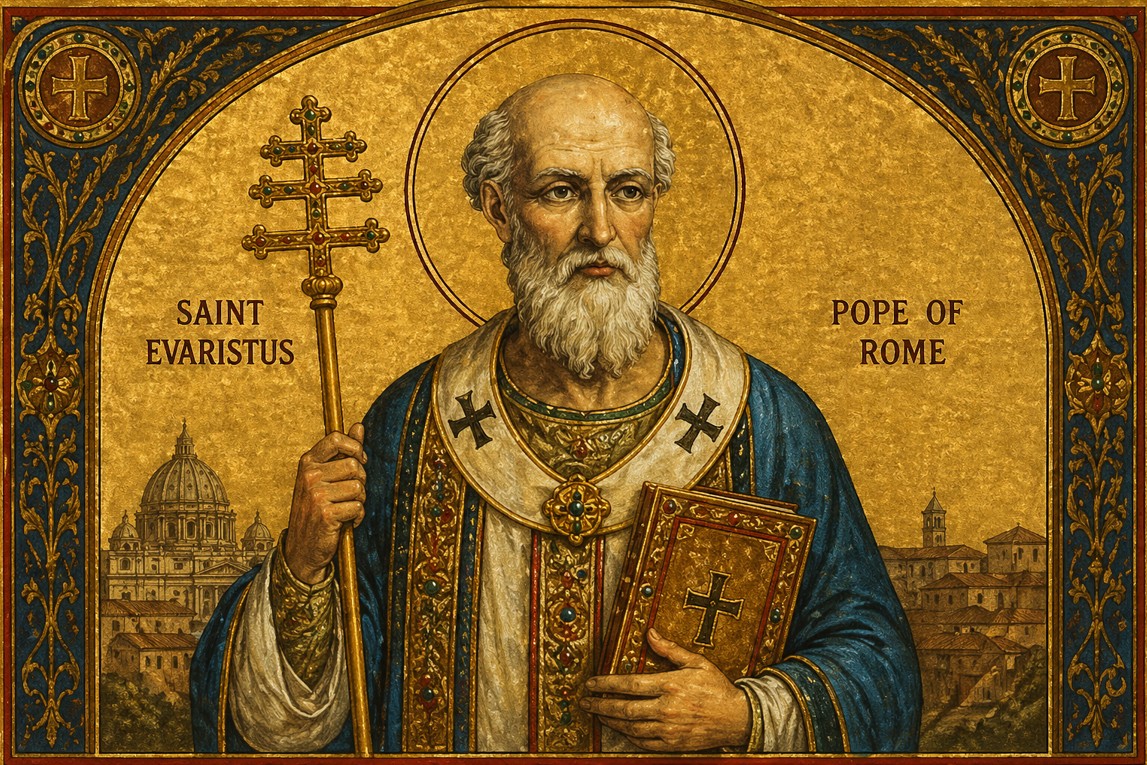
Pope Evaristus succeeded Pope Clement I and guided the Church during a period of gradual expansion and increasing structure.

This snapshot helps readers quickly understand who Pope Evaristus was and the time in which he lived.
As the fifth successor of Saint Peter, Evaristus continued strengthening the Church’s internal organization. His leadership came at a time when Christianity was spreading quietly but steadily, requiring more defined structures to guide the faithful.


Little is known about Evaristus’ early life, reflecting the limited records of the early Church. Tradition suggests he was of Greek origin, possibly born to a Jewish father and a Greek mother. He likely came to Rome as Christianity began to take root across different cultures and regions.
After the death of Clement I, Evaristus was chosen as Bishop of Rome. His election continued the line of apostolic succession, ensuring continuity in leadership and teaching within the Church.
Evaristus led the Church during the early second century under the Roman Empire.
While the intense persecutions of earlier reigns had lessened, Christians still lived under uncertainty and risk.
Evaristus is traditionally credited with important organizational developments:
These contributions were significant because they allowed the Church to grow in an orderly and sustainable way.
Evaristus is remembered for:
His spirituality reflects service through organization—building systems that would support the Church for generations.
Evaristus faced several challenges:
Though no major controversies are recorded, his leadership required careful balance between growth and stability.
No direct writings of Evaristus survive, but his life conveys a lasting message: Growth in the Church must be guided by order, care, and faithful leadership.
Tradition holds that Evaristus died in Rome, possibly as a martyr, though details remain uncertain.
He is honored as one who helped organize the Church during its early expansion.
St. Evaristus represents:
His work laid the groundwork for a more organized Church capable of reaching wider communities.
Why does St. Evaristus matter today?
His legacy continues through the structured life of the Church today, carried forward by successors.
To know more about the previous Popes, click here
By Catholic Connect Reporter


© 2026 CATHOLIC CONNECT POWERED BY ATCONLINE LLP