- 26 April, 2026

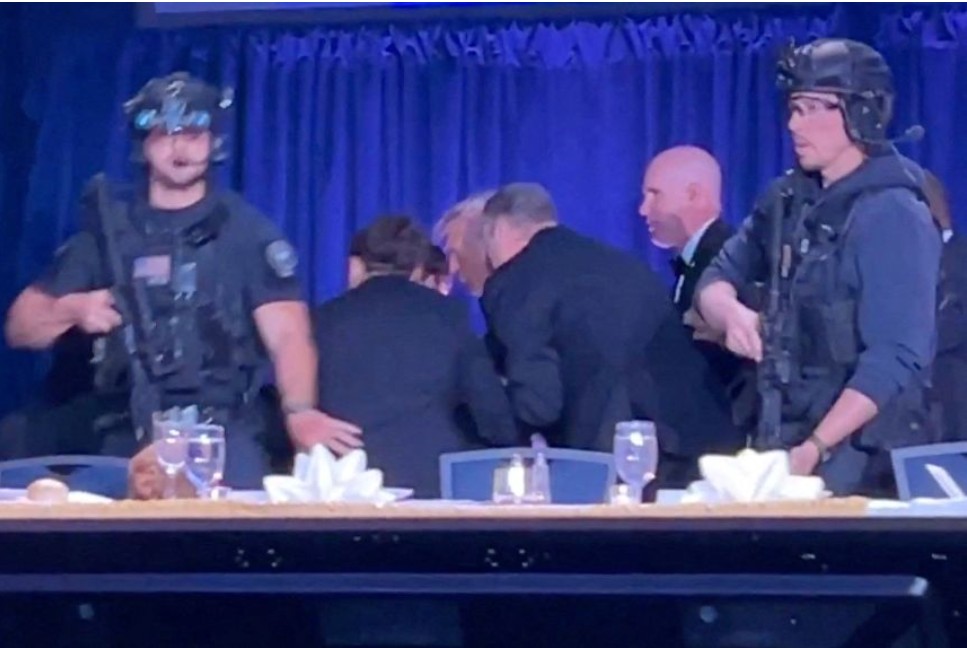
Washington, D.C., April 26, 2026: A night meant for journalism, satire, and national reflection turned into moments of fear and confusion as gunshots rang out inside the same hall hosting Donald Trump during the annual White House Correspondents' Dinner at the Washington Hilton at approximately 8:35 p.m. ET (6:05 a.m. IST). The incident triggered panic among the nearly 2,500 attendees, including political leaders, journalists, and public figures.

The unsettling episode unfolded when what initially sounded like distant thuds quickly registered as gunfire. Guests inside the grand ballroom froze, unsure of what was happening. Within seconds, the confusion turned into instinctive fear as people began ducking under tables, seeking cover wherever they could.
Among those present were First Lady Melania Trump and Vice President JD Vance, all of whom, along with President Trump, were swiftly evacuated by the United States Secret Service. Their rapid removal from the venue highlighted the seriousness of the threat and the efficiency of the security response.
Eyewitnesses described a deeply tense atmosphere. Many reported hearing between four to eight shots, followed by the sound of glass shattering. In those critical moments, hundreds of attendees crawled under tables, unsure whether the danger was contained or moving closer. Some feared that a gunman might enter the ballroom itself.


Security personnel reacted immediately. Armed agents in protective gear spread across the venue, scanning for further threats while ensuring the safe evacuation of key individuals. One Secret Service officer was reportedly shot at close range but survived due to a bulletproof vest—an incident that underscored both the danger faced and the protection afforded by preparedness.
Within a short time, authorities confirmed that a suspect had been apprehended. The individual was identified as Cole Tomas Allen, a 31-year-old from Torrance California. Law enforcement agencies, including the Federal Bureau of Investigation, quickly began investigating his background, movements, and possible motives.
As the situation stabilized, questions began to emerge. Chief among them was how a suspect managed to get so close to such a high-profile event, especially given the presence of top political leaders. While the surrounding area had been secured with road closures and law enforcement presence, reports suggested that internal security measures at the venue may not have been as stringent as expected.
Guests recounted relatively light screening procedures, raising concerns about vulnerabilities in event security. These concerns were amplified by the historical significance of the venue itself—the same hotel where an assassination attempt on President Ronald Reagan took place in 1981.
Despite the chaos, officials were quick to reassure the public. President Trump later confirmed that all key leaders were safe and commended the swift action of law enforcement. Messages of relief and solidarity poured in from political figures across the spectrum, many expressing gratitude for the safety of those present and calling for unity in the face of such incidents.
Inside the ballroom, however, the emotional impact lingered. For those who experienced the ordeal firsthand, the memory of those few minutes under the tables—listening, waiting, fearing—remains vivid. The uncertainty, the silence broken only by distant commands and movement, left a lasting impression on many attendees.
Participants also struggled to communicate in the immediate aftermath, as they attempted to contact colleagues, report developments, and make sense of the unfolding situation. Journalists, accustomed to covering crises, suddenly found themselves at the center of one.
The incident has reignited discussions about security at public events, particularly those involving national leaders. It has also highlighted the growing concerns around threats in an increasingly polarized environment.
As investigations continue, authorities are working to reconstruct the sequence of events and understand the motives behind the attack. Evidence gathered from the suspect’s residence and digital footprint is expected to provide crucial insights in the coming days.
The evening, intended as a celebration of journalism and democratic discourse, instead became a stark reminder of the fragile line between normalcy and crisis.
Yet, amid the fear, there was also resilience—the calm professionalism of security forces, the instinctive solidarity among attendees, and the shared relief that lives were spared.
In the end, what remains is not just the memory of shots echoing through a hall filled with leaders and journalists, but the enduring question of how such moments can be prevented in the future—so that spaces meant for dialogue and unity remain just that.
By Catholic Connect Reporter


© 2026 CATHOLIC CONNECT POWERED BY ATCONLINE LLP