- 15 April, 2026

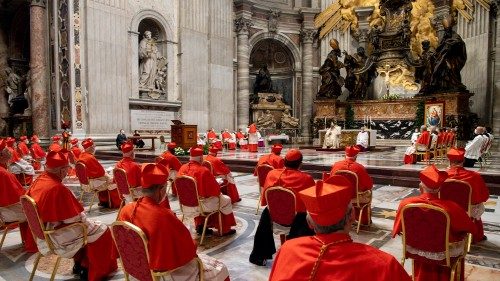
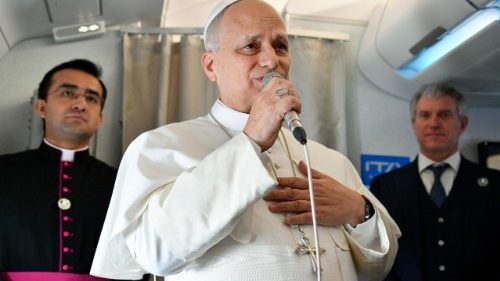
Vatican, April 15, 2026: In a letter addressed to the Cardinals ahead of the Extraordinary Consistory scheduled for late June, Pope Leo XIV urges deeper reflection on the themes of “Evangelii gaudium,” especially regarding the reform of Christian initiation processes, while cautioning against proselytism and a mindset focused only on preservation or institutional growth.

At the centre of the letter is the message that the Church’s mission “is not its own survival, but the communication of the love with which God loves the world.” The letter was released on Tuesday.
The Consistory is set to take place at the Vatican on June 26 and 27, just before the Solemnity of Saints Peter and Paul, and will conclude with a Eucharistic celebration led by the Pope. The gathering had earlier been announced at the conclusion of the January 7–8 Consistory.


In his message, the Pope thanks the Cardinals for their work during the January meeting, describing their contributions as “a resource of lasting value” that should continue to be developed through discernment within the Church.
“Evangelii gaudium” as a key reference
Pope Leo XIV highlights Pope Francis’ Apostolic Exhortation, Evangelii gaudium, as an ongoing guide for the Church’s life and mission.
He explains that it “refocuses everything on the kerygma as the heart of Christian and ecclesial identity” and calls it “a ‘breath of fresh air,' capable of initiating processes of pastoral and missionary conversion.”
Renewal at multiple levels
The Pope explains that this vision invites renewal across different dimensions of Church life.
On the personal level, every baptized person is called “to renew their encounter with Christ, moving from a faith merely received to a faith truly experienced and lived.”
At the community level, he emphasizes a transition “from a pastoral approach focused on maintenance to a missionary pastoral approach,” where communities become “living agents of the proclamation,” attentive to relationships and open to accompaniment and healing.
At the diocesan level, he underlines the responsibility of pastors to ensure that missionary vitality is not “weighed down or stifled by organizational impediments,” while promoting discernment focused on what truly matters.
A Christ-centred mission
From these reflections, the Pope presents a unified understanding of mission, describing it as “Christ-centred and kerygmatic,” arising from a transformative encounter and spreading “through attraction rather than conquest.”
He adds that this mission “conjoins explicit proclamation, witness, commitment, and dialogue,” while steering clear of “the temptation of proselytism” and “a logic of mere institutional preservation or expansion.”
Even where Christians form a minority, he says, the Church is called to live “as a small flock bringing hope to all.”
Key priorities ahead
Looking forward, the Pope calls for a sincere evaluation of how Evangelii gaudium has been received over time, noting that certain aspects remain “unknown and unimplemented.”
He identifies key priorities including reforming Christian initiation processes, rediscovering the importance of apostolic and pastoral visits, and “to review the effectiveness of ecclesial communication, including at the level of the Holy See, in a more clearly missionary key.”
Preparing for the June Consistory
Concluding his letter, the Pope again expresses appreciation for the Cardinals’ service and notes that further details will be shared in preparation for the June meeting.
Entrusting the Church to the hope of the Risen Lord, he extends Easter greetings and invites the faithful to rediscover the core of the Church’s mission: to bear witness to God’s love in the world.
Courtesy: Vatican News

© 2026 CATHOLIC CONNECT POWERED BY ATCONLINE LLP