- 27 May, 2026
May 27, 2026: We live in a world where kingdoms collapse, borders shift overnight, and even ancient monuments disappear in conflict. Yet, inside a hilltop monastery in western Ukraine, a centuries-old icon has survived through wars, invasions and religious division.


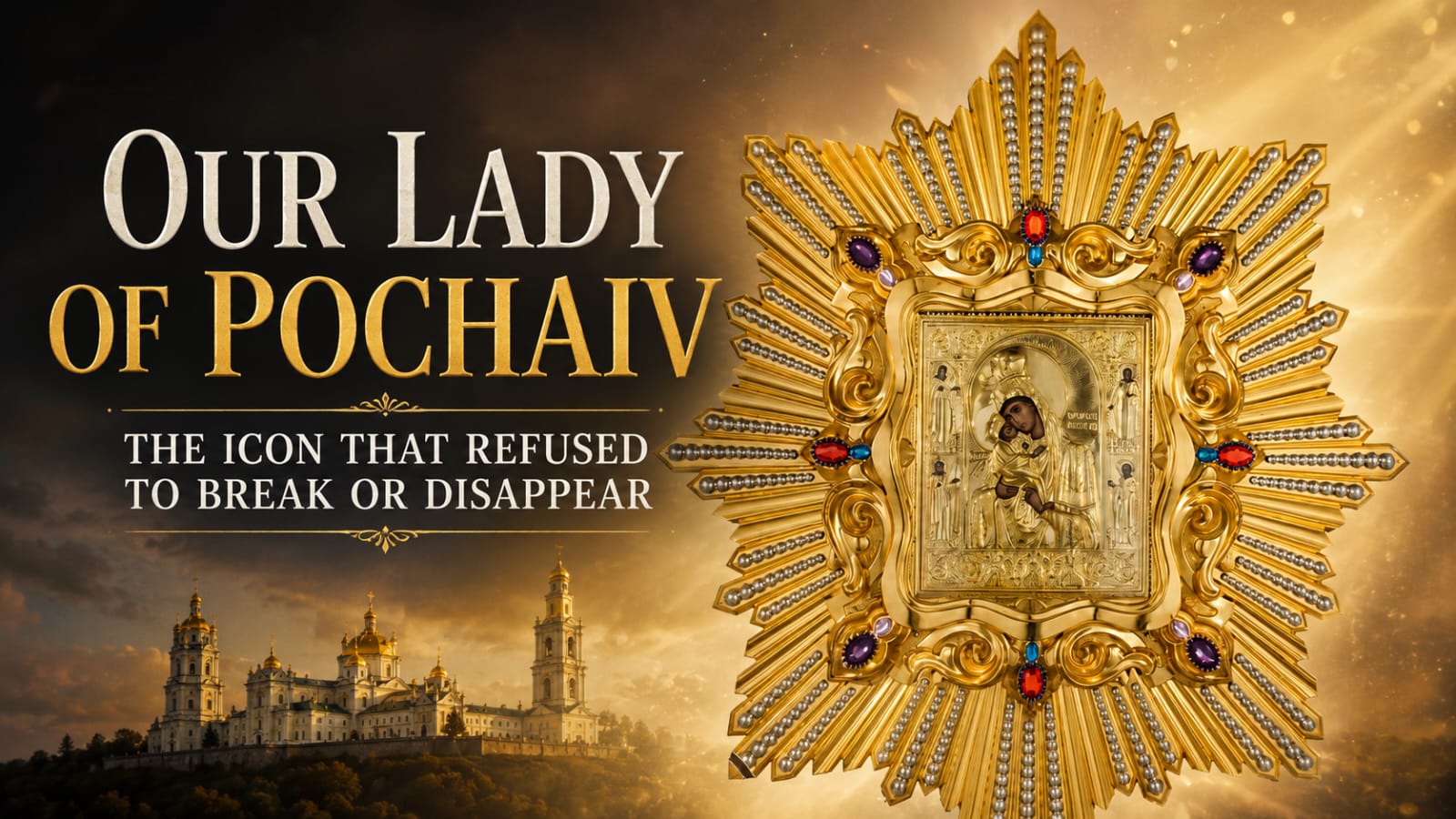
It is known as Our Lady of Pochaiv.
To many believers, it is far more than an ancient image of the Virgin Mary holding the Child Jesus. It has become a symbol of resilience, survival and hope through centuries of uncertainty.


The Siege That Changed History
The most dramatic moment in the story of Our Lady of Pochaiv dates back to 1675.
The Pochaiv Monastery was surrounded by a powerful Ottoman Turkish and Tatar force. Inside the monastery walls, terrified monks and local refugees prepared for what seemed like certain death.
With no weapons left, they carried the icon to the monastery walls and prayed throughout the night.
According to one of Eastern Europe’s most enduring legends, the Virgin Mary appeared above the church at sunrise, surrounded by angels holding swords. As the attackers released a massive volley of arrows, the arrows were said to have suddenly turned back mid-air and fallen upon the attacking soldiers themselves.
Panic spread through the enemy camp, the siege collapsed, and the monastery survived.
But the mystery of Pochaiv began even earlier.
Local tradition says that in 1340, two hermit monks saw the Virgin Mary standing on the hill in a pillar of fire. After the vision disappeared, her footprint was believed to be left behind in the stone, from which a spring of water began to flow. Even today, pilgrims continue to visit the site believing the water carries healing properties.
The icon itself arrived in 1559 when a Greek metropolitan named Neophytos travelled through the region from Constantinople and gifted a small Byzantine icon to a noblewoman named Anna Hojska. After the image was linked to the healing of Hojska’s blind brother, she donated it to the monks of Pochaiv in 1597.
More Than an Icon
For centuries, Eastern Orthodox and Roman Catholic communities fought over territory and theology in Eastern Europe. Yet both sides deeply revered the icon of Our Lady of Pochaiv.
The monastery itself shifted between Orthodox and Greek Catholic control over the years. In 1773, Pope Clement XIV formally crowned the icon with gold, making it one of the rare Orthodox icons recognised in such a way by a Roman Catholic Pope.
Today, the original icon remains covered with a jewel-encrusted golden shield known as a riza and is lowered every morning so pilgrims can pray before it.
Why Our Lady of Pochaiv Still Matters
In a world shaped by uncertainty, the story of Our Lady of Pochaiv continues to resonate far beyond the walls of a monastery.
It stands as a reminder that while empires rise and fall, certain symbols endure because people continue to hold onto hope through them.
For generations, people facing fear, war and uncertainty looked towards this icon and found courage to continue.
That may be why the image still draws countless pilgrims today — not simply because it survived history, but because it became a symbol that survival itself is possible.
By Catholic Connect Reporter
© 2026 CATHOLIC CONNECT POWERED BY ATCONLINE LLP