- 27 May, 2026

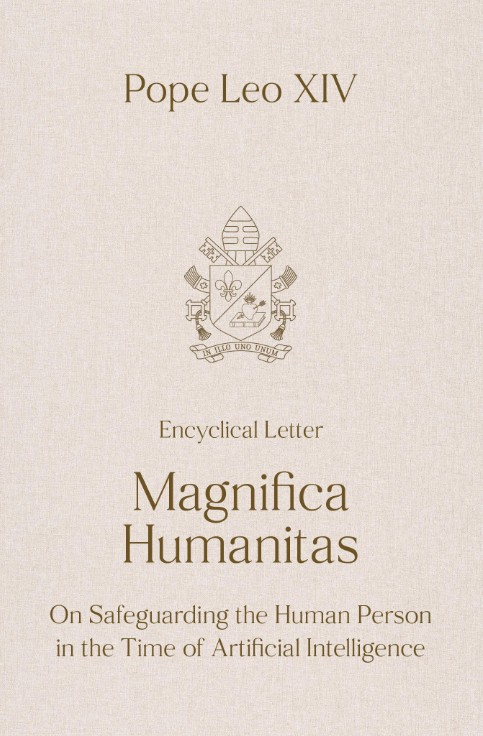
Vatican, May 27, 2026: When Pope Leo XIV released his first encyclical, Magnifica Humanitas (“Magnificent Humanity”), many Catholics around the world asked a simple question: What exactly is this document, and why does it matter?


For those unfamiliar with Vatican language, an encyclical is one of the highest forms of papal teaching. It is a formal letter written by the Pope to guide Catholics — and often the wider world — on important moral and social issues.
In this case, Pope Leo XIV chose to address one of the biggest questions of modern life: artificial intelligence and the future of human dignity.
Far from being just a theological text for scholars, Magnifica Humanitas is a direct response to the rapidly changing digital age. It asks humanity a profound question: Will technology serve people, or will people become servants of technology?

(CLICK HERE to follow Catholic Connect and to stay updated with Catholic News & Content)
Why “Magnifica Humanitas” Is So Significant
The encyclical was signed on 15 May 2026 — exactly 135 years after Pope Leo XIII issued Rerum Novarum, the historic Church document that addressed workers’ rights during the Industrial Revolution.
Pope Leo XIV believes artificial intelligence represents a transformation just as powerful as the Industrial Revolution once was.
The document repeatedly warns that technology is “never neutral” because it reflects the intentions of those who create and control it. The Pope raises concerns about misinformation, surveillance, job loss, digital addiction, AI warfare, and the concentration of technological power in the hands of a few corporations.
Yet the encyclical is not anti-technology. Instead, it calls Catholics to ensure that innovation remains rooted in compassion, truth, justice, and human dignity.
Has the Church Done Something Like This Before?
Yes — throughout history, the Catholic Church has responded to major global changes.
During the Industrial Revolution, Rerum Novarum defended workers against exploitation. Later popes addressed war, poverty, capitalism, environmental destruction, and global inequality.
But Magnifica Humanitas is unique because it directly confronts artificial intelligence, digital culture, and what the Pope calls the danger of building a “new Tower of Babel” — a world driven by power, control, and pride rather than human solidarity.
The document marks one of the Church’s strongest interventions yet into the ethical debate surrounding AI.
A Simple Breakdown of the Five Chapters
Chapter 1: A Dynamic Approach Faithful to the Gospel
Faith in a Changing World : Traces Catholic social doctrine from Pope Leo XIII to today, showing how faith responds to changing historical challenges.
Chapter 2: Foundations and Principles of the Social Doctrine of the Church
Principles That Must Never Change : Core values: human dignity, solidarity, subsidiarity, justice, common good, and universal destination of goods.
Chapter 3: Technology and Dominance: The Grandeur of Humanity in Light of the Promises of AI
Understanding AI : Here, Pope Leo XIV explains AI as a tool requiring vigilance, rejects transhumanism/posthumanism, affirms human moral responsibility and grace.
Chapter 4: Safeguarding Humanity at a Time of Transformation
Truth, Work and Freedom : Addresses misinformation, democracy, education, digital addiction, unemployment, and the dignity of work.
Chapter 5: The Culture of Power and the Civilization of Love
War, Power and Human Responsibility : Criticises autonomous weapons, warns against war and political realism, calls for peace, diplomacy, and justice.
What Does This Mean for Catholics Today?
The publication of Magnifica Humanitas is not merely informational — it is a call to action.
Pope Leo XIV urges Catholics to remain “profoundly human” in a digital world. That means using technology responsibly, protecting truth, defending the dignity of workers, resisting online hatred, and ensuring that human relationships are never replaced by algorithms.
Catholics are also encouraged to become informed about AI, ethics, digital culture, and social justice. The Pope makes it clear that faith cannot remain silent while technology reshapes society.
A Hopeful Vision for the Future
Despite its warnings, Magnifica Humanitas is ultimately a hopeful document.
Pope Leo XIV believes humanity still has a choice. The world can either build a digital civilisation rooted in greed and control, or one guided by compassion, truth, and the dignity of every human person.
His message is simple but powerful: technology should never diminish humanity — it should help humanity flourish.
At a time when the world is rapidly changing, Magnifica Humanitas may become one of the defining Catholic documents of the modern age — not because it fears the future, but because it calls humanity to shape that future with wisdom, faith, and responsibility.
By Catholic Connect Reporter
© 2026 CATHOLIC CONNECT POWERED BY ATCONLINE LLP