- 27 May, 2026

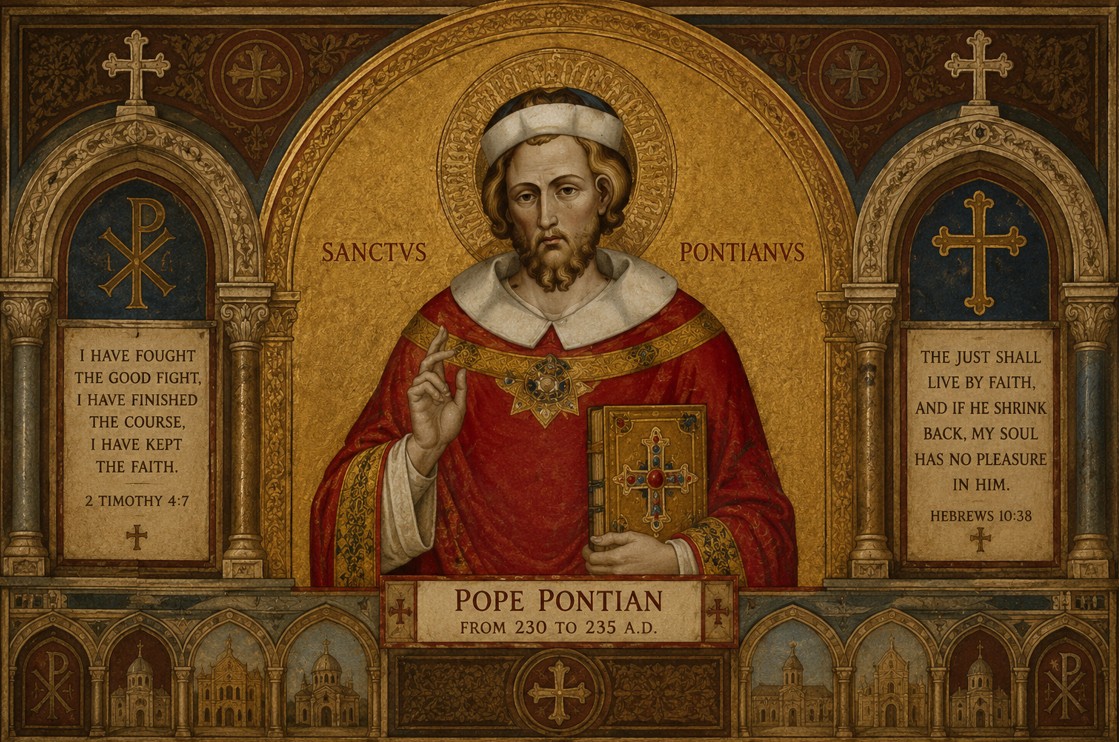
Pope Pontian, the eighteenth successor of Saint Peter, is remembered as a courageous leader who placed the unity of the Church above personal authority. His papacy, though brief, became historically significant because he was the first pope known to resign the papal office voluntarily under extraordinary circumstances.


What does true leadership look like during suffering?
For Pope Pontian, leadership meant sacrifice. During a period of persecution and division, he chose not to cling to power but to protect the unity and stability of the Church. His decision would leave a lasting mark on Church history.


Little is known about Pontian’s early life, which was common for many early popes. Tradition suggests he was born in Rome and raised within the growing Christian community of the empire.
By the early third century, Christianity had spread widely across Roman society, but believers still lived under the constant threat of political change and persecution.
(CLICK HERE to follow Catholic Connect and to stay updated with Catholic News & Content)
Pontian was elected Bishop of Rome in 230 AD following the death of Pope Urban I. His election came during a difficult period marked by theological disputes and lingering divisions caused by the schism of Hippolytus of Rome.
Despite these tensions, Pontian worked to preserve peace and strengthen the unity of the Church.
Pontian led the Church during the reign of Emperor Alexander Severus and later Emperor Maximinus Thrax.
When Emperor Maximinus began targeting Christian leaders, Pontian became one of the first victims of the persecution.
Pontian is remembered for several important contributions:
His resignation was especially significant because it demonstrated that the mission of the Church mattered more than personal position or prestige.
Pontian is remembered for:
His spirituality reflected deep trust in God during hardship and uncertainty.
Pontian faced major difficulties during his papacy:
Tradition holds that both Pontian and Hippolytus eventually reconciled before their deaths — a powerful witness to Christian unity.
Though no direct writings survive, the example of Pontian offers a lasting message: True leadership serves the Church before itself.
Pontian died in exile in Sardinia around 235 AD.
He is honoured as one of the early martyrs who remained faithful under persecution.
Why does St. Pontian matter today?
His legacy continues through the life of the Church today, carried forward by his successors.
To know more about the previous Popes, click here
By Catholic Connect Reporter
________________________
St. Pontian, Pope Pontian biography, eighteenth pope Catholic Church, Pope Pontian resignation, early Catholic popes, Hippolytus reconciliation, Roman persecution Christians, Catholic Church history, apostolic succession, Pope Pontian exile Sardinia
© 2026 CATHOLIC CONNECT POWERED BY ATCONLINE LLP