- 13 July, 2026

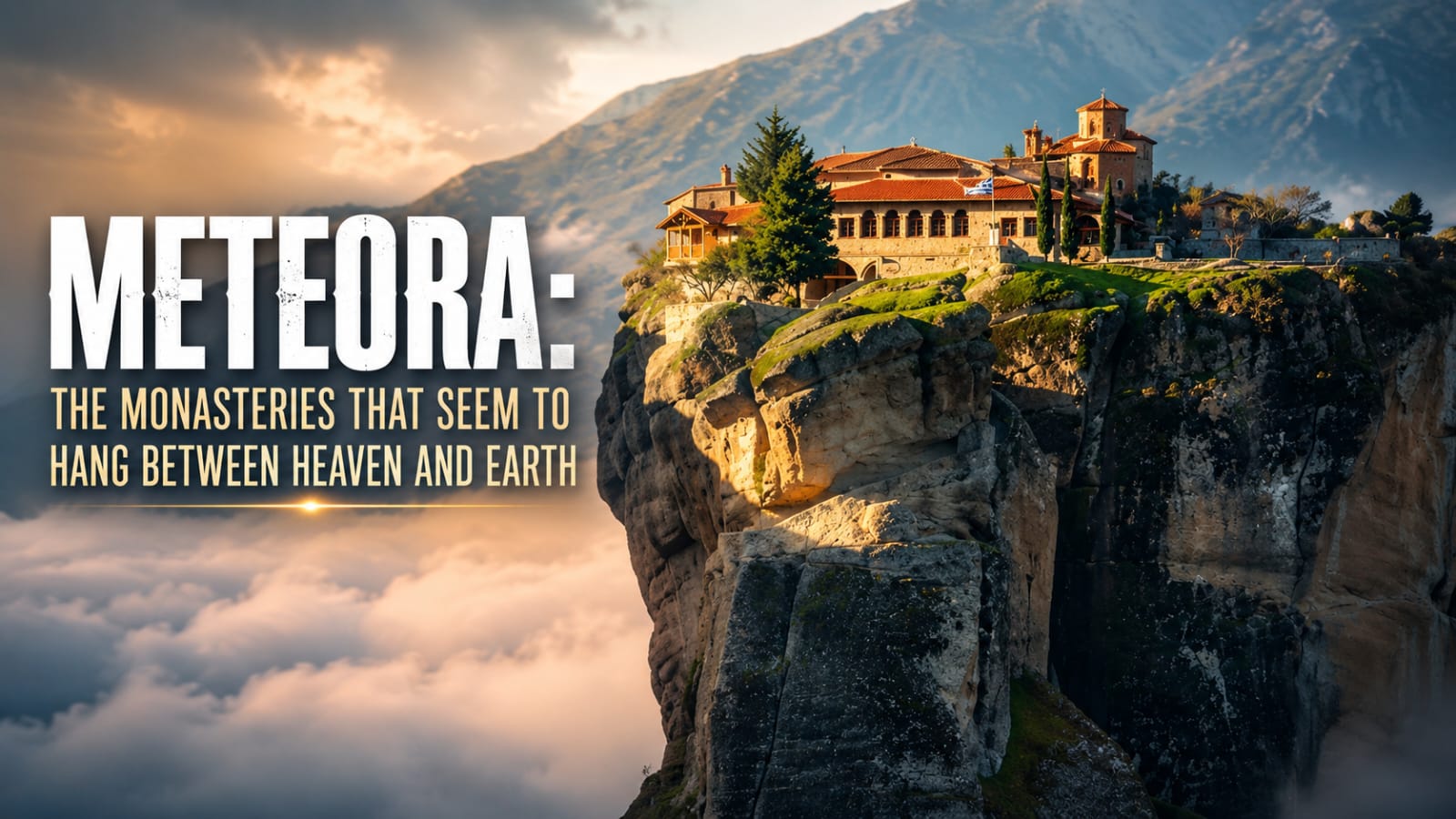
July 13, 2026: How far would faith lead a person? At Meteora—meaning "suspended in the air"—in central Greece, the answer rises hundreds of feet above the valley of Thessaly. Here, towering sandstone pillars lift monasteries that appear to float in the sky, as though they were placed between heaven and earth. Their breathtaking setting captures the eye—but it is the faith carved into every stone that compels the heart to linger.


From Silent Caves to Sky-High Sanctuaries
Long before monasteries crowned these cliffs, hermit monks sought refuge in the caves of Meteora. From the 11th century, they embraced solitude, choosing the towering rocks as places of prayer and contemplation.
Between the 14th and 16th centuries, that quiet beginning grew into an organised monastic complex. Around 1356, Saint Athanasios founded the Great Meteoron Monastery, seeking refuge from the political instability and Ottoman turmoil that threatened the region. By the 16th century, Meteora had reached its architectural golden age, with 24 gravity-defying monasteries standing atop the sandstone pillars as spiritual fortresses.


When Building Became Prayer
Reaching the summits was once an act of remarkable courage. Before staircases were carved into the cliffs, monks climbed using wooden ladders fastened to the rock faces, while rope nets and hand-turned winches carried every building material upward.
Every stone, timber beam, clay tile and handful of mortar travelled this impossible route. Long before the monasteries were complete, their construction had already become a witness to faith. Building was not simply labour—it was an act of ascetical prayer, born from a desire to overcome earthly limits in pursuit of God.
Constructed from local stone and timber, the monasteries blend so naturally with the grey sandstone that they seem to emerge from the cliffs themselves, uniting earth's rugged strength with heaven's quiet promise.
A Journey Into the Sacred
The approach to the Great Meteoron, the oldest and highest monastery, is unforgettable. A narrow mountain path leads to a stone bridge spanning a dizzying abyss before heavy wooden doors open into a world of stillness.
Inside the Katholikon, the main church, the vast landscape disappears. Dim light, the fragrance of beeswax and frankincense, and deep silence create an atmosphere that draws the soul inward.
The journey through the church is intentional. The narthex, softly lit and adorned with frescoes of saints and martyrs, prepares visitors to leave the outside world behind. Beyond it, the naos rises beneath a majestic dome supported by four columns. At its highest point, Christ Pantocrator gazes down, proclaiming God's sovereignty over the universe.
Separating the nave from the altar is the beautifully carved wooden iconostasis, covered in gold leaf and sacred icons. More than a screen, it forms a graceful boundary between the earthly congregation and the heavenly mystery of the Eucharist.
Outside, the cliffs reveal the vastness of creation. Inside, the monastery becomes a peaceful fortress where the noise of the world simply fades away.
Where Light Gives Life to Stone
Meteora's beauty reaches its fullest expression in its interior art. Small windows preserve the strength of the Byzantine structure while allowing candlelight to shape the atmosphere of prayer.
The walls are covered with post-Byzantine frescoes by masters such as Frangos Kastellanos. As candlelight flickers across golden halos and richly coloured icons, the painted figures seem almost alive. Arches and vaulted ceilings do more than support the building—they frame a heavenly vision, transforming the entire church into a three-dimensional Bible for the faithful.
A Living Witness to Faith
Of the original 24 monasteries, only six remain active today, continuing a centuries-old tradition of prayer and monastic life. Recognised as a UNESCO World Heritage Site, Meteora is celebrated not only for its extraordinary architecture but also for its enduring spiritual and cultural significance.
Meteora is more than an architectural masterpiece or a historic monument. Its monasteries remain living communities of monks and nuns, where prayer continues to shape daily life. Every cliff climbed, every stone lifted and every prayer offered transformed impossible heights into places of worship. Centuries later, these sanctuaries still stand suspended between heaven and earth, reminding every visitor that architecture can do far more than shape buildings—it can become a lasting witness to faith itself.
By Catholic Connect Reporter
Read More:
Monastery of Alcobaça: Portugal's Treasure of Love and Legacy
Las Lajas Sanctuary: Colombia's Breathtaking Church Between Cliffs and Sky
Church of Saint George, Lalibela: The Astonishing Church Carved from a Single Rock
Archbasilica of St John Lateran: Inside the Highest-Ranking Church in the Catholic Church
Saint Catherine's Monastery: The World's Oldest Living Christian Monastery
The Church of the Holy Sepulchre: Walking Through the Sacred Heart of Christianity
Inside St. Mark's Basilica: The Church That Glows Like Heaven
Notre-Dame Cathedral: The Gothic Masterpiece That Rose from the Ashes to Inspire the World
Milan Cathedral: Italy's Crown of Marble Reaching Towards Heaven
Chartres Cathedral: Where Stone, Light, and Heaven Meet
Montserrat Monastery: A 1,000-Year-Old Architectural Marvel in the Mountains
Inside the Sagrada Família: The Incredible Story of Gaudí's Greatest Masterpiece
© 2026 CATHOLIC CONNECT POWERED BY ATCONLINE LLP