- 27 July, 2026

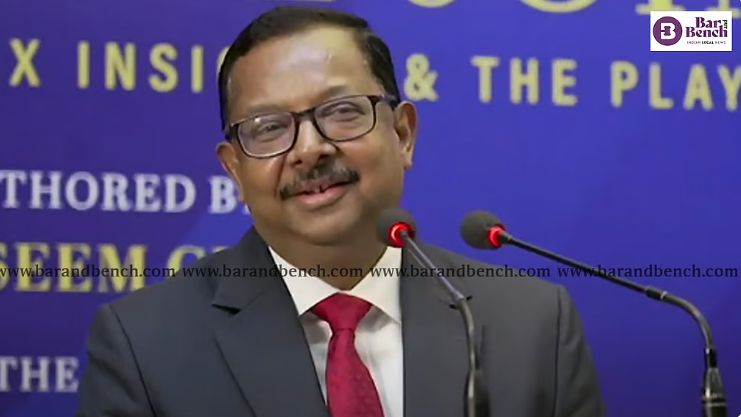
New Delhi, July 27, 2026: Supreme Court Justice Ujjal Bhuyan has raised concerns over the growing tendency to criminalise ordinary conduct and peaceful dissent, stressing that personal liberty and freedom of expression must remain central to India’s constitutional democracy.


Speaking at the 4th Justice G.P. Singh Memorial Lecture in Bhopal, Justice Bhuyan referred to the arrest of Muslim students who were allegedly detained after consuming chicken biryani during a boat ride on the Ganga in Varanasi. The students reportedly spent months in custody before securing bail, despite the absence of any law prohibiting such an act.
“I am sure consuming chicken biryani is not an offence. There is no law prohibiting it,” Justice Bhuyan said, using the incident to highlight concerns over arrests and prolonged detention in cases where no clear criminal offence has been established.


The judge also questioned a justice system in which individuals may remain behind bars for extended periods before courts eventually grant them relief. He noted that while judicial intervention may ultimately provide protection, delayed justice can effectively undermine the right to liberty, particularly when bail is granted only after prolonged incarceration or accompanied by restrictive conditions.
Justice Bhuyan broadened his remarks to address the shrinking space for democratic dissent, questioning the use of criminal proceedings against people participating in peaceful protests, including demonstrations expressing solidarity with Gaza.
Disagreement with government policies, he said, is an essential element of a functioning democracy and should not, by itself, become a ground for criminal prosecution.
Addressing students and members of the legal fraternity, Justice Bhuyan stressed the importance of universities as spaces for independent thought, critical inquiry and open debate. He cautioned against an environment in which conformity is encouraged at the expense of questioning and dissent, warning that democracies are weakened when opposing voices are silenced rather than heard.
His remarks come amid continuing public debate over free speech, preventive arrests, prolonged detention and timely access to justice. Legal observers said the judge’s comments underscored broader constitutional concerns relating to personal liberty and the protection of peaceful expression.
The larger message of Justice Bhuyan’s address was that criminal law must be invoked on the basis of clearly defined offences and not in response to public sentiment, political disagreement or peaceful dissent. His remarks reinforced the constitutional principle that a healthy democracy must protect lawful personal choices and preserve space for disagreement and peaceful expression.
Courtesy : Bar and Bench




© 2026 CATHOLIC CONNECT POWERED BY ATCONLINE LLP