- 27 July, 2026

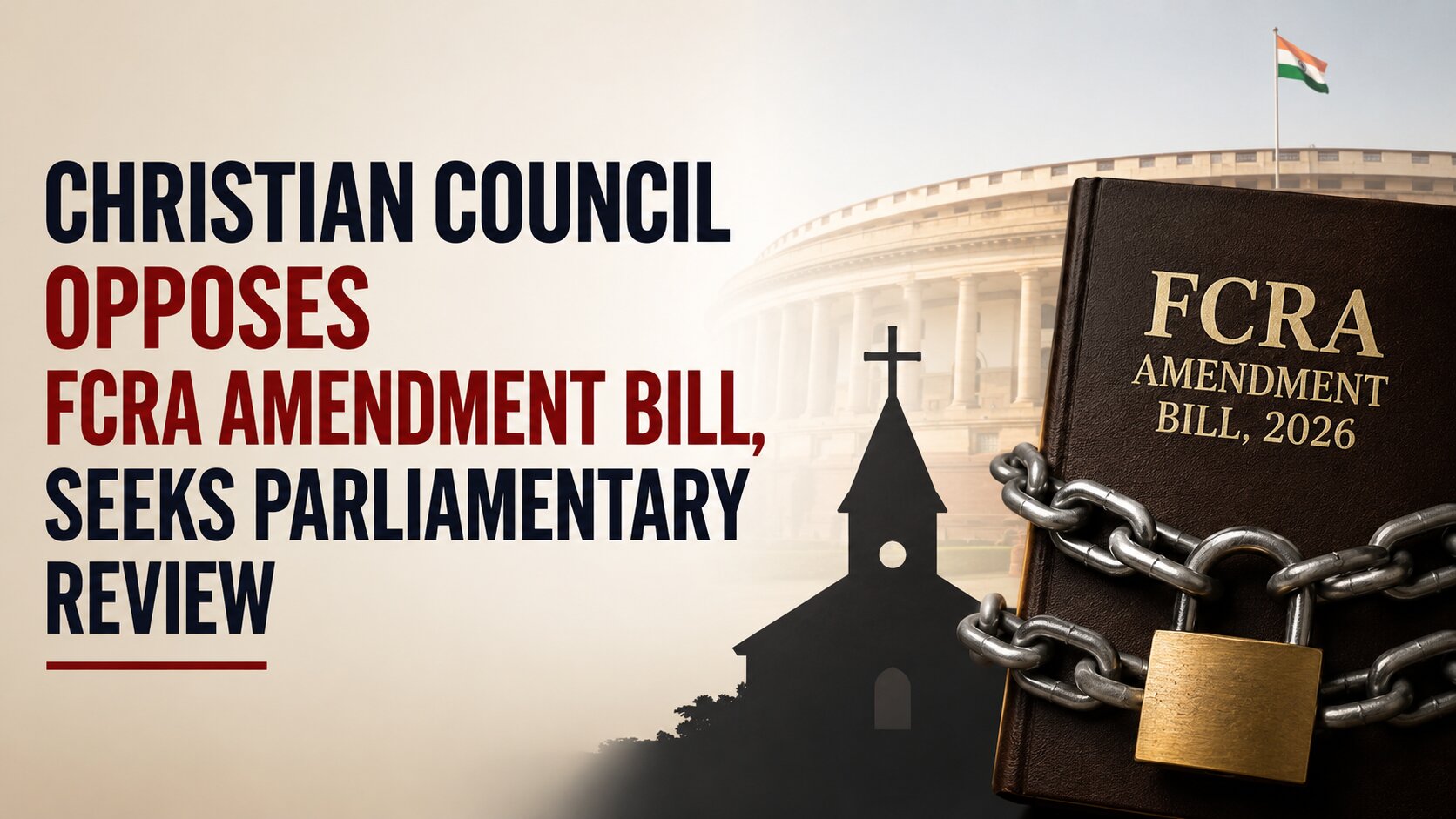
HYDERABAD, July 27, 2026: The All India Christian Council (AICC) has strongly opposed the proposed Foreign Contribution (Regulation) Amendment Bill, 2026, popularly referred to as FCRA 2.0, and urged political parties committed to constitutional values to resist its passage.


In a statement, the Council expressed concern over the government's decision to introduce the Bill during the ongoing Monsoon Session of Parliament, alleging that it had been revived without the promised consultations with minority community leaders.
The AICC called for the proposed legislation to be referred to a Joint Parliamentary Committee, arguing that its provisions could have far-reaching consequences for minority and religious institutions.


The Council's primary concern is a provision under which foreign contributions and assets of organisations whose FCRA registration is cancelled, surrendered or allowed to lapse without renewal could be transferred to a government-notified "Designated Authority."
According to the AICC, such a provision could place properties including schools, hostels, hospitals and clinics at risk of state takeover, even when they were lawfully acquired through legitimate contributions from India and abroad. It questioned the constitutional basis for transferring such assets to a government authority and argued that the provision could affect fundamental rights under Articles 19, 25 and 26 of the Constitution.
Rejecting comparisons with foreign-funding regulations in other democracies, the Council said the proposed framework went beyond transparency requirements by making prior government permission necessary for receiving foreign contributions and potentially allowing state control over institutional assets.
The AICC also rejected the government's argument that reducing the maximum prison term for violations from five years to one year would make the law more lenient. It argued that reduced penalties could not offset what it described as expanded government powers over organisational assets.
The Council further raised concerns about the concentration of discretionary powers within the executive and called for greater constitutional clarity and independent oversight.
Reiterating its opposition to the Bill, the AICC urged political parties to prevent its passage and called for genuine consultation with affected communities. It said Christian institutions had served the poor across religious and caste boundaries for generations and remained willing to submit their accounts to lawful scrutiny.
However, the Council said it would oppose any system in which the right of charitable institutions to serve communities depended on the discretion of those in power or where institutions established through charitable contributions could be taken over by the state.
By Catholic Connect Reporter




© 2026 CATHOLIC CONNECT POWERED BY ATCONLINE LLP