- 03 August, 2026

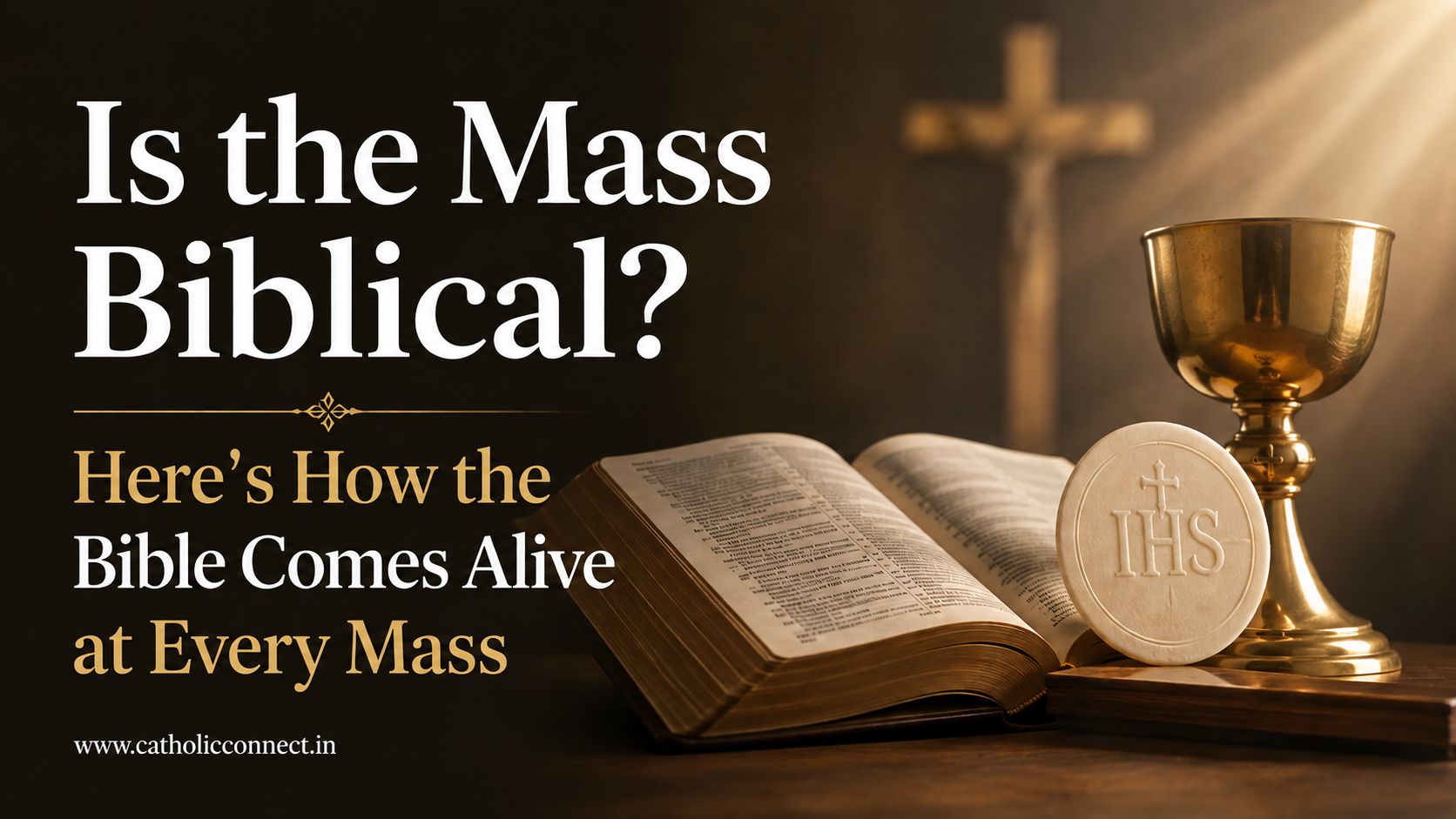
August 3, 2026: Some people ask, "Where is the Mass in the Bible?" The answer may come as a surprise: from the opening Sign of the Cross to the final "Amen," the Mass is woven from Sacred Scripture. Much of the prayers, proclamations and gestures either comes directly from the Bible or is deeply rooted in it. Rather than leaving the Bible behind when they enter church, Catholics step into its living story.


The Mass Begins with Scripture
The Mass opens with the Sign of the Cross using Jesus' own words from Matthew 28:19. The priest's greeting echoes St. Paul's blessing in 2 Corinthians 13:13, reminding the faithful that they gather in the presence of the Holy Trinity.
Repentance Before Worship

Before approaching the altar, the Church pauses to acknowledge sin and ask for mercy. This moment recalls Jesus’ teaching that reconciliation must come before sacrifice (Matthew 5:23–24) and echoes Psalm 51’s plea for cleansing, a clean heart, and a contrite spirit (Psalm 51:1–2, 10, 17). In the Mass, the Penitential Act is a humble preparation for the sacred mysteries, and the Church teaches that the regular confession of venial faults helps form conscience, heal the soul, and strengthen the life of grace (CCC 1458; Roman Missal, Order of Mass).
The Gloria Joins the Song of Heaven
On Sundays and solemnities, the Church sings the Gloria, which begins with the angels' hymn at Christ's birth: "Glory to God in the highest" (Luke 2:14). It continues with biblical titles for Jesus, including "Only Begotten Son," and the One seated at the Father's right hand (Hebrews 1:3). Far from being a later composition, the Gloria is a hymn built from the language of Scripture.
God Speaks Through His Word
The Liturgy of the Word proclaims readings from the Old Testament, Psalms, New Testament and Gospel. After the Gospel, the homily follows Christ's own example of explaining the Scriptures to His disciples (Luke 24:27). The Creed that follows summarises the Bible's story—from creation and the Incarnation to Christ's Resurrection, Ascension and the promise of eternal life.
Bread, Wine and Our Lives
During the Offertory, bread and wine are brought to the altar, recalling the offering of Melchizedek, the priest who presented bread and wine to God (Genesis 14:18). At the same time, the faithful offer their own lives to God, echoing St Paul's invitation to "present your bodies as a living sacrifice" (Romans 12:1).
Sanctus: Holy Worship Around the Throne
Just before the Eucharistic Prayer, the Church prays the Sanctus. The Mass places you in the same worship seen by the prophets and in heaven’s vision:
“Holy, holy, holy” (Isaiah 6:3)
heavenly praise without end (Revelation 4:8)
So the Sanctus is not a random “extra prayer.” It is your voice joining the worship of heaven because God is truly present.
The Eucharist Is Christ's Own Gift
The center of the Mass is the Eucharistic Prayer. Here the Church enters the mystery of the Last Supper and the Cross at the same time (Matthew 26:26–28; Mark 14:22–24; Luke 22:19–20; 1 Corinthians 11:23–26). Jesus took bread, gave thanks, broke it, and gave it to His disciples, saying, “This is my body” (Matthew 26:26; Mark 14:22; Luke 22:19; 1 Corinthians 11:24). Then He took the cup and said, “This is my blood of the covenant” (Matthew 26:27–28; Mark 14:23–24; Luke 22:20; 1 Corinthians 11:25). In Luke’s account, He adds the command: “Do this in remembrance of me” (Luke 22:19; 1 Corinthians 11:24–25). That command is not mere memory. It is Christ’s own invitation to proclaim the Lord’s death until He comes (1 Corinthians 11:26) and to receive the living bread that gives eternal life (John 6:53–56).
This is why the Eucharist is the heart of Christian worship. At Mass, the Church does what Christ commanded, and Christ fulfills what He promised. The same Lord who was recognised at Emmaus in the breaking of the bread is made known here as well (Luke 24:30–31). The disciples did not merely recall Jesus; they encountered the risen Lord through the breaking of the bread (Luke 24:30–31). The Eucharist is therefore both sacrifice and banquet, memorial and presence, cross and resurrection.
“Lamb of God”: The Bible’s Passover Fulfilled
“Lamb of God” (Agnus Dei) is rooted in John the Baptist’s proclamation: “Here is the Lamb of God” (John 1:29). The Mass is biblical because it presents Christ as the Passover sacrifice who takes away sin—not by metaphor alone, but through the real gift of the Eucharist.
Receiving Communion: Coming to Christ Like the Centurion
Before Communion, you pray that you are not worthy to receive—matching the centurion’s faith: “Lord, I am not worthy that you should enter under my roof” (Matthew 8:8). This prepares you to receive Christ with reverence, humility, and trust.
The Mass Ends with Mission
The Mass concludes with blessing and dismissal, because worship always leads to mission. After encountering the risen Lord, the disciples at Emmaus immediately returned to tell others what they had seen (Luke 24:33–35). Jesus also sent His disciples into the world, saying, “Go therefore and make disciples of all nations” (Matthew 28:18–20), and “As the Father has sent me, so I send you” (John 20:21). The Church therefore goes forth in the power of the Holy Spirit as Christ’s witnesses to the ends of the earth (Acts 1:8; Luke 24:46–49).
The Mass is biblical because it turns Scripture into worship and worship into encounter: the Bible is not only read at Mass, it is lived.
By Catholic Connect Reporter
Discover More About the Holy Mass:
Why Do Catholics Call It the Mass? The Answer Begins with Three Latin Words
How the Mass Developed Over 2,000 Years: A Journey Through History and Worship

© 2026 CATHOLIC CONNECT POWERED BY ATCONLINE LLP