- 15 May, 2026

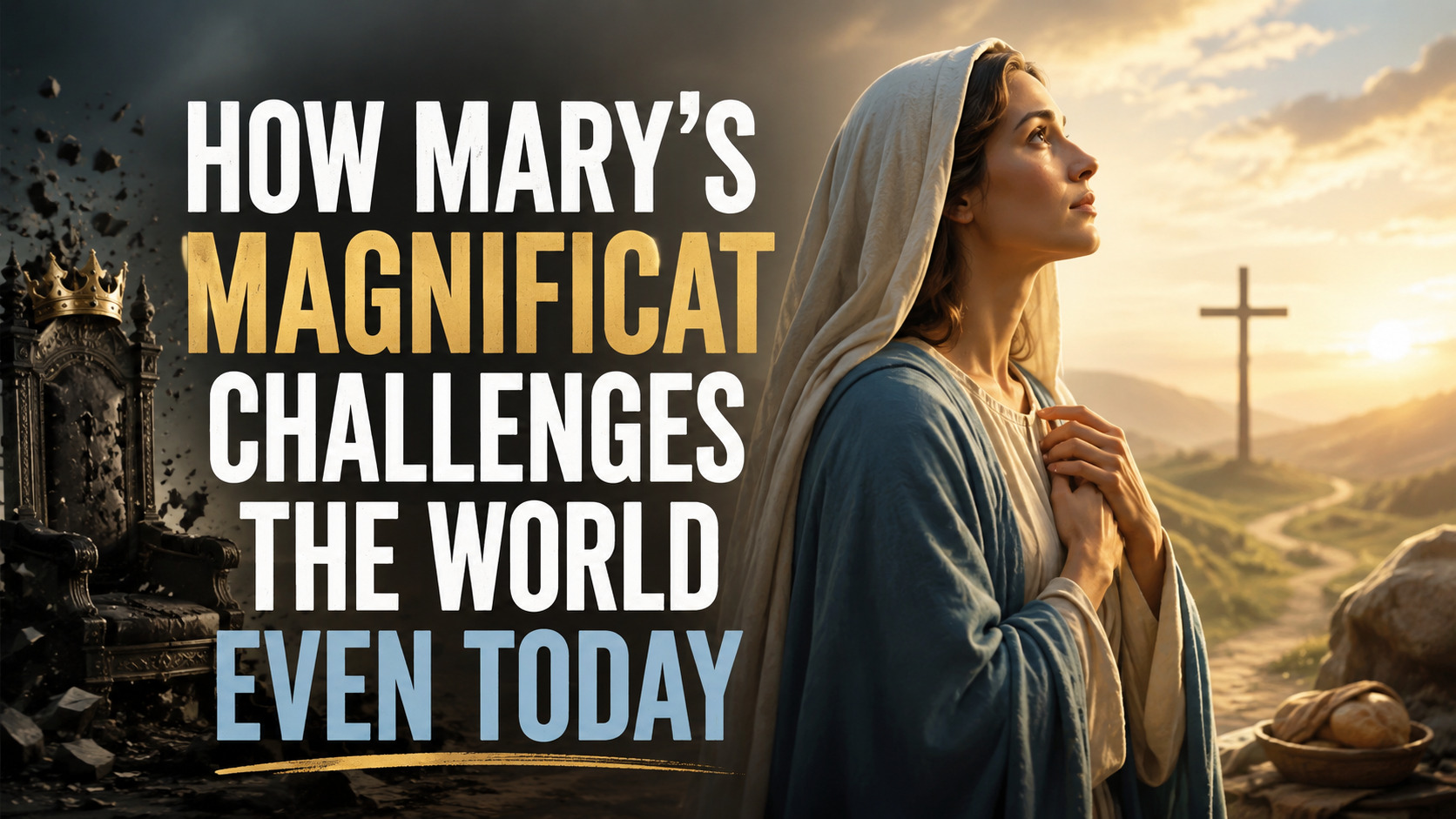
May 15, 2026: In a world driven by competition, social status and the constant pressure to appear successful, Mary’s words in the Gospel of Luke offer a message that feels both comforting and revolutionary.


When Mary visited her cousin Elizabeth, she did not deliver a speech or preach to crowds. Instead, she sang a prayer — a prayer now known as the Magnificat (Luke 1:46–55). Yet this was no ordinary hymn. Hidden within Mary’s gentle words is a bold vision of justice, humility and the kind of world God desires.
Even after centuries, the Magnificat continues to challenge the way people think, live and treat one another.


Humility in a World Seeking Attention
Mary begins by recognising her “lowliness” before God. She does not boast about being chosen to become the mother of Jesus. Instead, she places her trust completely in God.
In today’s world, where people often feel pressured to constantly prove their worth, gain recognition or seek validation online, Mary’s humility feels deeply relevant. Her life reminds believers that humility is not weakness or lack of confidence. Rather, it is the freedom to live without pride, comparison or the need to appear perfect.
Practising this humility can begin in simple daily ways — listening instead of interrupting, admitting mistakes without shame, avoiding gossip, appreciating others without jealousy and treating people with kindness even during stressful moments.
Mary’s example shows that holiness is often found not in grand gestures, but in ordinary acts done with love.
(CLICK HERE to follow Catholic Connect and to stay tune with the Church)
The Prayer of the “Great Reversal”
The Magnificat also contains some of the most powerful lines in the New Testament.
Mary proclaims:
“He has brought down rulers from their thrones but has lifted up the humble. He has filled the hungry with good things.”
These words reveal what many describe as the “Great Reversal” — the idea that God’s kingdom does not operate according to worldly standards.
In God’s eyes, greatness is not measured by wealth, popularity or influence, but by compassion, justice and love.
Even today, many people continue to experience loneliness, inequality, rejection and indifference. Mary’s prayer reminds Christians that faith is not only about attending church or praying privately. It is also about caring for people who feel unseen and standing beside those who are struggling.
Living out the Magnificat can happen through simple choices — helping someone in need, speaking respectfully to workers often ignored, supporting a friend going through difficulties or choosing honesty when dishonesty feels easier.
Mary’s Message for Today
The Magnificat also invites people to reflect on their modern “thrones” — pride, greed, unhealthy ambition, consumerism or even the obsession with social media approval.
Mary reminds believers that lasting fulfilment cannot be found only in success or possessions, but in living with humility, trust and compassion.
What makes the Magnificat so remarkable is that it came from Mary — a young woman with no political power, wealth or social influence, yet filled with extraordinary faith and courage.
This Marian month, the Church remembers not only Mary’s gentleness, but also her courage to proclaim a world transformed by God’s justice.
And perhaps that is why the Magnificat still speaks so strongly today — because it reminds people that God notices the humble, values the forgotten and continues to work through ordinary hearts willing to say “yes” to Him.
By Catholic Connect Reporter

© 2026 CATHOLIC CONNECT POWERED BY ATCONLINE LLP