- 09 October, 2026

Lubero, Democratic Republic of the Congo, May 2026: Fresh reports emerging from eastern Democratic Republic of the Congo have once again drawn global attention to the deep suffering faced by civilians living in conflict zones across North Kivu and Ituri.


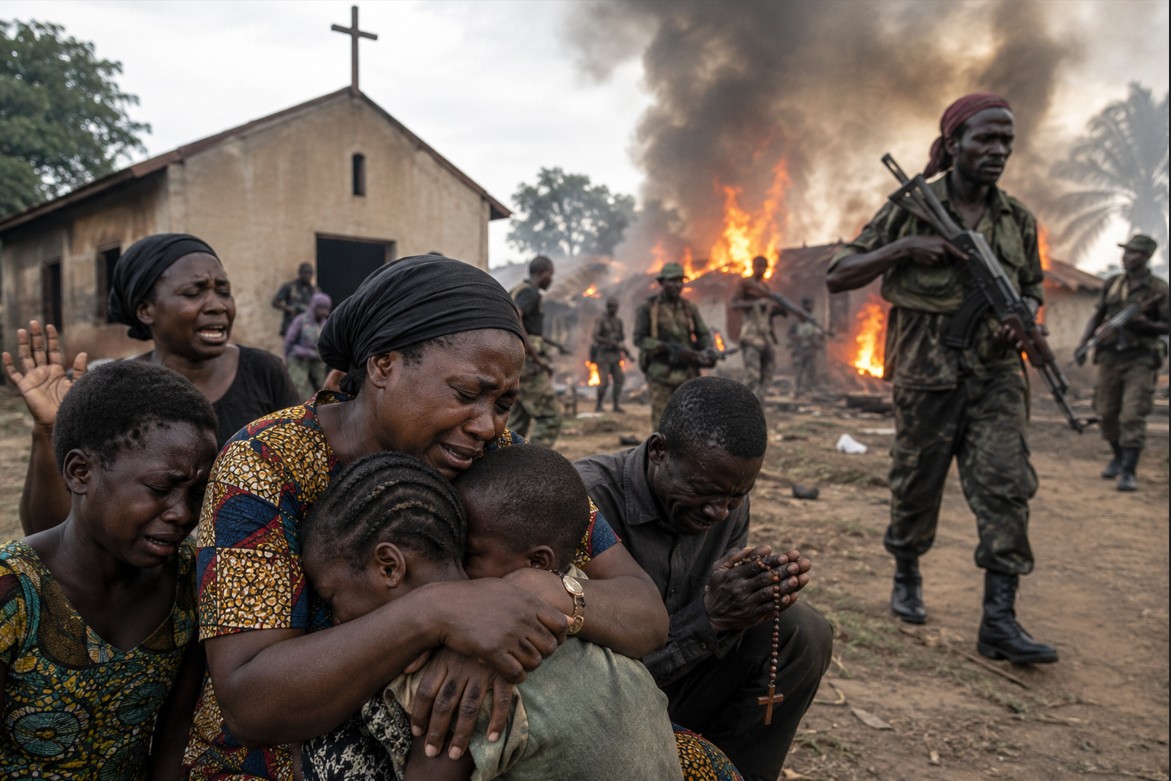
In recent days, tragic accounts have continued to surface following deadly attacks in the Lubero region, where civilians had reportedly gathered near or within a church community when violence erupted. Early reports suggest that dozens of people were killed in an assault believed to be linked to Islamist militant groups operating in eastern Congo, including factions associated with the Allied Democratic Forces (ADF) and Islamic State Central Africa Province (ISCAP).
While some details surrounding the incident remain difficult to independently verify as investigations continue, one painful truth is already clear: innocent lives were lost, families are grieving, and entire communities are once again living through trauma.
For many Christians around the world, these attacks are heartbreaking reminders that countless believers continue to worship, gather, and live under the constant threat of violence and instability.
Yet beyond religious identity, the suffering of civilians in eastern Congo should move every human heart toward compassion, prayer, justice, and peace.
Eastern Congo has endured years of armed conflict involving militant groups, extremist organizations, rebel movements, and local militias. Communities across North Kivu and Ituri provinces have repeatedly faced massacres, kidnappings, displacement, and attacks on places of worship.
Among the most feared groups is the Allied Democratic Forces (ADF), originally formed in Uganda before establishing a violent presence in eastern Congo. Since pledging allegiance to the Islamic State in 2019, the group—often referred to as Islamic State Central Africa Province (ISCAP)—has been linked to repeated attacks targeting civilians, including Christian communities.
Reports from recent years describe horrifying acts of brutality: villages burned, worshippers killed during prayer gatherings, churches destroyed, and civilians abducted. In April 2026, up to 60 Christians were reportedly massacred in Bafwakoa village in Ituri after allegedly refusing demands connected to Islamic State ideology. Local officials reported that victims were killed with machetes, homes were burned, and thousands were displaced.
Weeks later, further assaults were reported in Beni Territory and surrounding regions, with dozens more Christians killed in attacks claimed by ISCAP-linked militants.
The violence has become so severe that humanitarian organizations and religious freedom advocates now warn that Christian communities across parts of eastern Congo are facing systematic terror.
Behind every headline is a deeply personal story.
Families mourning loved ones who never returned home. Children displaced from villages destroyed overnight. Parents searching for abducted relatives. Communities gathering for prayer while living in fear of another attack.
Many testimonies reveal not only the scale of violence, but also the emotional and spiritual wounds left behind.
In many villages, churches are more than buildings. They are centers of hope, shelter, prayer, and community life. When violence reaches these sacred spaces, entire communities feel shattered. And yet, despite fear and devastation, many believers continue to gather for worship, refusing to surrender their faith.
The crisis in eastern Congo is deeply complex and cannot be reduced to a single cause.
Religious Extremism:
Groups linked to the Islamic State have increasingly targeted Christian communities in parts of eastern Congo. Their propaganda openly threatens Christians and promotes forced submission, intimidation, or displacement.
Weak Security and Armed Conflict:
Years of instability have left large areas vulnerable to armed groups. In remote regions, civilians often lack adequate protection, allowing militants to operate with relative freedom.
Humanitarian Collapse:
Conflict has displaced hundreds of thousands of people. Poverty, food insecurity, and lack of infrastructure deepen the suffering and leave communities highly vulnerable.
Cycles of Fear and Trauma:
Repeated violence has created an atmosphere where entire villages live under constant fear of attack, abduction, or retaliation.
Regional Instability:
The wider conflict involving rebel groups, political tensions, and cross-border instability has further weakened security across eastern Congo.
Human rights advocates, church leaders, and humanitarian organizations continue to call for greater international attention to the crisis unfolding in eastern Congo.
Recent reports estimate that thousands of civilians have been killed in the region over recent years, while many more remain displaced.
Organizations such as Open Doors, Aid to the Church in Need, and other humanitarian groups warn that persecution and extremist violence against Christian communities across sub-Saharan Africa are reaching alarming levels.
At the same time, humanitarian agencies stress that civilians of all backgrounds continue to suffer immensely amid ongoing violence.
The need for verified reporting also remains important. In conflict situations, information can spread rapidly online before all facts are confirmed. Compassion must therefore be joined with caution and responsibility.
But even as investigations continue, the grief of families and the suffering of survivors are undeniable.
The tragedy unfolding in eastern Congo is not simply a regional issue. It is a human tragedy.
For Christians worldwide, these attacks are painful reminders of the cost many believers continue to pay for gathering in worship and publicly living their faith.
Prayer alone cannot replace the need for justice, protection, and humanitarian support. But prayer remains a powerful expression of solidarity with suffering communities.
Catholics, churches, and people of goodwill around the world can respond by:
• Praying for victims, survivors, and displaced families
• Supporting trusted humanitarian and relief organizations
• Raising awareness through responsible and verified reporting
• Advocating for peace, accountability, and protection of civilians
• Standing in spiritual solidarity with persecuted communities
The violence in eastern Congo is a devastating reminder of how fragile peace can be.
One more community shattered. One more church left grieving. One more reminder that persecution and conflict continue to wound countless innocent people.
And yet even amid destruction, faith continues to endure.
Across eastern Congo, believers still gather to pray. Families still cling to hope. Church communities still care for the grieving and displaced.
The darkness of violence is real. But so is the courage of those who continue to trust God through unimaginable suffering.
Even in the most broken places, God has not forgotten the mourning, the displaced, or the fearful.
And for the people of eastern Congo, that hope remains desperately needed today.
By Catholic Connect Reporter

© 2026 CATHOLIC CONNECT POWERED BY ATCONLINE LLP