- 02 May, 2026

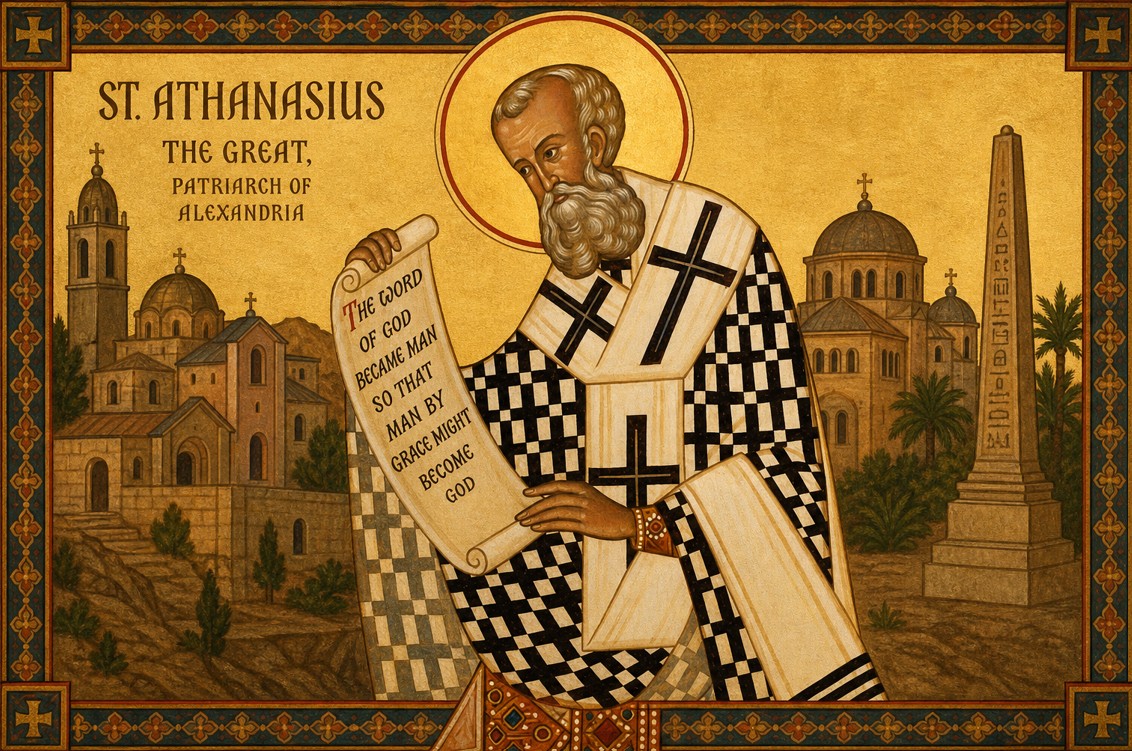
Egypt, May 2, 2026: Discover Saint Athanasius of Alexandria, the fearless defender of the Trinity who was exiled five times for the truth. Learn about his May 2 feast day, the Arian controversy, and his lasting impact on the Catholic faith.

Feast Day: May 2
Born: c. 293, Alexandria, Egypt
Died: May 2, 373, Alexandria
Known for: Defending the Trinity against Arianism


Title: Bishop of Alexandria, Doctor of the Church
Famous phrase: “Athanasius contra mundum” (Athanasius against the world)
What if standing for truth meant losing everything?
Exile. False accusations. Political enemies. Even fellow bishops opposing you.
Saint Athanasius of Alexandria lived this reality—and refused to compromise.
His courage didn’t just defend a doctrine.
It preserved the very foundation of Christianity.
In the 4th century, the Church faced a theological crisis that shook its core: the Arian controversy.
Arius taught that Jesus was not fully God—but a created being.
This idea spread rapidly, even gaining support from powerful leaders.
The unity of the Church was at risk.
At the Council of Nicaea, the Church boldly proclaimed that Christ is fully divine—“consubstantial with the Father.”
But the battle was far from over.
Athanasius was only a young deacon at Nicaea.
Yet his clarity and conviction stood out.
Soon after, he became Bishop of Alexandria—one of the most influential positions in the Church.
From that moment on, his life became a battlefield for truth.
Here is what makes his story extraordinary:
He was exiled not once—but five times.
Why?
Because he refused to accept the false teaching that Christ was less than God.
Political leaders and even Church figures opposed him.
At one point, he was driven into the desert, hiding among monks while continuing to write and teach.
His enemies had power.
He had conviction.
Athanasius earned the title:
“Athanasius contra mundum”—Athanasius against the world.
It wasn’t exaggeration.
At times, it seemed like the majority of leaders supported Arianism.
Yet he stood firm.
His writings—especially On the Incarnation—explained a truth central to Christianity:
Jesus Christ is fully God and fully man, sent to save humanity.
Without this truth, Christianity collapses.
What gave him such endurance?
It wasn’t political skill or personal ambition.
It was his deep conviction about who Christ is.
For Athanasius:
If Christ is not truly God, He cannot truly save.
This belief fueled decades of suffering, exile, and resistance.
Saint Athanasius didn’t just defend doctrine—he shaped the future of Christianity.
His impact includes:
Defending the Nicene Creed
Strengthening belief in the Trinity
Influencing future Church Fathers
Helping define orthodox Christian theology
His writings became foundational for generations.
After years of exile and struggle, Athanasius finally returned to Alexandria.
He spent his final years in peace, strengthening the Church he fought so hard to protect.
He died on May 2, 373.
The truth he defended had prevailed.
His life speaks powerfully to modern believers:
Truth is worth suffering for
Faithfulness matters more than popularity
Standing alone does not mean being wrong
Courage is often quiet, persistent, and costly
In every generation, truth faces challenges.
Compromise is often easier.
Silence is safer.
Saint Athanasius reminds us:
Faith is not about comfort—it is about conviction.
Saint Athanasius didn’t just live in history.
He changed it.
When the truth about Christ was under attack, he stood firm—even when it cost him everything.
This May 2, his life asks a direct and challenging question:
Would we stand for truth… even if the world stood against us?
To know about more saints please visit the spiritual section.
By Catholic Connect Reporter
_______________________________
Saint Athanasius of Alexandria, May 2 feast day saint, Catholic Church Fathers, Arian controversy explained, defender of the Trinity, Nicene Creed history, early Church saints, Doctor of the Church Athanasius

© 2026 CATHOLIC CONNECT POWERED BY ATCONLINE LLP