- 22 April, 2026
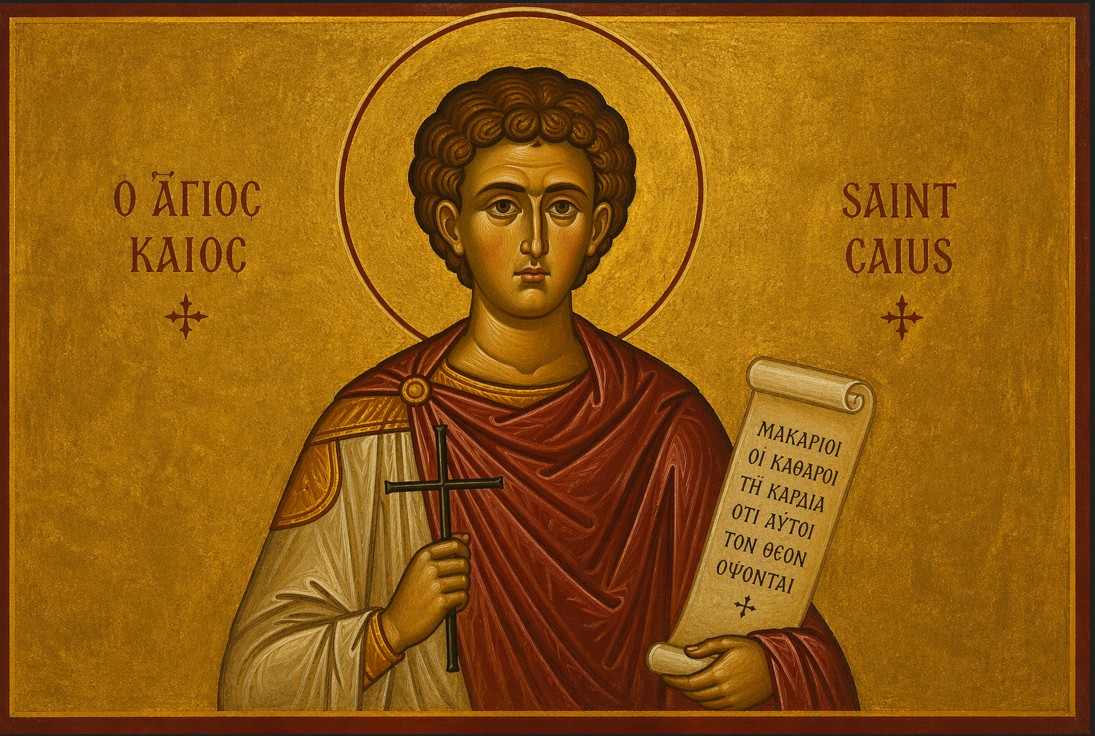
Italy, April 21, 2026 — Discover Saint Caius, the early pope who guided the Church through danger and secrecy. Learn about his feast day (April 22), life, and enduring spiritual legacy.

Feast Day: April 22
Died: April 22, 296, Rome, Italy
Title: Pope (283–296)
Known for: Leading the Church during hidden persecution


Region: Rome, Roman Empire
Also known as: Saint Gaius
What if one of the most important leaders in Church history lived almost entirely in silence?
Saint Caius is one of the least-known popes.
Yet his leadership came at a critical moment.
He guided the Church from 283 to 296—a time when Christianity stood on the edge of persecution and uncertainty.
Very little about his life has survived.
But what we do know reveals a story of quiet courage.
Unlike later saints who preached openly, Caius led in a world where faith could cost everything.
During the reign of Emperor Diocletian, tensions against Christians were rising.
Though full persecution had not yet begun, the threat was real.
Tradition holds that in his final years, Caius carried out his mission in secrecy, even hiding in the catacombs of Rome.
Imagine leading the Church—not from a throne, but from underground.
Saint Caius did more than survive difficult times.
He helped organize the Church.
One important tradition attributes to him a structured path to becoming a bishop.
Before reaching that role, a man had to serve in several stages:
Porter
Reader
Exorcist
Acolyte
Subdeacon
Deacon
Priest
This system helped bring order and stability to a growing Church.
Even in uncertainty, he was building the future.
Some traditions suggest that Caius may have been related to Emperor Diocletian.
If true, this makes his life even more striking.
He could have chosen influence and safety.
Instead, he chose the path of faith—serving a persecuted Church rather than aligning with imperial power.
Was Saint Caius a martyr?
The answer is not entirely clear.
Earlier traditions claimed he died for the faith.
But historical evidence suggests he may have died peacefully before the worst persecutions began.
What remains certain is this:
He lived faithfully in a time when martyrdom was always a possibility.
Saint Caius was buried in the Catacomb of Callixtus in Rome.
His tomb and inscription were later discovered—quiet proof of his existence and leadership.
He may not have left behind writings or dramatic stories.
But he left something just as powerful:
A Church that endured.
During his papacy:
Christian communities continued to grow
Church structure became more defined
Faith survived in the face of uncertainty
His leadership helped prepare the Church for the severe persecutions that would soon follow.
His life offers profound insights:
Faithfulness does not require recognition
God works even through hidden lives
Courage is often quiet, not dramatic
Leadership means serving even in uncertainty
In a world that values visibility and influence, his life offers a different message:
You can lead without being seen
You can remain faithful in uncertain times
You can make an impact without recognition
He reminds us that not all saints are known—but all are necessary.
This April 22, the feast of Saint Caius invites us to reflect:
What if the most important work we do is unseen?
He led without recognition.
He served without security.
He remained faithful in uncertainty.
And through that quiet leadership, he helped preserve the Church in one of its most fragile moments.
To know about more saints please visit the spiritual section.
By Catholic Connect Reporter
_______________________________
Saint Caius, Pope Caius, April 22 saint feast day, early Church popes, Catholic pope saints history, saints of Rome, persecution of early Christians, Saint Caius biography

© 2026 CATHOLIC CONNECT POWERED BY ATCONLINE LLP