- 14 September, 2026

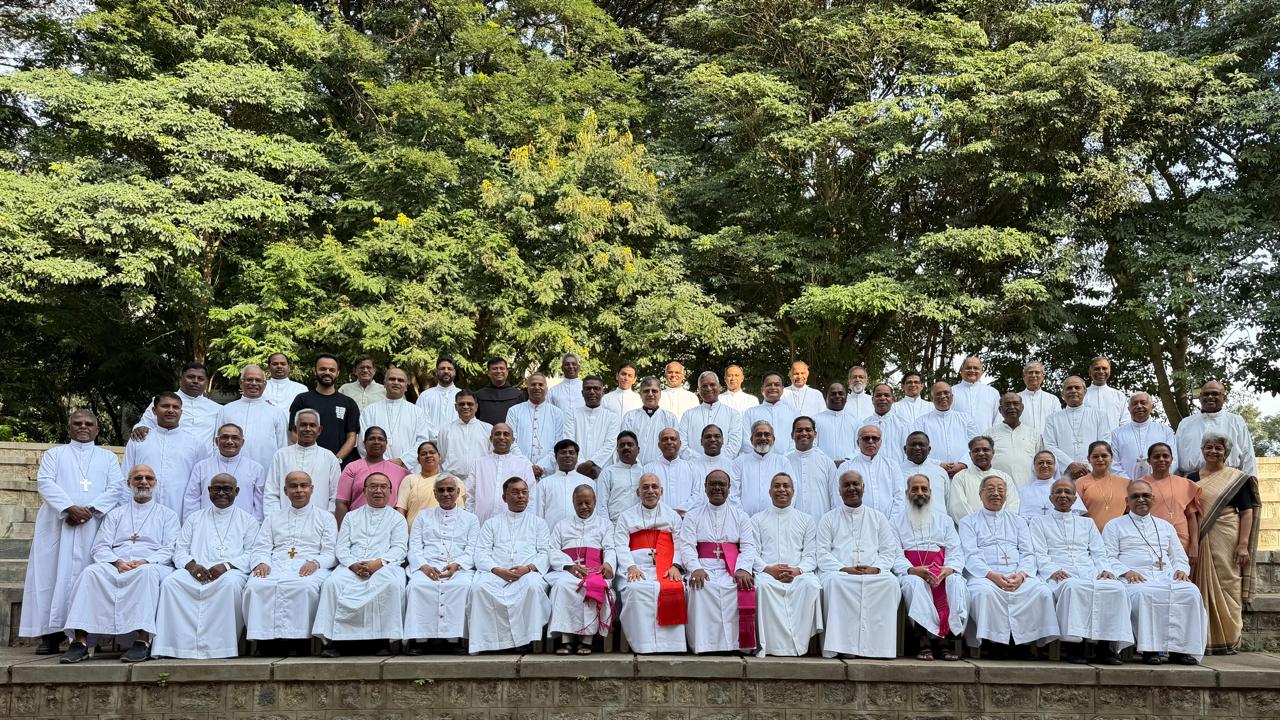
Bengaluru, September 14, 2026: The third day of the CCBI gathering centred on the meaning of synodality and the call for the entire People of God to listen, discern and participate actively in the Church’s mission.

Reflections on communion, listening, the sacramental nature of the Church, Baptism and the Eucharist highlighted the shared responsibility of clergy, religious and laity in the life and mission of the Church.
The day began with an address by CCBI President Cardinal Filipe Neri Ferrão, who reflected on the Church’s mission and the need for a renewed commitment to walking together as a synodal Church. He emphasised communion, participation and mission as essential to responding to the pastoral realities of the Church in India.
Cardinal Ferrão encouraged participants to recognise that every member of the Church has a role in building communion and contributing to its mission.

Listening as the Way to Renewal
Fr. Stephen introduced the day’s programme, placing the discussions within the broader journey of renewal and restructuring undertaken by the CCBI.
He invited participants to approach the deliberations with openness, attentive listening and a willingness to discern together.
Fr. Christopher Vimal Raj led a reflection on listening as a fundamental dimension of synodality. He noted that genuine listening goes beyond hearing words and requires openness to the experiences, perspectives and concerns of others, as well as attentiveness to the movement of the Holy Spirit.
Such listening, he said, creates space for dialogue, mutual understanding and communal discernment. It enables the Church to move beyond individual perspectives and seek together what best serves its mission.
Church as Sign and Instrument of God’s Presence
Fr Christopher also reflected on the sacramental nature of the Church, presenting it as a visible sign and instrument of God’s presence and action in the world.
He explained that the Church’s structures, ministries and pastoral activities derive their meaning from the mission of making Christ and the Gospel present in concrete human situations.
This understanding, he said, has important implications for pastoral structures. Programmes and structures are not ends in themselves but must serve communion, encourage participation and enable the Church to bear more effective witness to Christ.
Mission of the Whole People of God
The reflection connected sacramentality and synodality with the baptismal vocation of every Christian.
Baptism, participants were reminded, is the foundation of Christian identity and participation in the Church. Through Baptism, every Christian becomes a member of the Body of Christ and receives a call to share in the Church’s mission.
Consequently, mission cannot be viewed solely as the responsibility of ordained ministers or those holding formal positions of leadership. Clergy, religious and laity bring distinct gifts and responsibilities to the Church’s life and mission.
Eucharist as Source of Mission
The discussions further linked the baptismal vocation with the Eucharistic identity of the Church.
As a Eucharistic people, Christians are nourished and united in Christ before being sent into the world to live and proclaim the Gospel. The Eucharist is therefore both an expression of communion and a source of mission.
Those gathered at the Eucharistic table are called to bear witness to Christ through their lives, relationships, service and commitment to their communities.
The day’s reflections brought together listening, synodality, sacramentality, Baptism and the Eucharist as interconnected dimensions of the Church’s mission.
The discussions underscored that renewal should not be reduced to organisational restructuring. Rather, it is an opportunity to foster a Church that is more participatory, missionary and committed to walking together as the People of God.
By Catholic Connect Reporter


© 2026 CATHOLIC CONNECT POWERED BY ATCONLINE LLP