- 25 July, 2026

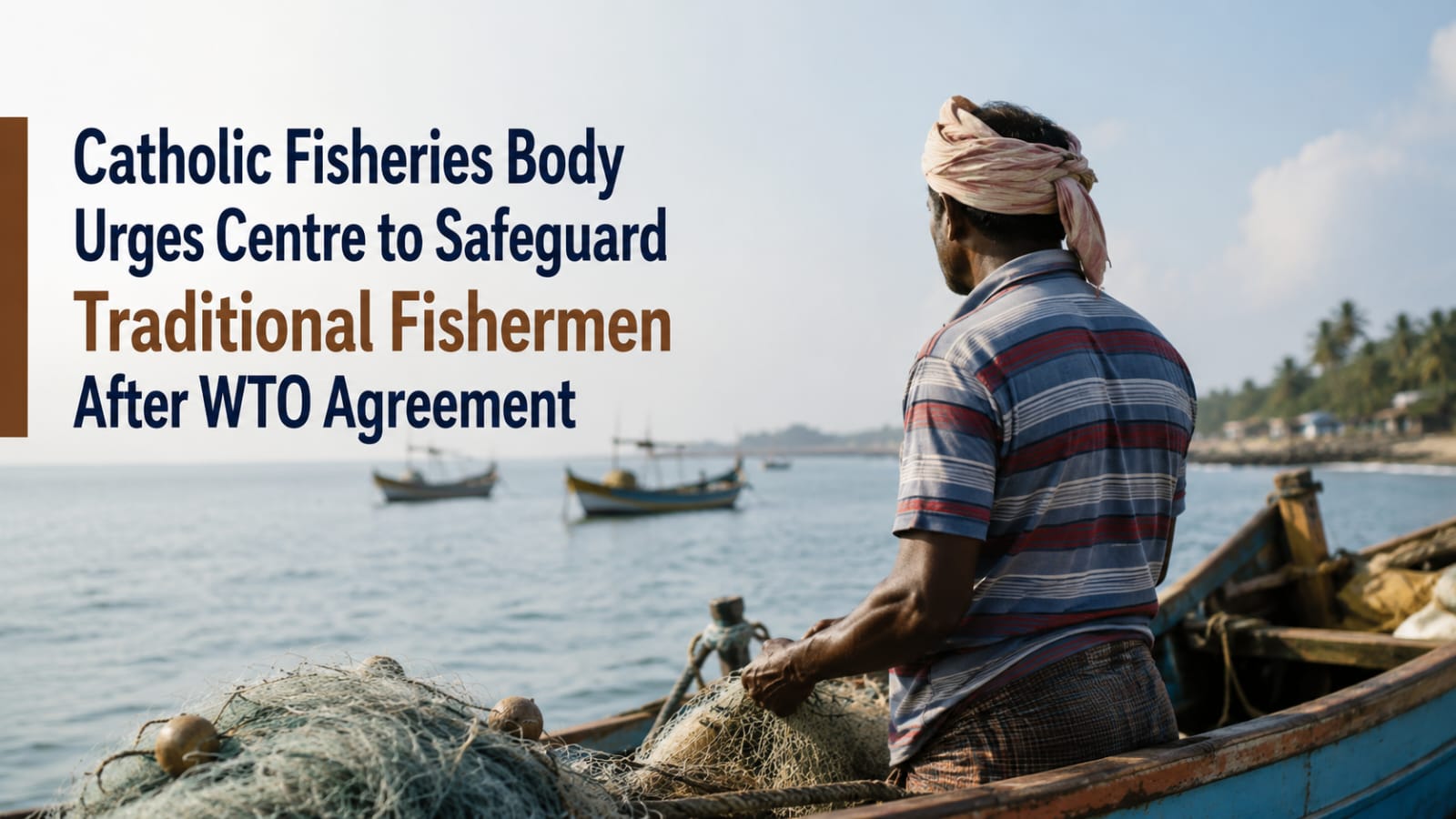
KOCHI, July 25, 2026: The Coastal Area Development Agency for Liberation (CADAL) has urged the Central Government to ensure that India’s acceptance of the World Trade Organization (WTO) Fisheries Subsidy Agreement does not undermine the livelihoods of traditional fishermen or hinder the development of the country’s fisheries sector.


India formally accepted the agreement on July 20, when the Commerce Secretary submitted the instrument of acceptance to the WTO Director-General in Geneva. With the move, India became the 123rd WTO member to accept the agreement.
In a press release, CADAL Chairman Bishop James Anaparambil, General Secretary Joseph Jude and Director Celestine Puthenpurackal called on the government to take necessary safeguards while implementing the agreement to protect traditional fishing communities and support the growth of the fisheries sector.


The organisation acknowledged the importance of sustainable management and conservation of marine resources and the need to combat illegal fishing, describing these as shared responsibilities of the international community. However, it stressed that international trade regulations must recognise the historical differences, varying levels of development and livelihood realities of developed and developing countries.
CADAL said Kerala's fisheries sector remains largely dependent on traditional and small-scale fishing, with hundreds of thousands of families relying on government support for fuel assistance, boat modernisation, safety equipment, fishing harbour infrastructure, cold storage and social security programmes.
It expressed concern that financial assistance provided through schemes such as the Pradhan Mantri Matsya Sampada Yojana, a central fisheries development programme launched in 2020, as well as fuel subsidies provided by the Kerala government, could be affected if such support is restricted under the WTO framework.
“It's biggest impact will be on traditional fishermen in coastal states including Kerala,” the organisation warned.
CADAL also pointed to India's efforts to expand its role in the global fisheries sector through initiatives involving deep-sea fishing, tuna fishing and the blue economy. It argued that developed countries have historically strengthened their fisheries industries through substantial government subsidies and said applying identical restrictions to developing countries at an earlier stage of development would be inequitable.
The organisation urged the Central Government to firmly defend the interests of India's fishing communities in future WTO negotiations and intensify diplomatic efforts to ensure that essential government support for traditional and small-scale fishermen is not categorised as “harmful subsidies.”
“Sustainable fishing and environmental protection are essential, but they must be within a framework that ensures social justice, livelihood security and the right to development,” CADAL said.
By Joseph Jude, KRLCC


© 2026 CATHOLIC CONNECT POWERED BY ATCONLINE LLP