- 28 April, 2026

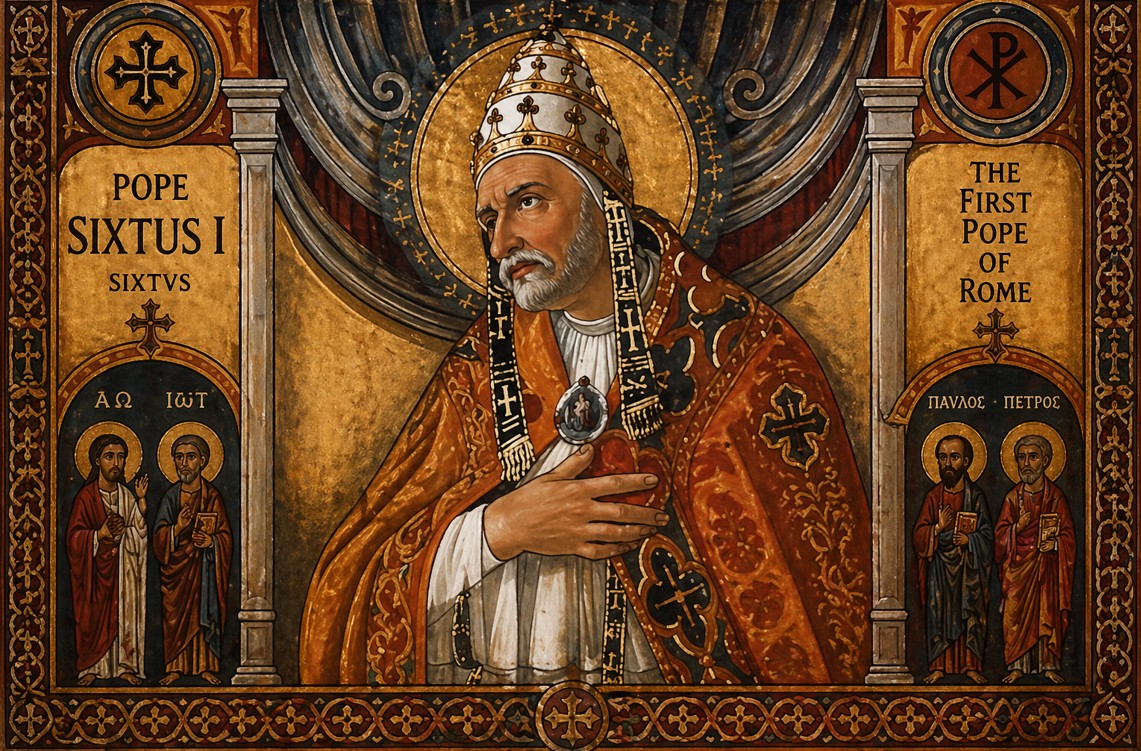
Pope Sixtus I succeeded Pope Alexander I and guided the Church during a time when liturgical discipline and reverence in worship were becoming more clearly defined.

This section provides a clear snapshot, helping readers quickly understand who he was and the time in which he lived.
As the seventh successor of Saint Peter, Sixtus I is remembered for strengthening reverence and discipline within the Church’s liturgical life. His leadership helped preserve the sacred character of Christian worship during a time of gradual growth.


Little is known about the early life of Sixtus I. Tradition suggests he was either Roman or of Greek descent. Like many early Church leaders, he likely grew up in a predominantly pagan society and came to embrace Christianity through the witness of earlier believers.
Following the death of Pope Alexander I, Sixtus I was chosen as Bishop of Rome. His election continued the line of apostolic succession, ensuring continuity in leadership and safeguarding the traditions passed down from the apostles.
Sixtus I led the Church in the early second century under the Roman Empire.
Although the severe persecutions under Emperor Nero were in the past, Christians still practiced their faith with caution due to ongoing uncertainty.
Tradition attributes several important contributions to Sixtus I:
These contributions were important because they helped maintain the dignity and unity of worship, reinforcing the sacred identity of the Church.
Sixtus I is remembered for:
His spirituality reflects a strong emphasis on honoring the sacred and maintaining proper devotion in Christian life.
Sixtus I faced several challenges:
Though no major controversies are recorded, guiding a growing Church required steady and careful leadership.
While no writings of Sixtus I survive, his life conveys a meaningful message: Reverence in worship reflects the depth of faith in the heart.
Tradition holds that Sixtus I died in Rome, possibly as a martyr, though details remain uncertain.
He is honored as one who helped preserve the sacred dignity of Christian worship.
St. Sixtus I represents:
His leadership helped shape how the Church approaches sacred liturgy.
Why does St. Sixtus I matter today?
His legacy continues through the structured life of the Church today, carried forward by his successors.
To know more about the previous Popes, click here
By Catholic Connect Reporter

© 2026 CATHOLIC CONNECT POWERED BY ATCONLINE LLP