- 28 April, 2026
Abuja, Nigeria, 28 April 2026: More than three weeks after Easter celebrations concluded, the pain of that sacred season still lingers deeply in parts of Nigeria. What should have been a time of joy, renewal, and hope instead became a stark reminder of the ongoing persecution faced by Christian communities across the country.

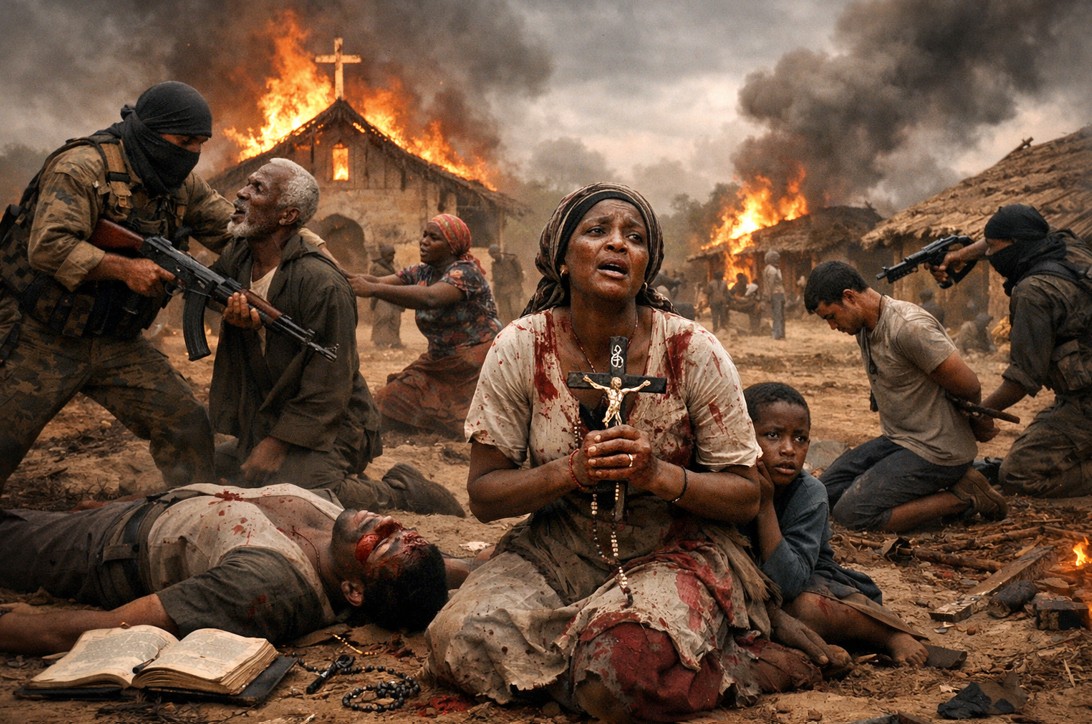
The Easter attacks—where dozens of worshippers lost their lives—were not isolated incidents. Rather, they revealed a troubling pattern: key Christian moments and gatherings increasingly becoming targets of violence. From Palm Sunday through Easter and beyond, reports continue to emerge of assaults on churches, villages, and innocent families whose only “crime” is their faith.
Survivors recall how armed groups stormed into communities, interrupting prayers, burning homes, and forcing entire villages to flee. In some places, believers returned days later to find their churches reduced to ash—the very sanctuaries where generations had been baptized, married, and laid to rest.
Yet even in destruction, one truth stands firm: the Church is not just a building. And despite attempts to silence it, the faith of Nigerian Christians remains unshaken.


The Easter violence is part of a broader and deeply concerning trend. Christian communities in northern and central Nigeria have faced repeated attacks over the years, often intensifying during religious seasons or large gatherings.
Groups such as Boko Haram and Islamic State West Africa Province continue to target Christian populations. Their methods are calculated: attack during worship, destroy places of gathering, and create fear that discourages public expressions of faith.
But beyond extremist groups, violence also emerges from complex local conflicts—especially in Nigeria’s Middle Belt—where tensions between predominantly Muslim Fulani herders and largely Christian farming communities often escalate into deadly clashes.
Understanding the persecution requires looking beyond headlines to the deeper forces at play.
1. Religious Extremism:
Militant groups seek to impose strict ideological control and often view Christianity as a threat. Churches become symbolic targets, representing both faith and community identity.
2. Land and Resource Conflicts:
Competition over land remains a major driver of violence. Many Christian communities are farmers whose lands are increasingly contested, leading to displacement and conflict that frequently takes on a religious dimension.
3. Weak Security and Governance:
In many affected areas, limited government presence leaves communities exposed. Delayed responses and lack of adequate protection allow attackers to operate with relative freedom.
4. Culture of Impunity:
A recurring concern among local leaders is the lack of accountability. When perpetrators are not brought to justice, it fuels further violence and deepens fear among victims.
5. Targeting of Identity:
For many attackers, the goal is not just land or power—but erasing the visible presence of Christianity. Destroying churches, schools, and homes is intended to dismantle both faith and community life.
Behind every statistic is a story of loss. Families grieving loved ones killed during prayer. Children growing up in displacement camps. Communities struggling to rebuild with limited resources.
Churches—once vibrant centers of worship and fellowship—now stand in ruins in many regions. And yet, remarkably, believers continue to gather. Sometimes under open skies, sometimes in makeshift shelters, they pray, sing, and hold onto hope.
The words of the Gospel of Matthew resonate deeply in such times: “Blessed are those who are persecuted for righteousness’ sake…” For many Nigerian Christians, this is not just scripture—it is lived reality.
The suffering of Christians in Nigeria is not a distant issue—it is a call to the global Church. Catholics and people of goodwill around the world have a vital role to play in responding to this crisis.
1. Prayer as Strength:
Prayer remains the first and most powerful response. Families, parishes, and communities can offer Rosaries, Mass intentions, and personal prayers for those facing persecution. As the Psalms reminds us, “The Lord is close to the brokenhearted.”
2. Raising Awareness:
Many of these incidents receive limited global attention. Sharing verified reports, organizing discussions, and using media platforms can help bring visibility to the struggles of Nigerian Christians.
3. Supporting Relief Efforts:
Catholic charities and humanitarian organizations on the ground provide essential aid—food, shelter, healthcare, and trauma support. Financial contributions can directly impact displaced families trying to rebuild their lives.
4. Advocacy for Justice:
Engaging with policymakers and international institutions can help push for stronger protections and accountability. Religious freedom must remain a global priority.
5. Building Spiritual Bonds:
Parishes can form connections with affected communities—through prayer partnerships, messages of solidarity, and cultural exchange—reminding them they are not alone.
These events may have exposed the harsh reality of persecution, but they also revealed something deeper: a faith that refuses to be extinguished.
Attackers may burn churches, scatter communities, and attempt to instill fear. But the resilience of Nigerian Christians tells another story—a story of courage, endurance, and unwavering trust in God.
As the Letter to the Romans encourages, “Be faithful in prayer.” This faith continues to sustain communities even in the face of unimaginable hardship.
The message of the Resurrection still echoes—not just as a theological truth, but as a lived experience. Out of suffering, hope rises. Out of destruction, faith endures.
And in Nigeria today, that faith continues to stand—unbroken, courageous, and alive.
By Catholic Connect Reporter
© 2026 CATHOLIC CONNECT POWERED BY ATCONLINE LLP