- 09 August, 2026

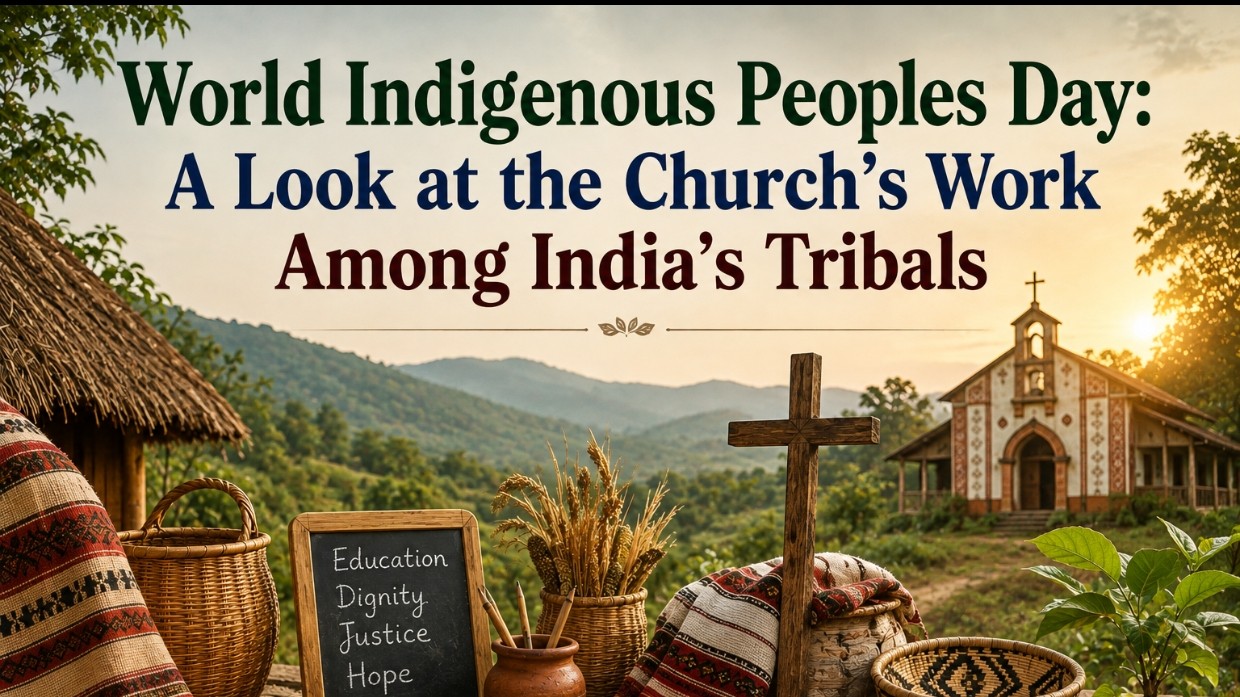
August 9, 2026: What does it really mean to stand with Indigenous people? Is it simply about speaking up for their rights on a particular day, or is it about walking with them when they need a school, a home, a livelihood, a voice or someone willing to defend their dignity?


Across India, the Catholic Church has been doing just that for generations.
From the forests of Jharkhand to the tribal villages of Assam, from the communities of Kerala to the hills of Manipur, priests, religious sisters, missionaries and lay people have worked alongside Indigenous communities — educating children, empowering women, developing communities, protecting cultures and standing up for rights.


Here are just a few recent glimpses of that much larger story.
A home can mean more than four walls
In Tamil Nadu, the Tamil Nadu Bishops’ Council’s Commission for Scheduled Castes and Scheduled Tribes launched a project to build 60 houses for vulnerable Dalit and Tribal families living in severe poverty. Twelve houses have already been completed, with work underway on the remaining 48.
For these families, the project is about more than construction. It is about giving people something every family deserves — security, stability and dignity.
When faith transforms a village
In Bhitar Panbari, Assam, the Church’s presence began with small communities coming together in prayer. Through Basic Ecclesial Communities, that faith gradually became a source of wider community development in a village that had faced isolation, poor infrastructure and widespread illiteracy.
It is a reminder that sometimes the Church’s work begins with something as simple as people coming together — and discovering that they can transform their community together.
Education that creates leaders
For decades, the Ranchi Jesuit Province has invested in Adivasi communities through education, vocational training and leadership formation. Its educational ministry across Chotanagpur and Assam now reaches more than 41,500 students.
But the impact goes beyond classrooms. Generations of young people have gone on to become teachers, professionals, public servants, Church leaders and voices for their own communities.
When standing with people means standing for their rights
The Church’s work has not always been about building institutions or providing services. Sometimes it has meant standing beside communities when their rights are threatened.
The Bagaicha Centre in Ranchi, founded by Jesuit Fr Stan Swamy, continues to accompany Adivasi communities in their struggles concerning land, dignity and justice, carrying forward a mission that became central to Fr. Stan’s life and legacy.
Giving tribal children a place to grow
In Kerala, the Sisters of Nazareth have accompanied the Muthuvan tribal community in Marayoor for decades. Their work includes boarding homes and education for tribal children, giving young people access to opportunities that might otherwise remain beyond reach.
The sisters have also worked to strengthen women’s economic participation and independence, showing that empowering a community often begins by empowering its women.
Helping communities find their own voice
In parts of Andhra Pradesh and Tamil Nadu, religious sisters have helped Indigenous communities establish Village Development Committees and train local people as leaders.
The idea is simple but powerful: communities should not merely receive help; they should have a voice in deciding what their communities need and how they will move forward.
Giving young people a reason to dream
In Latehar, Jharkhand, the Diocese of Daltonganj, together with Street Providence, launched a football development programme for 60 tribal students — 30 boys and 30 girls.
A football field may seem far removed from questions of poverty or social development. But for these young people, sport can mean confidence, discipline, friendship and an opportunity to imagine a different future.
Faith that celebrates identity
And standing with Indigenous communities also means celebrating who they are.
In Manipur, more than 500 women from eight Anal Catholic communities gathered for a four-day conference focused on faith formation, community development and cultural identity. The gathering also saw 130 participants receive the Sacrament of Confirmation, bringing faith and cultural belonging together.
These are only a few recent examples. The story is much larger.
For generations, Catholic schools, hospitals, hostels, social centres, pastoral missions and religious congregations have been present among India’s tribal communities. Their work has touched education, healthcare, livelihoods, leadership, women's empowerment, youth development, culture and advocacy for land and human rights.
And perhaps that is what it means to truly stand with Indigenous Peoples: not simply to speak about them, but to walk with them.
This is at the heart of the Church’s mission among Indigenous communities.
Pope Francis, in Querida Amazonia, called for respect for Indigenous cultures and urged the Church to stand alongside communities in defending human dignity, protecting creation and promoting justice. Laudato Si’ likewise draws attention to the wisdom of Indigenous communities and their profound relationship with the earth.
So, as the world marks the International Day of the World's Indigenous Peoples, perhaps the question is not simply, “What can we do for Indigenous communities?”
Perhaps it is also: “What can we learn from the communities we have been walking alongside?”
Their resilience, their cultures, their relationship with creation and their determination to preserve their identity have much to teach us.
And the Church’s story among India’s Indigenous Peoples continues — not as a story of doing things for them, but of walking with them towards dignity, justice, opportunity and hope.
By Catholic Connect Reporter
Continue Reading on Catholic Connect App
Get access to exclusive news articles & more.
© 2026 CATHOLIC CONNECT POWERED BY ATCONLINE LLP