- 08 May, 2026

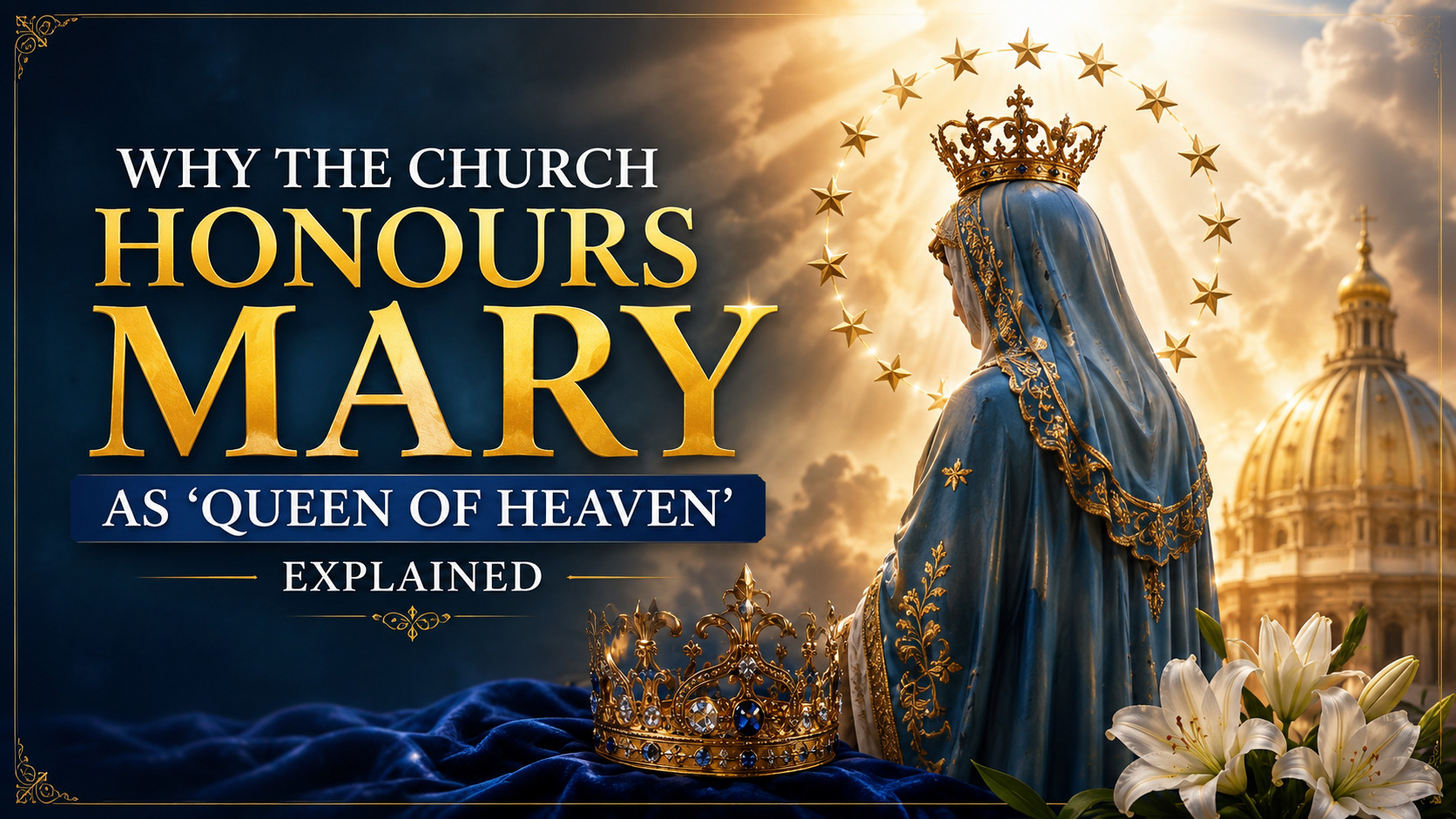
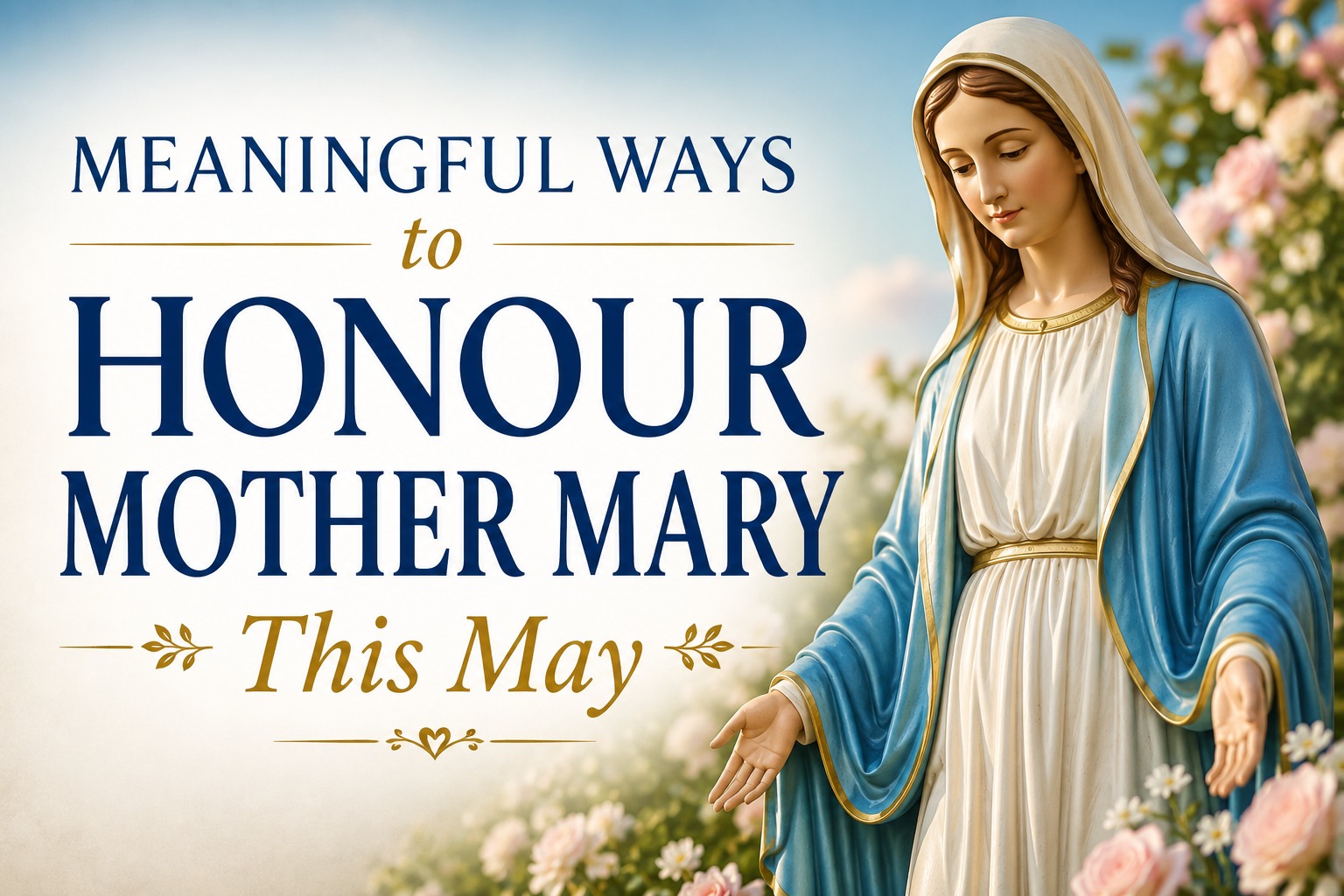
May 8, 2026: She is called the “Queen of Heaven” in hymns, prayers and centuries of Christian devotion — but where did this title come from? Is it rooted in the Bible, Church tradition, or both? For millions of Christians around the world, Mary’s queenship is not merely a title of honour, but a reflection of her unique role beside Jesus Christ in salvation history.


A Mother Crowned Beside Her Son
For centuries, Christians across the world have lifted their eyes to heaven and lovingly called Mary the “Queen of Heaven.” In cathedrals and chapels, through ancient hymns and whispered prayers, believers have honoured her not as a goddess, but as the humble mother chosen by God to bear Jesus Christ, the King of Kings.
For centuries, Christians across the world have lifted their eyes to heaven and lovingly called Mary the “Queen of Heaven.” In cathedrals and chapels, through ancient hymns and whispered prayers, believers have honoured her not as a goddess, but as the humble mother chosen by God to bear Jesus Christ, the King of Kings.


The title Regina Caeli — “Queen of Heaven” — carries deep spiritual meaning in Catholic and Orthodox traditions. Though the exact phrase is not directly mentioned in the Bible, the belief is rooted in Scripture, sacred tradition, and the lived faith of the Church through the centuries. For many faithful, Mary’s queenship is a reminder that humility, obedience, and love are exalted in the Kingdom of God.
The Queen Mother in the Kingdom of David
One of the strongest biblical foundations for Mary’s queenship comes from the Old Testament tradition of the Gebirah, or “Great Lady.” In the ancient Kingdom of Israel, the king’s mother held a position of honour and influence.
In 1 Kings 2:19-20, Bathsheba, the mother of King Solomon, enters the royal court. Solomon rises to greet her, bows before her, and seats her at his right hand. This powerful image reveals the dignity given to the mother of the king.
Christian theologians see this as a foreshadowing of Mary. Since Jesus is the eternal King in the line of David, Mary is understood as the Queen Mother of the heavenly kingdom. Just as Solomon honoured Bathsheba, Christ honours His mother with a place close to Him.
The Woman Crowned with Stars
Another important scriptural image comes from the Book of Revelation.
Revelation 12:1 declares: “A great sign appeared in heaven: a woman clothed with the sun, with the moon under her feet and a crown of twelve stars on her head.”
For Catholics and Orthodox Christians, this radiant woman points to Mary, the mother of Jesus. The chapter speaks of the woman giving birth to the child destined to rule all nations — a clear reference to Christ. The crown of twelve stars has therefore been seen as a sign of Mary’s heavenly queenship.
This image has inspired generations of Christian art, prayer, and devotion. It presents Mary not in earthly splendour, but in heavenly glory, clothed in the light of God.
The Church’s Recognition of Mary’s Royal Dignity
The Church’s understanding of Mary as Queen developed gradually through prayer, reflection, and theological teaching.
A major moment came during the Council of Ephesus in 431 AD, when Mary was officially proclaimed Theotokos, meaning “God-bearer” or “Mother of God.” By affirming the divine identity of Jesus, the Church also recognised the unique dignity of His mother.
Centuries later, Pope Pius XII formally established the Feast of the Queenship of Mary through the encyclical Ad Caeli Reginam in 1954. The document explained that Mary is Queen because of her intimate union with Christ and her special role in the salvation of humanity.
The Second Vatican Council also reflected this belief in Lumen Gentium, stating that Mary “was taken up body and soul into heavenly glory, and exalted by the Lord as Queen of the universe.”
These teachings emphasise that Mary’s queenship flows entirely from Jesus Christ. She reigns not by power or authority of her own, but through her loving union with her Son.
A Title Sung Through the Ages
Long before official Church declarations, Christians were already honouring Mary as Queen in prayer and worship. Ancient hymns such as the Salve Regina (“Hail Holy Queen”) have echoed through monasteries, churches, and homes for centuries.
Eastern Orthodox traditions also lovingly refer to Mary as the Panagia (“All-Holy”) and celebrate her Dormition with deep reverence. Their liturgical hymns frequently call her “Queen of All” and “Lady of the World.”
Across cultures and languages, devotion to Mary as Queen continues to unite believers in prayer and hope.
A Crown Woven with Humility
Mary’s crown is not one of earthly wealth or worldly power. It is a crown woven with humility, faith, suffering, and complete surrender to God’s will. Her queenship points believers not toward herself, but toward Christ.
In calling Mary the Queen of Heaven, Christians celebrate the triumph of grace in a human life fully open to God. She remains the gentle mother who intercedes for her children, comforts the sorrowful, and leads hearts closer to Jesus.
As the faithful continue to pray, “Hail Holy Queen, Mother of Mercy,” they do so with the confidence that the woman who once said “yes” to God now shines in heavenly glory beside her Son — crowned not for power, but for love.
By Catholic Connect Reporter

© 2026 CATHOLIC CONNECT POWERED BY ATCONLINE LLP