- 12 October, 2026
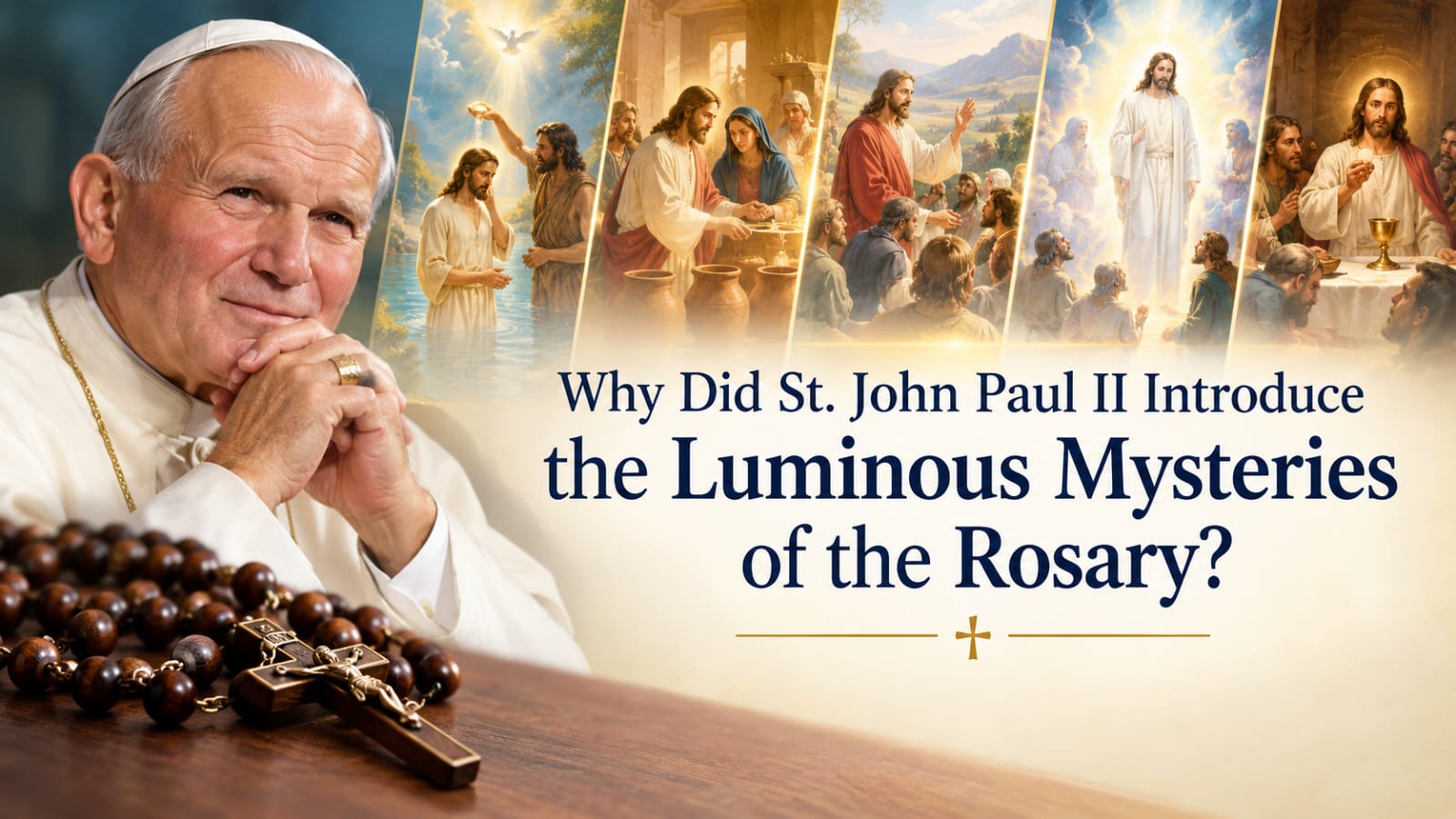
12 October, 2026: Have you ever wondered why the Rosary includes five Luminous Mysteries alongside the Joyful, Sorrowful and Glorious Mysteries? Proposed by St. John Paul II in 2002, they invited Catholics to reflect more fully on the public ministry of Jesus Christ.


The traditional arrangement of the Rosary contemplates selected moments in Jesus’ life, from the Incarnation and hidden life to his Passion, death and Resurrection. But it gives comparatively little attention to the years when Jesus preached and ministered publicly.
Why add another set of mysteries?
In Rosarium Virginis Mariae, St. John Paul II proposed five mysteries from Jesus’ public ministry to help make the Rosary a fuller “compendium of the Gospel.” They were intended to complement—not replace—the traditional mysteries, and he left their inclusion to the freedom of individuals and communities.
Why was this addition fitting? As the Pope explained, these mysteries help bring into focus Jesus’ proclamation of God’s Kingdom, his works and the demands of his Gospel. They broaden meditation on Christ’s life without changing anything essential in the Rosary’s traditional form.
Why are they called the Mysteries of Light?
St. John Paul II called them the “mysteries of light” because Jesus is the light of the world, and this truth shines out especially during his public ministry. Through his words and deeds, Jesus reveals the Father and makes the Kingdom of God known.
These mysteries invite the faithful not merely to recall Gospel events, but to contemplate what they reveal about Christ and his mission. Prayed attentively, the Rosary can deepen understanding of the Gospel and help shape our lives more closely on Christ.
The Luminous Mysteries are often prayed on Thursdays, following St. John Paul II suggested a weekly pattern. He also noted that individuals and communities may adapt the pattern according to spiritual and pastoral needs.
What are the five Luminous Mysteries?
1. The Baptism of Jesus in the Jordan: The Father declares Jesus his beloved Son, and the Holy Spirit descends upon him as his mission begins.
2. The Wedding at Cana: Jesus changes water into wine, revealing his glory and leading his disciples to believe.
3. The Proclamation of the Kingdom of God and the Call to Conversion:vJesus announces the Kingdom, calls people to conversion and extends mercy to sinners.
4. The Transfiguration: Jesus reveals his glory, and the Father commands the disciples to listen to him. This vision prepares them to accompany Jesus through his Passion toward the joy of the Resurrection.
5. The Institution of the Eucharist: At the Last Supper, Jesus offers his Body and Blood under the signs of bread and wine, expressing his love and anticipating his sacrifice.
How do they complete the Rosary?
The Joyful Mysteries contemplate the Incarnation and Jesus’ hidden life; the Luminous Mysteries focus on his public ministry; the Sorrowful Mysteries turn to his Passion; and the Glorious Mysteries contemplate his Resurrection and its fruits. Together, they offer a more complete path of meditation on the life and mission of Christ.
Ultimately, the Luminous Mysteries invite Catholics to contemplate the Gospel more attentively and follow Christ more closely in everyday life.
By Catholic Connect Reporter
Why Do Catholics Pray the Rosary When the Bible Warns Against Repetitive Prayer?
Why Are There 10 Hail Marys in Every Rosary Decade? The Meaning Behind the Number
Why Does October Belong to the Rosary? The Story Behind the Church’s Marian Month
Why Are There 59 Beads on a Rosary? The Story Behind Its Traditional Structure
Where Did the Rosary Come From? The Story of Its Origins
Why Is the Rosary Sometimes Called a “Gospel Prayer”?


© 2026 CATHOLIC CONNECT POWERED BY ATCONLINE LLP