- 02 September, 2026
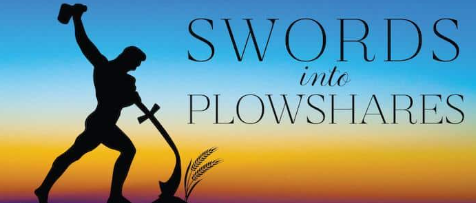
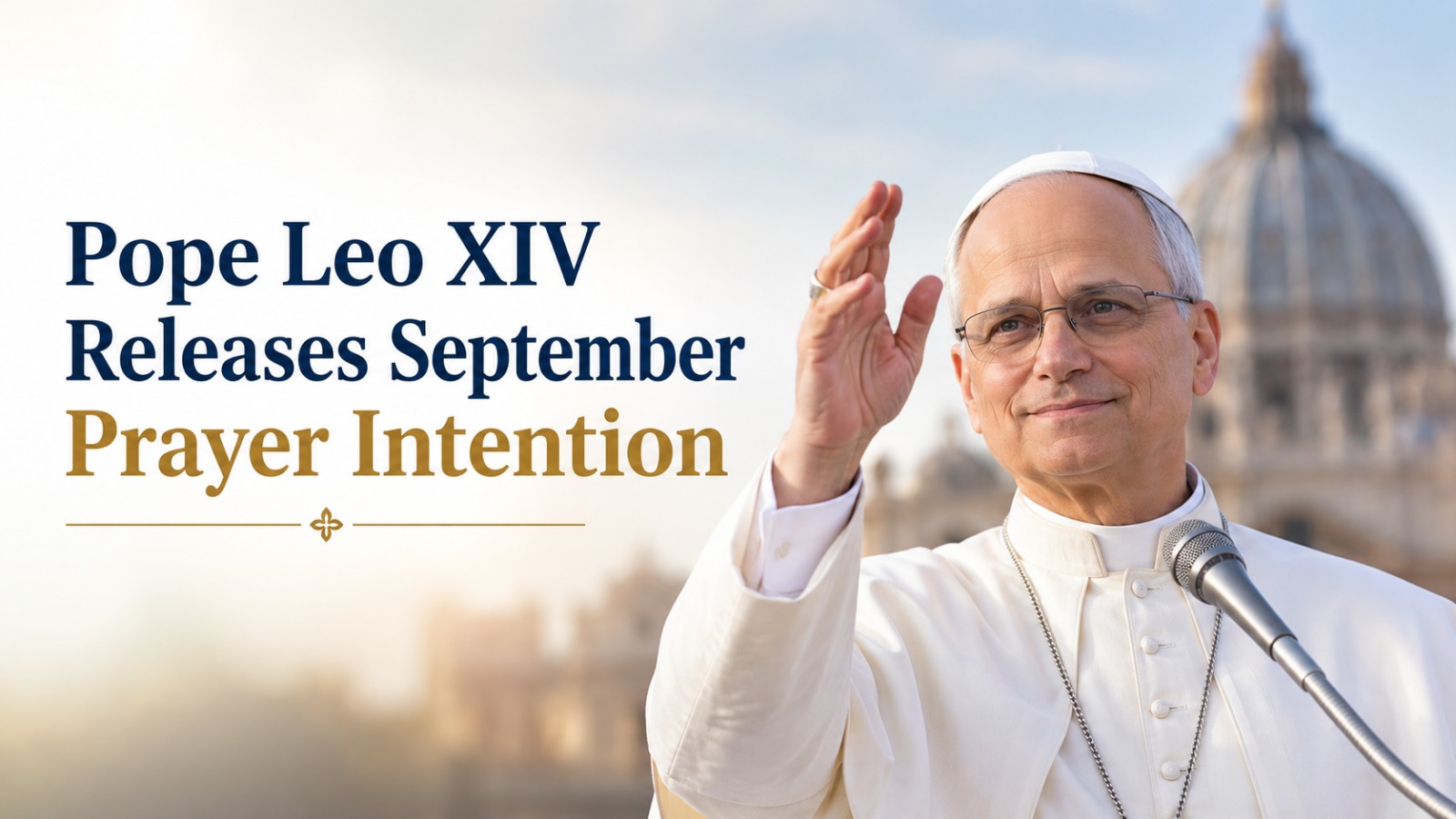
September 2, 2026:The 2026 message of Pope Leo XIV for the World Day of Prayer for the Care of Creation arrives at a revealing moment. Its central image is ancient but urgent: “They shall beat their swords into ploughshares and their spears into pruning hooks” (Isaiah 2:4). Leo XIV reads this not merely as a promise of disarmament but as a programme for repairing the whole fabric of life.


That connection matters. The ecological crisis cannot be separated from war, poverty, displacement and inequality. Nor can peace be reduced to the absence of armed conflict. Peace must also mean restoring the conditions in which people, communities and the natural world can flourish.
From Weapons to Life
The most striking feature of the message is its insistence that war and ecological destruction are not separate problems. The Vatican presents the Isaiah passage as a call to transform resources devoted to violence into instruments that serve human development and care for creation.


War kills directly, but its consequences continue long after the guns fall silent. It destroys homes, farms and infrastructure, contaminates land and water, drives people from their communities, and places additional pressure on already fragile ecosystems. Military spending also represents a moral choice about the purposes to which human intelligence, labour and public resources are directed.
This is why the image of swords becoming ploughshares remains so powerful. It is not simply about removing weapons. It is about converting instruments of death into instruments that sustain life.
The ploughshare asks a fundamental question: What is human power ultimately for?
The Violence Within
Read alongside Pope Francis’ Laudato Si’, Leo XIV’s message acquires a deeper theological significance. Francis described the ecological crisis as a crisis of relationships—with God, with one another and with creation. He insisted that care for our common home belongs to Christian discipleship, not to an optional programme of environmental concern.
His call for “ecological conversion” was therefore never merely an exercise in environmental housekeeping. It was a demand for a different way of seeing and living. Creation is not a warehouse of resources available for unlimited consumption, nor is the Earth simply an object to be managed. It is our common home, and human beings are participants within it.
Leo XIV develops this insight by placing the human heart at the centre of the crisis. The destruction outside us is connected to disorder within us: the desire to dominate, the pursuit of immediate profit, indifference to suffering, and the refusal to accept limits. This is a theological argument, but it has a practical consequence. Environmental policy cannot succeed if societies remain committed to endless consumption, domination and short-term gain.
A wounded planet reflects wounded relationships. The ecological crisis is therefore not only about emissions or damaged ecosystems. It is also about the kind of people and societies we are becoming.
El Niño and Unequal Vulnerability
The message’s timing gives it another layer of urgency. The World Meteorological Organisation reports that a strong El Niño is developing and is expected to intensify during August–October 2026. It projects a greater likelihood of above-normal temperatures across much of the world and significant shifts in rainfall, with increased drought risks in some regions and wetter conditions in others.
El Niño is a natural climate phenomenon and should not be treated as another name for human-caused climate change. Yet its effects are unfolding against a background of exceptionally warm global oceans and a changing climate system. These interacting pressures can intensify risks to food, water, health and livelihoods. The WMO therefore describes forecasts as an opportunity for early action, preparedness and risk reduction.
For India, this outlook is not an abstract scientific warning. Heat, uncertain rainfall and pressure on water supplies can affect farmers, food prices, informal workers and already vulnerable urban communities. The burden is greatest for those who have the fewest resources to adapt.
Climate disruption does not distribute its costs equally. Who has access to water when rainfall fails? Who can afford food when harvests are damaged? Who has insurance, strong infrastructure and political influence, and who is left exposed? These are not merely technical questions. They are questions of justice.
For churches, governments and communities, ecological responsibility therefore becomes a question of solidarity. To care for creation is to stand with those who suffer first and most severely from environmental damage, although they have often contributed least to it.
Conversion into Action
There is, however, a point at which the language of conversion must be tested against reality. It is tempting to describe ecological problems as failures of the human heart and leave the matter there. But the crisis is also shaped by economic systems, political decisions, corporate practices and patterns of consumption. A changed heart that produces no changed behaviour risks becoming pious language without consequence.
Laudato Si’ does not permit such an escape. Its vision of integral ecology joins personal responsibility to social, economic and political transformation. Ecological conversion must be visible in decisions about energy, transport, agriculture, urban planning, finance and public spending.
The challenge is to connect interior renewal with public responsibility. Prayer should deepen our moral vision, but moral vision should alter our choices. Churches must examine how they use land, energy and resources. Governments must treat food, water and climate resilience as matters of security. Citizens must ask whether convenience and consumption are being purchased at the expense of distant neighbours and future generations.
To beat swords into ploughshares is to redirect resources devoted to destruction towards food security, clean water, climate resilience, housing and the protection of vulnerable communities.
That is not naïve idealism. It is a different definition of security.
True security cannot be measured only by military strength or the number of weapons a nation possesses. A society is insecure when its people lack clean water, safe housing, reliable food, dignified work and protection from environmental disaster. Security must include the conditions that enable life to endure.
From Desert to Garden
The message ultimately offers a spiritual diagnosis of a profoundly contemporary crisis. A wounded planet and a wounded humanity cannot be healed through technical solutions alone. But prayer cannot substitute for action either.
The Christian vocation is both contemplative and practical: to recognise creation as a gift, protect the vulnerable, resist violence and transform systems that undermine life. El Niño reminds us that the physical world is already sending warnings. Laudato Si’ reminds us that these warnings have an ethical dimension. Leo XIV places them within the biblical vision of swords becoming tools for cultivation.
The real test of this message will be whether its vision reaches beyond liturgy and into choices about war, energy, agriculture, consumption and public policy. It will be tested when governments decide what deserves investment, when churches decide how they use resources, and when communities decide whether the vulnerable will be treated as neighbours or burdens.
The ploughshare is more than a symbol. It represents a decision about what human power is ultimately for.
In a world increasingly marked by heat, conflict and ecological anxiety, the Christian response cannot be retreat. It must be conversion: from domination to stewardship, from fear to solidarity, and from the machinery of destruction to the patient work of making life possible.
Peace, in this sense, must become a form of ecology—not because peace is one environmental concern among many, but because peace names the restored relationship on which the flourishing of people and the planet depends.
By Fr. Dr. John Singarayar SVD

© 2026 CATHOLIC CONNECT POWERED BY ATCONLINE LLP