- 07 August, 2026
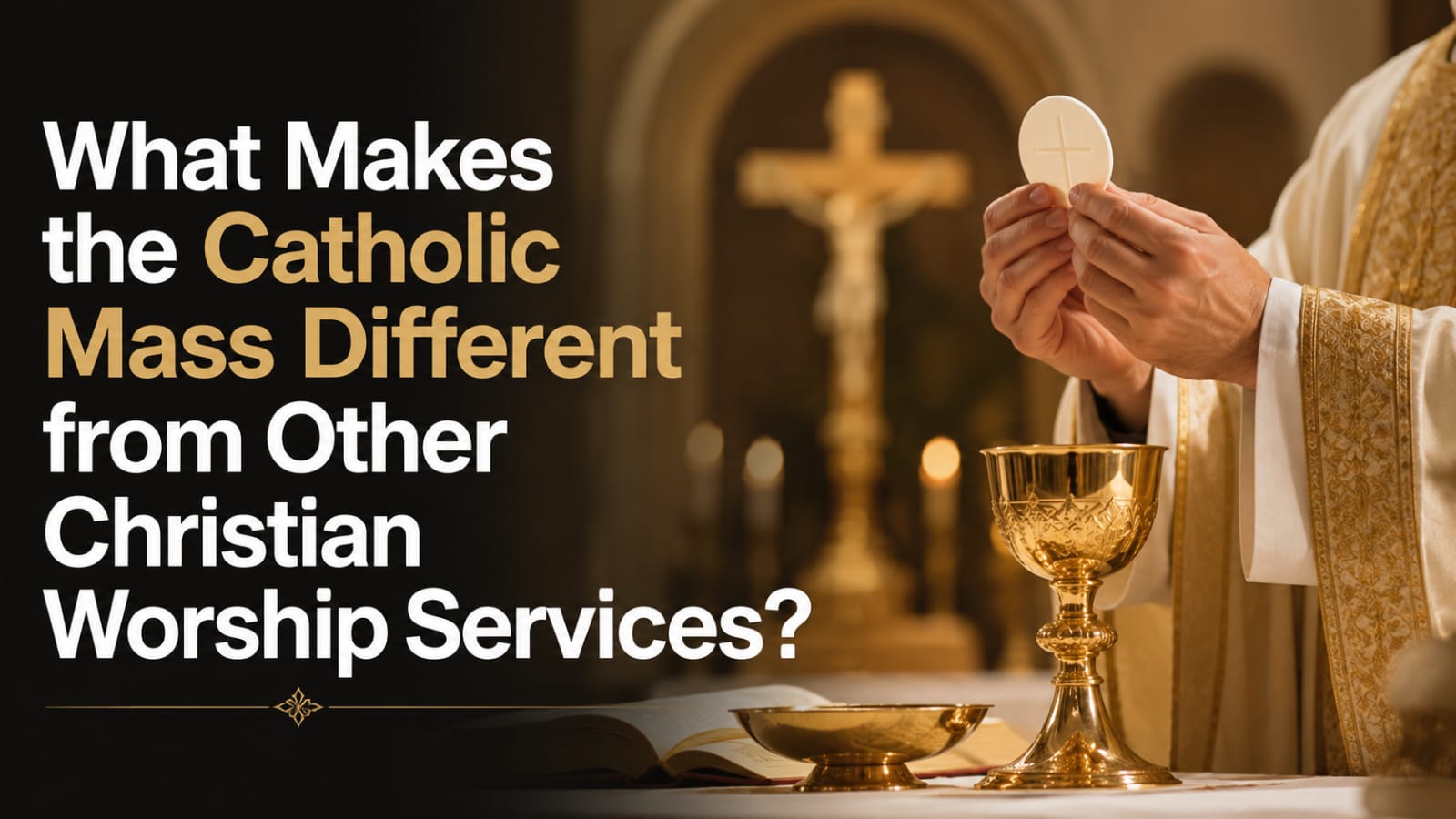
August 7, 2026: “Does it really matter whether I attend a Catholic church or another Christian church on Sunday?” “Aren’t we all worshipping the same God?” These are questions many Catholics have asked, especially in a world where worship services are more accessible than ever. Christians across different traditions gather to pray, read Scripture, sing hymns and seek to follow Jesus Christ. The Catholic Church recognises these shared beliefs with gratitude and respect.

Yet Catholics believe the Mass offers something distinctive. Its uniqueness does not lie in the music, the preacher or even the atmosphere. Instead, it is rooted in what Christ entrusted to the Apostles and what the Church has faithfully preserved through the centuries.
(Click here to follow Catholic Connect for regular News and Content)

The Eucharist: At the Heart of the Mass
To understand the Catholic Mass, one must begin with the Eucharist. At the Last Supper, Jesus took bread and said, “This is my body.” He then took the cup and said, “This is my blood of the covenant” (Mt 26:26–28). He also instructed the Apostles, “Do this in remembrance of me” (Lk 22:19–20).
Catholics believe that, through the Eucharistic celebration, the bread and wine become the Body and Blood of Christ. This conversion takes place through the efficacy of Christ’s words and the action of the Holy Spirit. Although the appearances of bread and wine remain, Christ is truly, really and substantially present—Body and Blood, Soul and Divinity. This is why the Church speaks of the Real Presence.
For this reason, the Eucharist is called “the source and summit of the Christian life.” It contains Christ Himself, the spiritual good of the Church. Catholics therefore come to Mass not only to hear the Word of God but also, when properly disposed, to receive Christ in Holy Communion.
One Sacrifice, Ever Present
The Catholic understanding of the Mass also raises an important question. If Jesus offered Himself once for all on the Cross, why is the Mass described as a sacrifice?
The Church teaches that Christ’s sacrifice is never repeated. Rather, the Eucharist is the memorial of Christ’s Passover and the sacramental making-present of His unique sacrifice. In every Eucharistic celebration, Christ’s one sacrifice remains present to the Church, and the work of redemption is carried out.
The Mass, therefore, is not simply a remembrance of Calvary as a past event. Through the Eucharistic celebration, the faithful are sacramentally united to Christ’s one offering to the Father.
One Faith, One Eucharist
Whether the Mass is celebrated in Bengaluru, Rome, Nairobi or Manila, the language, music and local customs may differ. The readings and prayers also vary according to the liturgical day, feast, calendar and legitimate Catholic tradition. Yet the essential structure of the liturgy, the Church’s Eucharistic faith and the sacramental celebration remain recognisably the same.
This universality reflects the unity of the Catholic Church. Wherever Catholics gather for Mass, they participate in the same Eucharistic mystery, centred not on any individual but on Christ Himself.
A Ministry Handed Down
Another distinctive feature of the Mass is the ministry of the ordained priest. Christ is present in the person of the minister, and the priest serves the Church in the celebration of the Eucharist.
Through the Sacrament of Holy Orders, the priest acts in persona Christi—“in the person of Christ.” This does not mean that the priest replaces Christ. Rather, Christ Himself acts through the ministry entrusted to the ordained priest.
This priestly ministry is inseparably linked to Apostolic Succession, the unbroken continuation of the apostolic ministry through the bishops. The Apostles left bishops as their successors so that the Gospel and the teaching authority entrusted to them might be faithfully preserved. Through the order of bishops, the Church continues the office of shepherding God's people without interruption.
More Than a Worship Service
Christians in different traditions sincerely seek to worship the Lord, and the Catholic Church is grateful for the faith shared by all who believe in Christ. At the same time, Catholics believe the Mass is far more than a gathering for prayer, preaching or fellowship.
It is the Eucharistic celebration in which Christ is truly present, His one sacrifice is made sacramentally present, and the apostolic worship entrusted to the Church continues through the ages. That is why Catholics gather every Sunday—not simply out of tradition, but because they believe that in every validly celebrated Mass they encounter Jesus Christ Himself and, when properly disposed, receive Him in the Eucharist.
By Catholic Connect Reporter
If God Made the Seventh Day Holy, Why Do Catholics Worship on Sunday?
Four Parts, One Beautiful Story: Understanding the Flow of the Mass
Why Does the Mass Follow the Same Order Every Time? The Church's Timeless Wisdom
Why Do Catholics Call It the Mass? The Answer Begins with Three Latin Words
How the Mass Developed Over 2,000 Years: A Journey Through History and Worship
Is the Mass Biblical? Discover the Bible in Every Part of the Holy Mass

© 2026 CATHOLIC CONNECT POWERED BY ATCONLINE LLP