image

They Recognized Him… and Their Hearts Burned Within Them: The Living Encounter of the 3rd Sunday of Easter

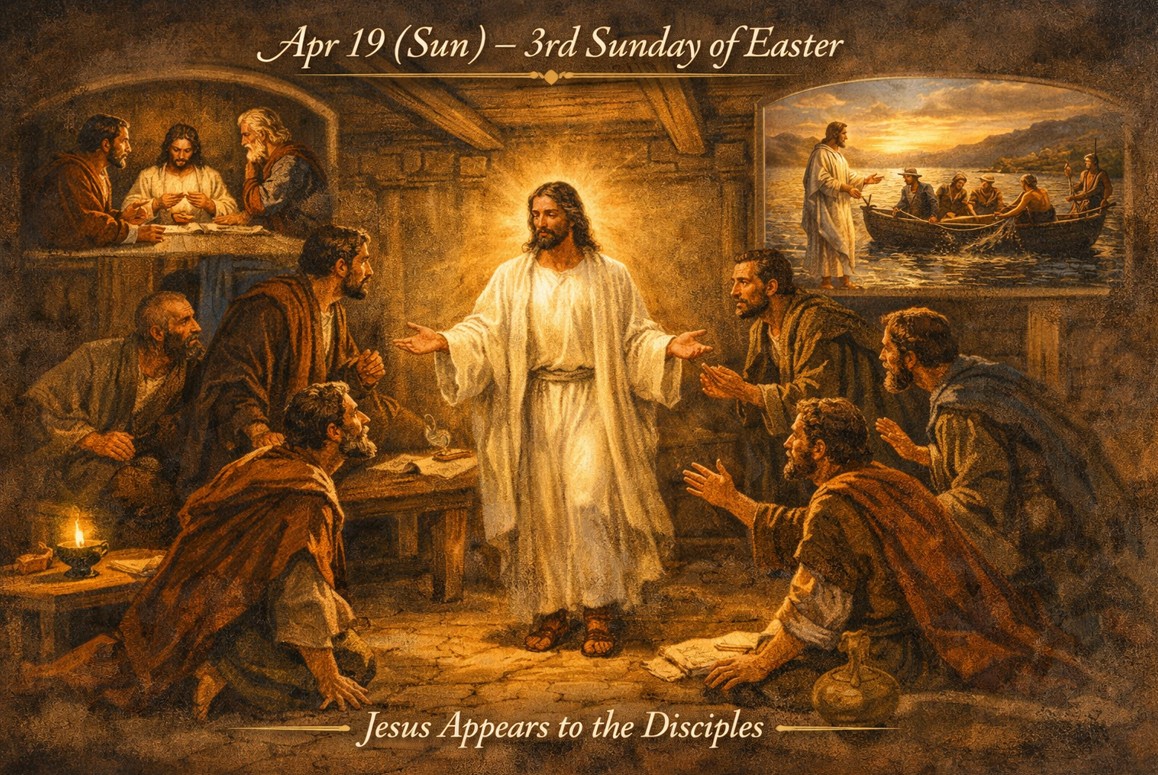
Vatican City, April 19, 2026: The 3rd Sunday of Easter invites the faithful into one of the most moving moments of the Resurrection—the journey of disciples who walk with Jesus without recognizing Him. This day in the Catholic Church reveals a profound truth: the risen Christ continues to walk beside His people, revealing Himself through Scripture, the Eucharist, and everyday life.


Significance of the 3rd Sunday of Easter

This Sunday centers on recognizing Christ’s presence in our journey.

  • It highlights the reality that Jesus is alive and walks with His people.
  • The day emphasizes faith, understanding, and spiritual awakening.
  • It teaches that Christ is often present even when not immediately recognized.
  • In Catholic teaching, it reveals how believers encounter Jesus through Word and Eucharist.


Historical Origins of the 3rd Sunday of Easter

This celebration is rooted in the early structure of Eastertide.

  • It is observed as part of the Easter season, which extends for 50 days after Easter Sunday.
  • In earlier Church tradition, it was known as the “Second Sunday after Easter.”
  • The liturgical calendar evolved over centuries, giving it its present title.
  • It has always focused on Resurrection appearances and the growth of faith in the early Church.


Relevance in the Catholic Church Today

The 3rd Sunday of Easter continues to speak deeply to modern believers.

  • It reminds Catholics that Christ is present in daily struggles and journeys.
  • The liturgy calls believers to grow in understanding through Scripture.
  • It strengthens faith in the Eucharist as a living encounter with Christ.
  • It encourages the faithful to become witnesses of hope in the world.


Interesting Stories and Biblical Events

This Sunday highlights one of the most meaningful Resurrection encounters.

  • The Gospel recounts the journey of two disciples on the road to Emmaus.
  • Jesus walks with them, explaining Scripture, yet remains unrecognized at first.
  • They finally recognize Him in the breaking of the bread, a powerful Eucharistic moment.
  • Their sorrow turns into joy, and they rush to share the Good News.


Insight: Sometimes, Christ is closest when we feel most lost—revealing Himself when our hearts are ready to see.


When It Became Part of the Catholic Church

This Sunday developed alongside the Church’s earliest Easter traditions.

  • The Resurrection has been celebrated since apostolic times.
  • By the early centuries, Sundays of Eastertide were clearly structured.
  • Liturgical reforms shaped its current placement and readings.
  • It remains a central part of the Catholic liturgical calendar.


Other Interesting Facts About the 3rd Sunday of Easter

  • It is part of the Easter season (Eastertide), the longest joyful period in the Church year.
  • In older tradition, it was associated with themes of divine mercy and joy.
  • The Emmaus story is often seen as a model of the Mass—Word followed by Eucharist.
  • It emphasizes transformation—from doubt to faith, and from confusion to clarity.
  • The readings often highlight the early Church boldly proclaiming the Resurrection.


The 3rd Sunday of Easter reminds believers that faith is a journey, not a moment. It calls the faithful to walk with Christ, listen to His Word, and recognize Him in the breaking of the bread—allowing their hearts to be renewed with hope and purpose.


By Catholic Connect Reporter

__________________________


Reflective Keywords : 3rd Sunday of Easter Catholic meaning, Emmaus story explained Catholic, Easter season significance Catholic Church, recognizing Jesus in Eucharist, Resurrection appearances Bible Catholic, Eastertide reflection Catholic, walking with Christ meaning

© 2026 CATHOLIC CONNECT POWERED BY ATCONLINE LLP