image

The World Fell Silent… and Hope Waited in the Darkness: The Deep Mystery of Holy Saturday

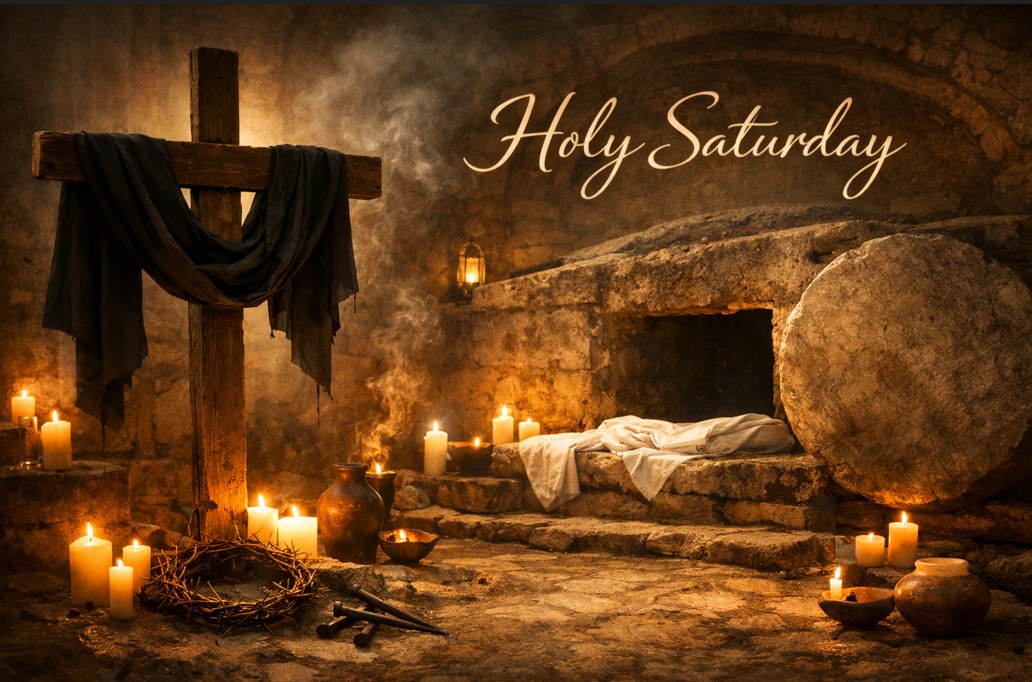
Vatican City, April 4, 2026: Holy Saturday is a day unlike any other in the Catholic Church—a sacred pause between sorrow and joy. Following the crucifixion of Jesus Christ, the Church enters into a profound silence, remembering the time when Christ lay in the tomb and the world awaited the promise of His Resurrection. It is a day filled with stillness, mystery, and quiet hope at the heart of Holy Week.


Significance of Holy Saturday

Holy Saturday embodies silence, waiting, and hidden hope.

  • It commemorates the day Jesus’ body rested in the tomb after His crucifixion.
  • The Church reflects on Christ’s descent to the dead, bringing salvation to the righteous.
  • It represents a moment of stillness between suffering and glory.
  • In Catholic teaching, it reveals that even in silence, God is at work bringing redemption.


Historical Origins of Holy Saturday

Holy Saturday has been observed since the earliest Christian communities.

  • Initially, alongside Good Friday, it was one of the first days commemorated in Holy Week.
  • Early Christians marked this day with strict fasting and deep prayer.
  • For centuries, no Mass was celebrated during the day, reflecting the absence felt after Christ’s death.
  • The Easter Vigil later emerged as the central celebration, especially by the early Church.


Relevance in the Catholic Church Today

Holy Saturday continues to hold deep spiritual meaning for Catholics.

  • It invites believers into quiet reflection and trust in God’s plan.
  • The Church remains in silence during the day, with no Eucharistic celebration.
  • It prepares the faithful for the joy of the Resurrection at the Easter Vigil.
  • It teaches patience—reminding believers that hope often unfolds in unseen ways.


Interesting Stories and Biblical Reflections

Holy Saturday carries profound theological and spiritual depth.

  • Tradition speaks of Christ descending to the realm of the dead to free the righteous souls.
  • The disciples experienced grief, confusion, and uncertainty during this time.
  • Ancient homilies describe this day as a “great silence” over the earth.
  • It reflects a hidden victory—where redemption continues even in death.


Insight: What appears as emptiness is actually a moment of divine preparation—where God is working beyond human sight.


When It Became Part of the Catholic Church

Holy Saturday became firmly established in early Church tradition.

  • Observed from the apostolic era as part of the Passion narrative.
  • By the 4th century, it was fully integrated into the structure of Holy Week.
  • The Easter Vigil became its defining liturgical celebration.
  • In 1955, liturgical reforms restored the Vigil to its proper place at night.


Other Interesting Facts About Holy Saturday

  • It marks the end of Lent and the transition to Easter joy.
  • No Mass is celebrated during the day—only the Easter Vigil at night.
  • The Church altar remains bare, symbolizing mourning and waiting.
  • The Easter Vigil includes the lighting of the Paschal Candle, symbolizing Christ as light.
  • It is one of the most ancient and meaningful nights for baptisms and new believers entering the Church.


Holy Saturday stands as a sacred reminder that even in silence, God’s plan is unfolding. It calls believers to trust in the unseen, to wait with faith, and to prepare their hearts for the triumph of light over darkness on Easter Sunday.


By Catholic Connect Reporter

_________________________


Reflective Keywords : Holy Saturday Catholic meaning, Easter Vigil Catholic Church, Holy Week significance Catholic, Jesus in the tomb meaning, descent into the dead Catholic teaching, Holy Saturday reflection Catholic, preparing for Easter Vigil
© 2026 CATHOLIC CONNECT POWERED BY ATCONLINE LLP