- 20 September, 2026

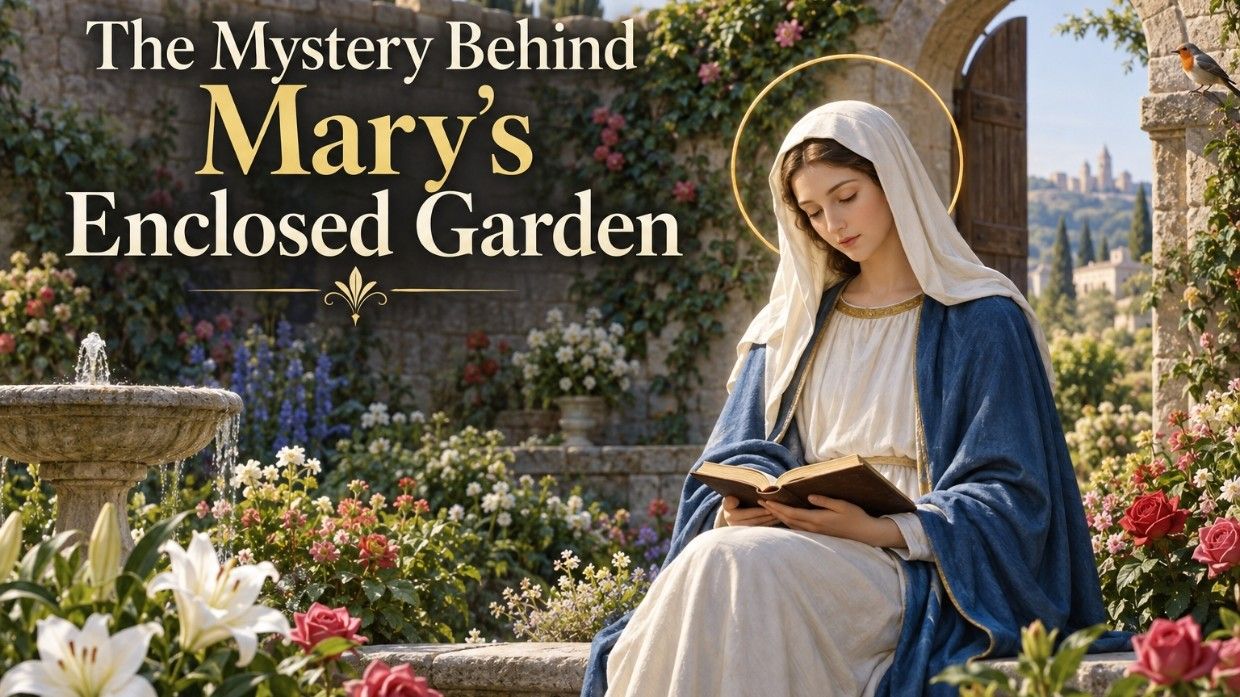
September 20, 2026: A peaceful garden surrounding the Virgin Mary may seem like a simple medieval scene, but its walls carry a deeper Christian meaning. Known as the hortus conclusus, or “enclosed garden,” this image became associated with Mary’s virginity, purity and role in the mystery of the Incarnation.


A Biblical Image
The Latin phrase hortus conclusus comes from the Song of Songs:
"A garden enclosed is my sister, my bride, a garden enclosed, a sealed fountain” (Song of Songs 4:12).

In its original context, this verse belongs to the love poetry of the Song of Songs. Christian tradition also read the book allegorically, seeing the bride as an image of the Church and applying some of its imagery to the Virgin Mary. St. Ambrose, for example, interpreted the enclosed garden as an image of virginal purity and the Church’s holiness.
Mary’s Perpetual Virginity
In Marian art, the garden’s walls symbolise Mary’s perpetual virginity: she was a virgin before the birth of Christ, remained a virgin in giving birth, and remained a virgin afterward. St Jerome connected the “enclosed garden” and “sealed fountain” with Mary’s identity as both mother and virgin.
(CLICK HERE to follow Catholic Connect and to stay updated with Catholic News & Content)
This symbolism does not suggest that Mary was physically isolated from ordinary human life. Rather, it uses poetic imagery to express her complete consecration to God and the singular mystery of her motherhood.
The Mystery of the Incarnation
Mary’s virginity is not an end in itself. It points towards the mystery of the Incarnation: Jesus Christ, the eternal Son of God, was conceived in Mary by the power of the Holy Spirit.
The enclosed garden can suggest a place belonging wholly to God, while the “sealed fountain” evokes Mary’s virginal motherhood. Christian liturgical tradition has applied these images directly to Mary, describing Christ as entering and leaving the garden of His mother without violating her virginity.
Flowers and Other Symbols
Medieval artists often placed Mary in a garden filled with flowers, trees and fountains. These details could suggest the beauty of creation and the spiritual fruitfulness associated with Mary. Particular flowers, such as the rose and lily, might also carry additional meanings, including love, purity and consecration.
However, not every garden scene has exactly the same meaning. Some works may use the garden primarily as a devotional setting, while others emphasise Marian virginity or the Incarnation.
The hortus conclusus is therefore symbolic religious art, not a literal description of Mary’s surroundings. Through its walls, flowers and peaceful setting, it offers a visual meditation on Mary’s perpetual virginity and on the mystery that the Son of God became man through her.
By Catholic Connect Reporter
Continue Reading on Catholic Connect App
Get access to exclusive news articles & more.





© 2026 CATHOLIC CONNECT POWERED BY ATCONLINE LLP