- 11 May, 2026

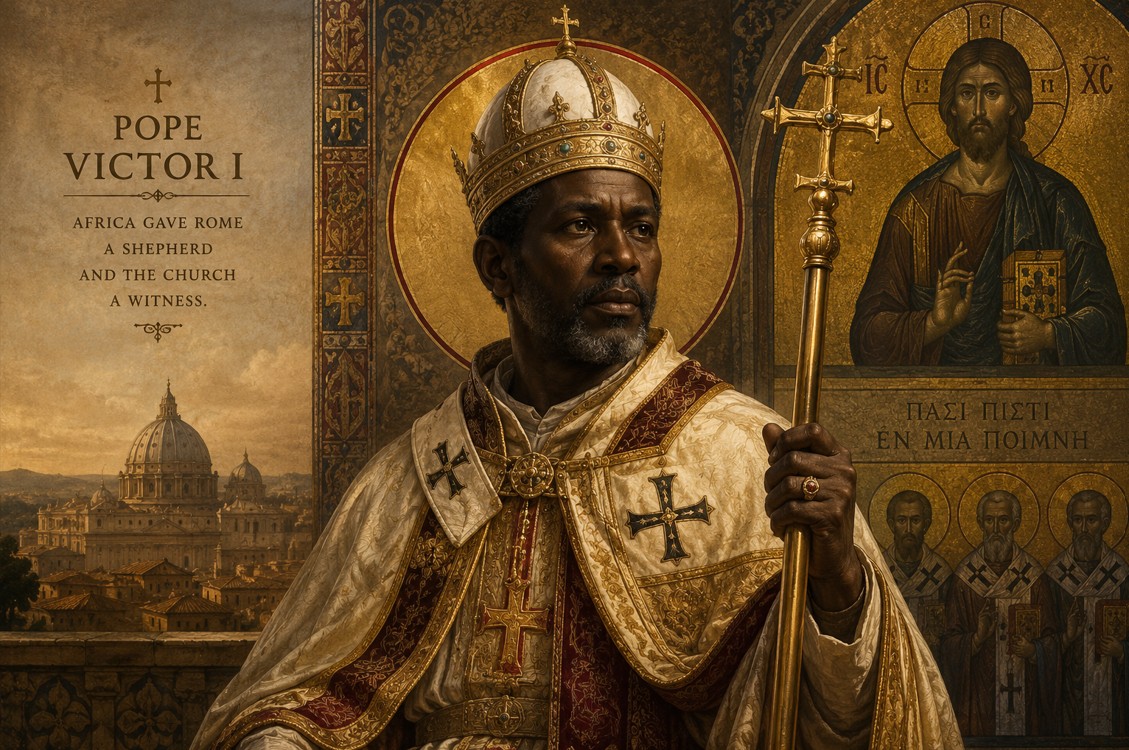
Pope Victor I, the fourteenth successor of Saint Peter, was a bold and influential leader who helped shape the identity of the early Church. Remembered as the first African pope, Victor I played a decisive role in major liturgical and doctrinal debates that would influence Christianity for centuries.


Victor I is widely recognized as the first pope from Africa, highlighting the important role North African Christianity played in the early Church.
Can one leader unify a divided Church?


That challenge stood before Victor I as Christianity spread across cultures, languages, and traditions. His papacy became a turning point in Church authority, liturgical unity, and the growing influence of the Bishop of Rome.
Pope Victor I served from 189 AD to 199 AD. He is best known for his efforts to standardise the date of Easter and for introducing Latin more prominently into the life of the Roman Church.
(CLICK HERE to follow Catholic Connect for regular Catholic Content)
Victor was born in Roman Africa, likely of Berber background according to several traditions. His rise to the papacy reflects the diversity of the early Church, where leadership emerged from many parts of the Roman Empire.
Though little is known about his early years, his later leadership reveals a man of strong conviction, discipline, and administrative skill.
After the death of Pope Eleutherius, Victor I was elected Bishop of Rome around 189 AD. His papacy marked a new stage in the authority and organization of the Roman Church.
Victor I led the Church during the closing years of the second century under the Roman Empire.
One of the major controversies of the era centered on the proper date for celebrating Easter, creating tensions between Eastern and Western Christians.
Victor I made several historic contributions to the Church:
These actions mattered because they helped unify Christian worship and strengthened the leadership role of the papacy in the universal Church.
Victor I is remembered for:
His spirituality reflected conviction, discipline, and strong pastoral responsibility.
Victor I’s papacy was not without tension:
Although controversial, these events revealed the growing influence of the papacy and the complexity of maintaining unity in a global Church.
Though no direct writings of Victor I survive in full, his leadership conveys a powerful lesson: Unity in worship strengthens the unity of the Church.
Victor I is honored as a saint in the Catholic Church.
Some traditions refer to him as a martyr, though historical evidence remains uncertain.
St. Victor I represents:
His papacy marked an important moment in the development of Roman authority and Christian liturgical practice.
Why does St. Victor I matter today?
His legacy continues through the life of the Church today, carried forward by his successors.
To know more about the previous Popes, click here
By Catholic Connect Reporter
_______________________
St. Victor I, Pope Victor I biography, first African pope, fourteenth pope Catholic Church, Easter controversy history, Quartodeciman controversy, early Catholic popes, Catholic Church history, apostolic succession, Pope Victor I Easter Sunday
© 2026 CATHOLIC CONNECT POWERED BY ATCONLINE LLP