- 25 June, 2026

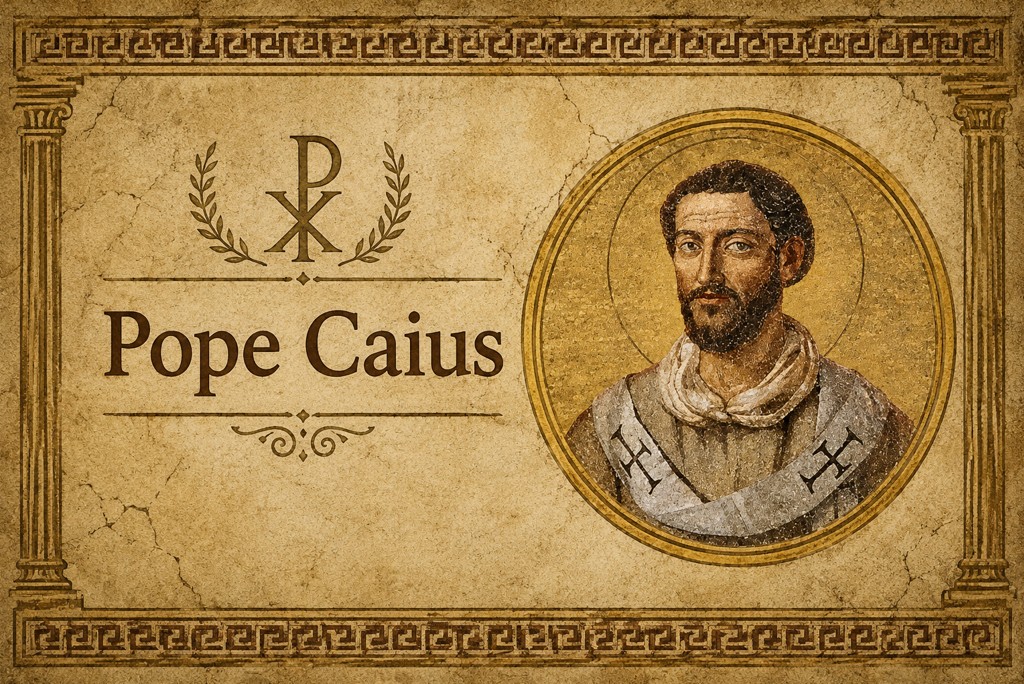
June 25, 2026: St. Caius, the twenty-eighth successor of Saint Peter, guided the Church during one of its final peaceful periods before the devastating persecution of Emperor Diocletian. His papacy witnessed a time of Christian growth, increasing organisation, and expanding influence across the Roman Empire. Though little is known about his personal life, he is remembered as a faithful shepherd who prepared the Church for the trials that would soon follow.


How does a leader prepare a community for challenges they cannot yet see?
Pope Caius served during a quiet but important moment in Church history. Christianity was growing throughout the Roman Empire, and believers enjoyed relative freedom. However, beneath this period of peace, political changes were taking place that would eventually bring one of the fiercest persecutions the Church had ever experienced.


Little historical information survives about Caius’ early years. Tradition identifies him as a relative of Emperor Diocletian, although this connection is uncertain.
He is believed to have come from Dalmatia and later became part of the Christian community in Rome. His formation took place during an era when Christianity was becoming increasingly organised despite remaining outside the official religious system of the Roman Empire.
(CLICK HERE to follow Catholic Connect for regular News and Content)
Caius was elected Bishop of Rome in 283 AD following the death of Pope Eutychian.
His election came during the reigns of Emperors Carus, Numerian, and later Diocletian. These years brought relative peace for Christians, allowing the Church to expand its ministries and strengthen its leadership structures.
Caius led the Church during the closing years of the third century.
This period of calm would soon end with Diocletian’s persecution beginning in 303 AD, only a few years after Caius’ death.
Although records of Caius’ papacy are limited, tradition associates him with several important developments:
His leadership helped ensure that the Church remained organised before entering a new era of persecution.
Caius is remembered for:
His spirituality reflected patience, preparation, and trust in God’s providence.
Caius faced challenges despite the peaceful environment:
Tradition states that Caius was martyred during the persecution of Diocletian, though historians generally consider this uncertain.
Although no writings from Caius survive, his life offers a lasting lesson: Faith must be strengthened during times of peace so that it can endure times of trial.
Caius is honoured as a saint in the Catholic Church.
He is remembered among the early popes who guided the Church before the great age of Christian persecution ended.
Why does St. Caius matter today?
His legacy continues through the life of the Church today, carried forward by his successors.
To know more about the previous Popes, click here
By Catholic Connect Reporter
________________________
St. Caius, Pope Caius biography, twenty-eighth pope Catholic Church, early Catholic popes, Pope Caius history, Roman Empire Christianity, Diocletian persecution, Catholic saints history, apostolic succession, Catholic Church history


© 2026 CATHOLIC CONNECT POWERED BY ATCONLINE LLP