- 27 April, 2026

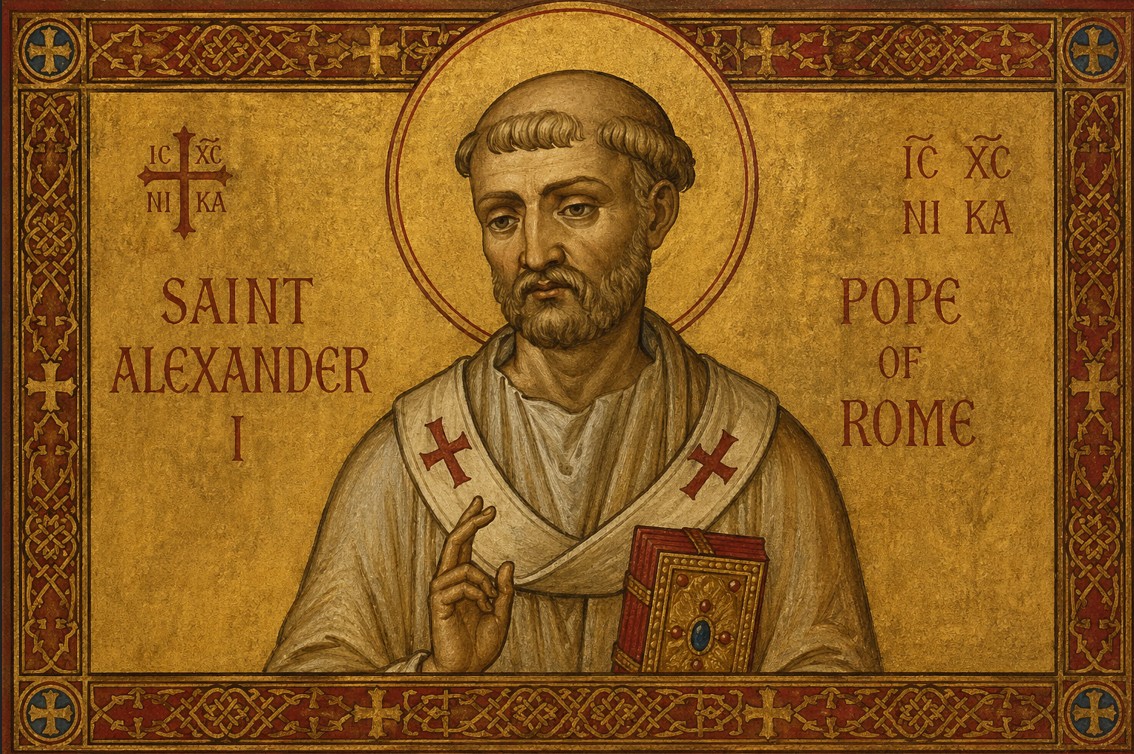
Pope Alexander I succeeded Pope Evaristus and guided the Church during a time when its liturgical practices and structures were gradually taking clearer shape.

This snapshot gives readers a clear and immediate understanding of who he was and the period in which he served.
As the sixth successor of Saint Peter, Alexander I played an important role in preserving and shaping early Church traditions. His papacy reflects a time when Christianity continued to grow quietly while deepening its liturgical and communal identity.


Very little is known about Alexander’s early life, which is typical of early popes. He is believed to have been Roman by birth and raised in a society still largely pagan. His formation in the Christian faith likely came through the influence of earlier generations of believers who preserved the teachings of the apostles.
Following the death of Pope Evaristus, Alexander was chosen as Bishop of Rome. His election continued the line of apostolic succession, ensuring continuity in leadership and safeguarding the teachings handed down from the apostles.
Alexander I led the Church during the early second century under the Roman Empire.
Although the widespread persecutions seen under Emperor Nero had passed, Christians still lived under the possibility of hostility and misunderstanding.
Tradition attributes several important contributions to Alexander I:
These contributions mattered because they helped shape the spiritual and communal life of Christians, giving structure to how the faith was practiced.
Alexander I is remembered for:
His spirituality reflects devotion expressed through liturgy and daily practice, emphasizing the sacredness of Christian life.
Alexander I faced ongoing challenges:
Though no major controversies are recorded, maintaining unity during expansion required careful leadership.
While no writings of Alexander I survive, his life conveys a meaningful lesson: Faith is strengthened through prayer, reverence, and faithful tradition.
Tradition holds that Alexander I died as a martyr in Rome, though historical certainty is limited.
He is honored as one who helped preserve the sacred traditions of the early Church.
St. Alexander I represents:
His contributions helped shape how Christians worship and live out their faith.
Why does St. Alexander I matter today?
His legacy continues through the structured life of the Church today, carried forward by his successors.
To know more about the previous Popes, click here
By Catholic Connect Reporter
© 2026 CATHOLIC CONNECT POWERED BY ATCONLINE LLP