- 11 August, 2026

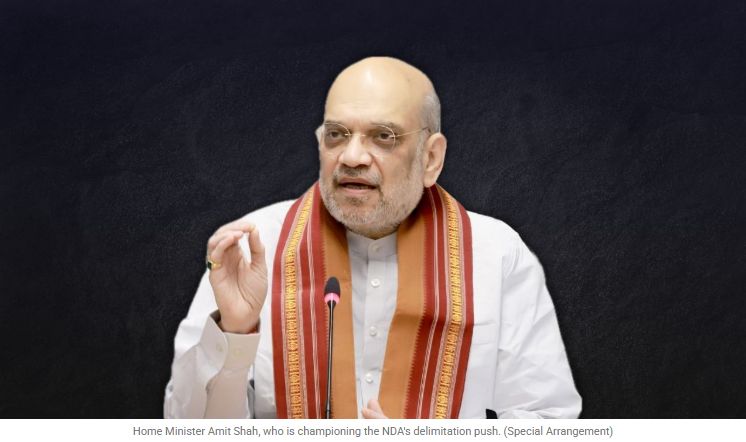
NEW DELHI, August 11, 2026: The debate over delimitation is increasingly raising concerns in Southern India, where political leaders and policymakers are questioning whether changes in parliamentary representation could reduce the region’s political influence.


The central argument is that States such as Tamil Nadu, Kerala, Karnataka, Andhra Pradesh and Telangana should not lose political weight because they successfully implemented population-control measures and invested heavily in education, healthcare and social development.
Should Success Lead to Less Representation?
For decades, Southern States were encouraged to stabilise their populations through better healthcare, education, women’s welfare and family planning.


These policies contributed to significant demographic changes across the region. At the same time, Southern States developed strong economies and became major contributors to India’s manufacturing, technology, pharmaceutical, services and export sectors.
Supporters of the South’s position argue that these achievements should be recognised rather than becoming a reason for reduced parliamentary representation.
If population becomes the dominant basis for determining representation, they say, States that successfully controlled population growth could find themselves with fewer seats compared with States where populations have increased more rapidly.
This has raised concerns over whether responsible governance could inadvertently lead to reduced political influence.
More Than a Question of Numbers
Delimitation involves more than simply redrawing constituency boundaries. Changes in the number of parliamentary seats can affect the political influence of individual States in national policymaking and government formation.
The debate therefore touches on India's federal structure and the relationship between the Union and the States.
Southern representatives are being urged to seek greater clarity on any proposed formula and to demand detailed demographic and parliamentary data before supporting major changes.
The argument is not necessarily against representation based on population, but rather for a system that takes into account the wider consequences of changing the balance between States.
Economic Contribution Also Matters
The South's economic contribution is another important part of the debate.
Tamil Nadu, Karnataka, Kerala, Andhra Pradesh and Telangana have become important centres for manufacturing, information technology, pharmaceuticals, services and exports. Their economies provide employment and generate significant economic activity for the country as a whole.
Critics of a population-only approach argue that a reduction in the region's political influence could create an imbalance in which economically important States have less bargaining power in national discussions.
Issues such as taxation, fiscal transfers, infrastructure, employment, education and industrial development could all be affected by changes in political representation.
A Call for Unity Among Southern MPs
The debate has also prompted calls for Southern MPs to work together despite their differences in political affiliation.
The region is represented by members of several national and regional parties. However, supporters of a common Southern position argue that delimitation is an issue whose consequences could extend well beyond individual political terms.
They want MPs to demand transparency, adequate parliamentary debate and safeguards for States that implemented population stabilisation policies.
Protecting the Federal Balance
The delimitation debate is ultimately about how India balances democratic representation with its federal structure.
Every citizen is entitled to representation, but any major redistribution of parliamentary power could have consequences for the relationship between different regions.
Southern States are therefore seeking assurances that their development achievements will not result in a corresponding loss of political influence.
As the debate develops, MPs from the region face an important responsibility: to ensure that any future delimitation exercise is transparent, constitutionally sound and fair to all States.
The South's message is not necessarily about weakening India's unity. Rather, it is about ensuring that economic contribution, demographic responsibility and political representation remain part of a balanced national conversation.
Courtesy : South First


© 2026 CATHOLIC CONNECT POWERED BY ATCONLINE LLP