- 11 August, 2026

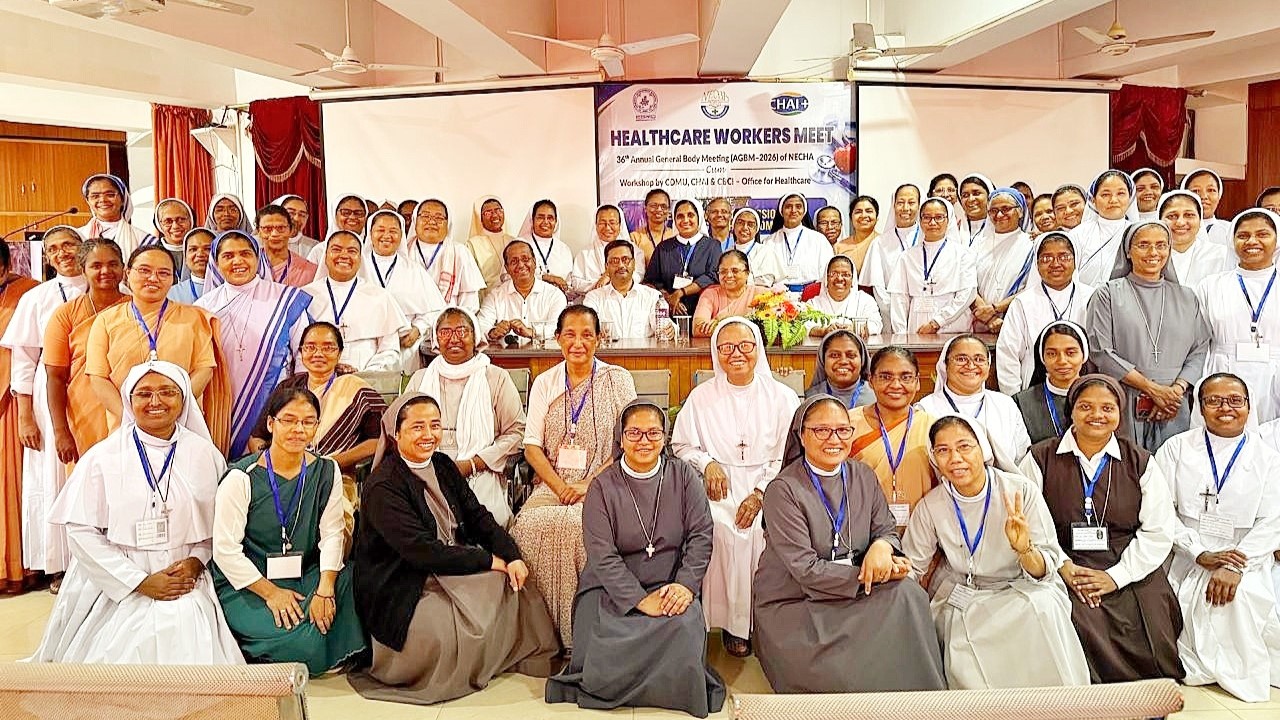
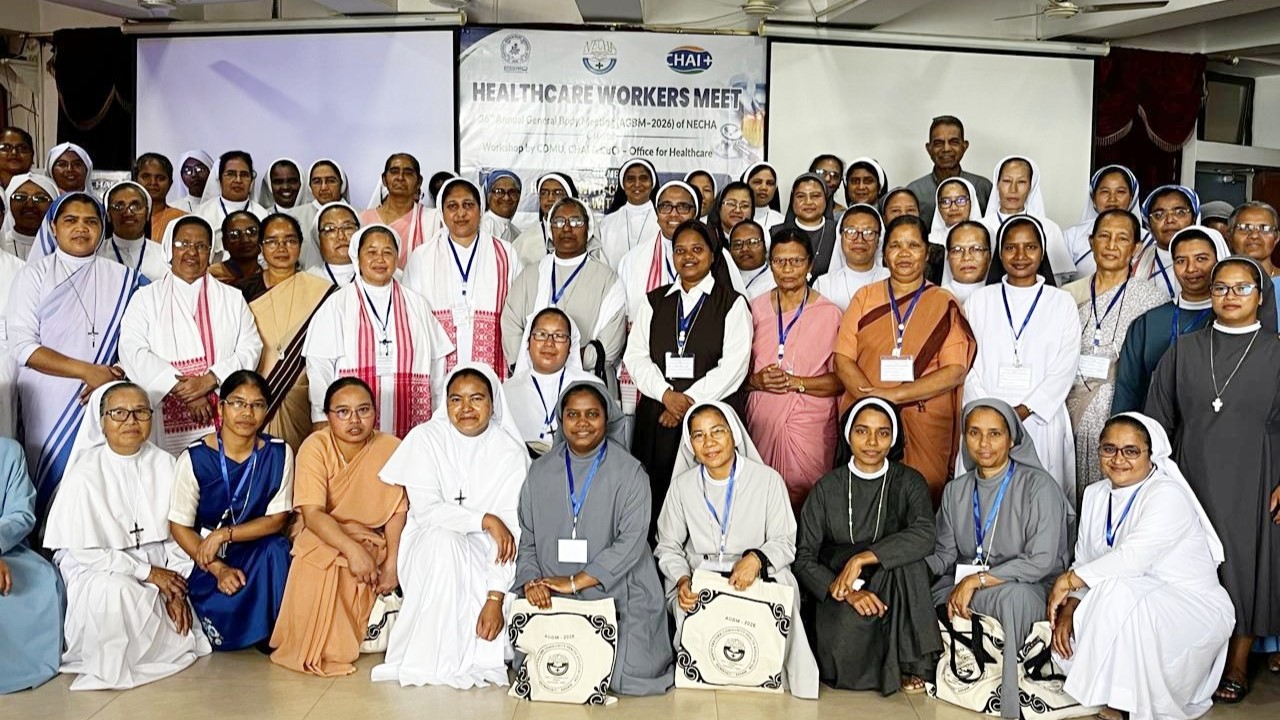
GUWAHATI, August 11, 2026: Catholic healthcare leaders from across North-East India have called for a renewed commitment to compassionate, ethical and holistic healthcare while strengthening collaboration among Church-run institutions and professionals.

The call came during the 36th Annual General Body Meeting (AGBM) and Healthcare Workers Meeting of the North East Catholic Health Association (NECHA), held on August 8 and 9 under the theme, “Healing with Compassion; Serving with Wisdom.” The two-day gathering brought together around 75 participants from 14 diocesan and regional units for prayer, reflection, learning, fellowship, networking and collective discernment on emerging challenges in healthcare.
Presiding over the opening Eucharistic celebration, Fr. V. M. Thomas, SDB, founder of Don Bosco Institute, described the Church’s healing ministry as a journey of hope and reminded participants of the power of faith. In his homily, he highlighted the contribution of women religious, describing them as “silent heroes” who serve the Church quietly and often without recognition. He encouraged them to continue their ministry with faith, courage, hope and perseverance.


Delivering the keynote address, Sr. Helen Mary, SAB, Director General of the Catholic Health Association of India (CHAI), described the theme of the gathering as both “timely and prophetic. “Compassion is the heart of our ministry. Wisdom is the compass that must guide our journey,” she said, outlining five priorities for the Church’s healthcare mission under what she called the 5 Cs of CHAI: Compassion, Community, Competence, Collaboration and Commitment.
She urged Catholic healthcare institutions to strengthen person-centred care, expand preventive and community-based healthcare, build resilient and future-ready institutions, invest in leadership and collaboration, and remain faithful to the Church’s preferential option for the poor.
The healthcare mission, she said, should contribute to a society where compassion becomes a culture, wisdom guides decisions and innovation strengthens the Church’s mission, so that people experience the healing love of God through healthcare services.
Fr. Santhosh Dias presented Jesus as the model of the Church’s healing ministry and stressed that healthcare remains an integral part of the Church’s mission. He noted that dioceses and religious congregations carry out this mission through hospitals, institutions and community-based programmes, supported by thousands of Christian healthcare professionals.
Fr. Dias also warned that values such as respect for life, human dignity, ethical medical practice and empathetic service are increasingly challenged by the commercialisation of healthcare. He called on Christian healthcare institutions and professionals to become prophetic witnesses by defending these values.
Healthcare workers, he said, are called not merely to heal bodies but also to nurture spirits and to become caretakers of their brothers and sisters. He encouraged Christian healthcare networks to animate, coordinate, advocate and strengthen the Church’s healing mission across India. “Together we can do great and wonderful things. Challenges may come, but our mission must never stop,” he said.
The gathering also honoured the presidents and secretaries of participating diocesan units with traditional Gamochas, recognising their leadership and contribution to the healthcare mission.
Focus on affordable and safe medicines
Access to safe, authentic and affordable medicines emerged as another major concern during the meeting.
Mr. Bishnu Chakraborty of the Community Development Medical Unit (CDMU) spoke about community development and the rational use of medicines. He said CDMU, inspired by former CHAI Director General Fr. James T., has worked for more than four decades to make medicines more accessible and affordable, particularly through collaboration with Catholic institutions.
Participants discussed the need to provide accurate information about medicines and diseases, promote their rational use, increase awareness among healthcare workers and communities, and improve access to genuine and generic medicines.
They also reflected on the importance of medicine safety, authenticity, affordability and proper stock management.
Strengthening healthcare networks
Networking and collaboration among Catholic healthcare institutions in the region formed another key area of discussion.
Reflecting on the development of the health ministry in the North-East, Fr. Dias urged institutions and professionals to support one another and work collectively in carrying out their mission.
Mr. Vipin Joseph, Programme Officer of CHAI, said the NECHA network had previously included about 325 member institutions, while around 164 institutions are currently active across seven states and 15 dioceses.
He described the network as a significant strength and encouraged members to deepen it through better communication, collaboration and contribution.
Mr. Jonas Lakra, who has been involved in collecting data from healthcare institutions in the region, highlighted challenges in systematic documentation and record-keeping.
He noted that inadequate data collection can affect the visibility and recognition of the services provided by Church institutions and urged members to improve the collection, documentation and maintenance of institutional records.
Dementia and addiction among emerging concerns
Dementia care was addressed by Ms. Sapnali Nayak, clinical psychologist and counsellor at V.G. Hospital, Dibrugarh. She explained that dementia is an umbrella term covering a range of symptoms affecting memory, thinking, behaviour, communication and the ability to perform everyday activities. Her session covered common signs and symptoms, causes and types of dementia, prevention and risk reduction, and the importance of early identification.
She stressed that families caring for people with dementia need patience, compassion and respect. Early recognition of changes, regular care, family support and greater understanding, she said, can help persons living with dementia maintain dignity and quality of life.
Addiction and rehabilitation were also discussed, with Fr. Chacko highlighting the challenges faced by communities in helping people affected by alcohol addiction access therapy and rehabilitation. Participants shared experiences from their respective ministries, highlighting the need for patient accompaniment, compassionate care and stronger support for individuals and families affected by addiction.
The discussion also emphasised the need to challenge stigma surrounding addiction and encourage rehabilitation and community support.
Archbishop stresses inner healing
Archbishop Emeritus Thomas Menamparambil, SDB, of Guwahati, presided over the Eucharistic celebration on the second day and reflected on the healing ministry of Jesus.
He reminded participants that Christ’s ministry was fundamentally a ministry of healing and encouraged them to remain open to God and attentive to others. Such openness and listening, he said, can lead to forgiveness and inner healing. He also observed that healing can be gradual and is often supported by forgiveness, attention, affection and care.
The Archbishop cautioned against excessive dependence on medicines and encouraged self-regulation, healthy habits, discipline and the creation of supportive environments conducive to wellbeing. He urged participants to “aim high in life” and remain committed to meaningful service.
New NECHA leadership elected
During the business session, members elected Sr. Lini Mathew, SCCG, as the new President of NECHA, with Sr. Lisset elected Vice-President.
Participants expressed gratitude to the outgoing leadership for its service and welcomed the newly elected office-bearers, assuring them of continued support and cooperation.
Representatives from 14 diocesan and regional units participated in the meeting, including ACHA, CHAB, CHAD, CHAT, CHAN, CHAS, DICHA, GCHA, JOCHA, NOCHA, TCHA, ICHA and MICHA.
Sr. Soosai, SSPs, expressed gratitude to God and to the dignitaries, resource persons, NECHA leadership, diocesan units, organisers and participants who contributed to the gathering.
The meeting concluded with a renewed emphasis on compassionate and holistic healthcare, rational medicine use, dementia care, addiction rehabilitation, professional competence, networking and effective documentation.
The participants also reaffirmed the Church’s commitment to serving the poor and vulnerable and to strengthening its healing ministry through compassion, wisdom, competence, collaboration and faith.
By Sr. Teena Pappachan, SD
Secretary, NECHA
© 2026 CATHOLIC CONNECT POWERED BY ATCONLINE LLP