- 16 October, 2026
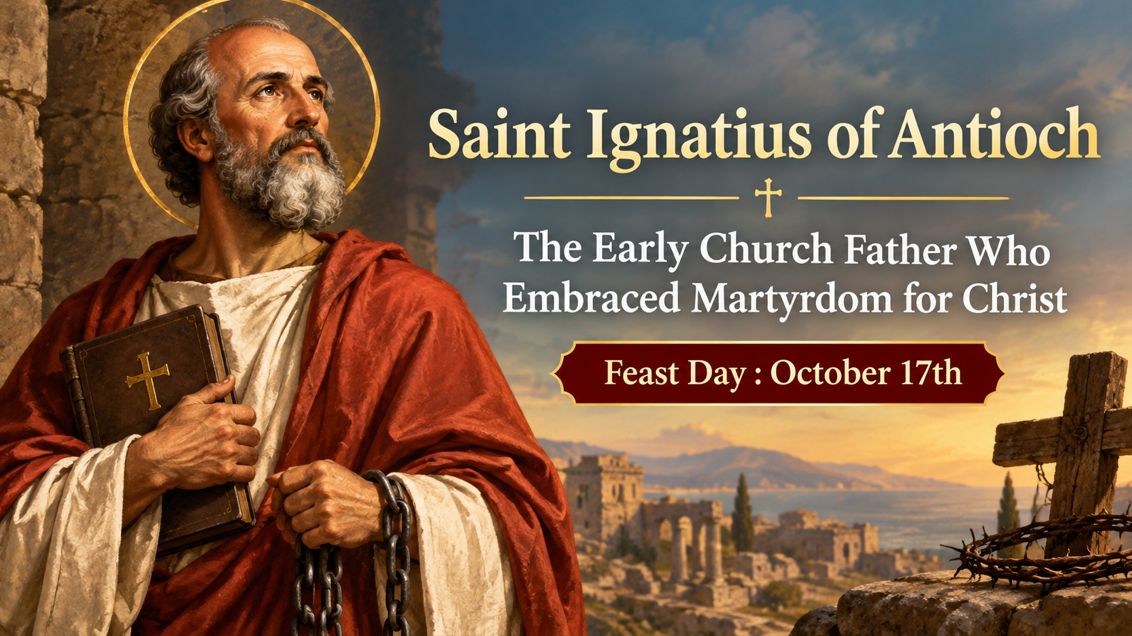
Rome, 17 October 2026: What gives a person the courage to remain faithful even when facing death? Saint Ignatius of Antioch, one of the earliest leaders of the Christian Church, offers a powerful answer through his unwavering love for Jesus Christ. As a bishop, teacher and martyr, he strengthened Christian communities through his letters and became an enduring example of faith, unity and courage. His life remains an important witness to the beliefs and practices of the early Church.



Feast Day: 17 October in the Roman Catholic calendar
Born: Probably in Syria, around the first century; his exact birth date is unknown
Died: Around 107–110 AD, traditionally in Rome
Known For: Bishop of Antioch, early Christian writings and martyrdom
Title: Apostolic Father of the Church
Remembered As: A faithful shepherd who defended Christian teaching and Church unity.
Little is known with certainty about Saint Ignatius’s early life. He became Bishop of Antioch, an important Christian centre in the Roman Empire. According to early Church tradition, he belonged to the generation closely connected with the Apostles and was a friend of Saint Polycarp.
Ignatius dedicated himself to guiding the Christian community, strengthening believers and preserving the teachings handed down by the Apostles. His writings reveal a passionate love for Christ and a deep concern for the spiritual well-being of the faithful.
(CLICK HERE to follow Catholic Connect and to stay updated with Catholic News & Content)
Saint Ignatius believed that unity was essential to the life of the Church. In his letters, he encouraged Christians to remain united in faith, prayer and worship, working closely with their bishops and local communities.
He also defended the truth that Jesus Christ truly became human, suffered and rose from the dead. His teaching helped early Christians respond to ideas that denied Christ’s real humanity.
Ignatius is particularly remembered for using the term “Catholic Church” in his Letter to the Smyrnaeans, writing about the universal Christian community united in Christ. His words remain significant in understanding the identity and organisation of the early Church.
During the reign of Emperor Trajan, Ignatius was arrested and sent under guard from Antioch to Rome. During this journey, he wrote seven letters to Christian communities and to Saint Polycarp, Bishop of Smyrna.
These letters encouraged believers to remain faithful, resist false teaching and care for one another. They also contain important reflections on the Eucharist, the role of bishops and the hope Christians find in Jesus Christ.
His writings remain valuable sources for understanding early Christian faith and worship.
Ignatius was taken to Rome, where early Christian tradition says he was condemned to die by being exposed to wild beasts. He accepted the prospect of martyrdom rather than deny his faith.
His courage became a powerful testimony to his love for Christ. The Church honours him as a martyr and an important early Christian teacher.
Saint Ignatius teaches believers to remain faithful during hardship, protect unity within the Church and place Christ at the centre of their lives. His letters encourage Christians to practise love, humility and commitment to the Gospel.
In a world often divided by disagreement, Saint Ignatius reminds Christians of the importance of unity, truth and steadfast faith. His witness encourages believers to live the Gospel courageously and follow Christ with wholehearted devotion.
Saint Ignatius of Antioch, pray for us!
To know about more saints and Catholic feast days, please visit the spiritual section.
By Catholic Connect Reporter
Saint Ignatius of Antioch, Saint Ignatius feast day, Apostolic Fathers, early Church history, Christian martyrs, Catholic saints of October, seven letters of Ignatius, early Christian theology, Church unity, Eucharistic devotion
© 2026 CATHOLIC CONNECT POWERED BY ATCONLINE LLP